
#Section 144
Log in to FollowLatest Section 144 updates, provisions, case laws, compliance requirements, tax implications and expert analysis under Income-tax law on TaxGuru.
Income Tax
Income Tax
Reassessment Quashed for Failure to Record Reasons Under Section 148: ITAT Mumbai
Income Tax
Income Tax
Reassessment Quashed for Invalid Sanction u/s 151: Approval by PCIT Instead of PCCIT Held Void
Income Tax
Income Tax
Reassessment Beyond 3 Years Upheld as Escapement Exceeded ₹50 Lakh — Cash Deposits u/s 69A
Income Tax
Income Tax
Vague Penalty Notice Makes Section 271(1)(c) Proceedings Void: ITAT Rajkot
Income Tax
Income Tax
Assessment Quashed as U/s 143(2) Issued by Wrong Jurisdictional AO: ITAT Kolkata
Income Tax
Income Tax
Assessment Held Void for Skipping Statutory Notice Under Section 143(2): ITAT Agra
Income Tax
Income Tax
ITAT Agra: 20% Adhoc Expense Disallowance Deleted; Overdue Interest Remanded; 36(1)(viia) Deduction Restored
Income Tax
Income Tax
ITAT Agra Upholds Separate NP Rates: 0.22% (Animal Trading) & 8.7% (Scrap)
Income Tax
Income Tax
Interest for Late Original Return Valid Despite Timely Search Filing: ITAT Ahmedabad
Income Tax
Income Tax
Section 148 Notices Void as Issued Outside Mandatory Faceless Scheme
Income Tax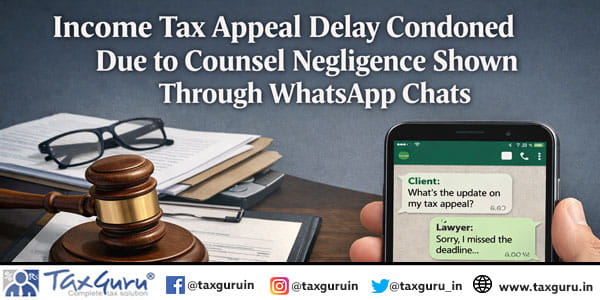
Income Tax
Income Tax Appeal Delay Condoned Due to Counsel Negligence Shown Through WhatsApp Chats
Income Tax
Income Tax
Commission Addition Deleted for Lack of Proof of Accommodation Entries: ITAT Delhi
Income Tax
Income Tax
Reassessment Void for Status Mismatch Between Notice and Order: ITAT Delhi
Income Tax
Income Tax
ITAT Quashes ₹8.35 Cr Loan Addition u/s 68 Due to Denial of Cross-Examination
Explore the latest Section 144 updates on TaxGuru, including relevant Income-tax Act provisions, rules, notifications, circulars, judicial decisions and compliance guidance. The coverage highlights important tax positions, procedural requirements, assessments, deductions, penalties and litigation developments to help taxpayers and professionals understand the practical implications of changes in income-tax law.

