
Courts: ITAT Surat
Find latest ITAT Surat judgments, orders and case laws on income tax covering assessments, additions, deductions, exemptions, capital gains, reassessment, TDS and penalties.
Same Cash Deposits Cannot Be Taxed in Firm and Proprietor: ITAT Surat
Section 153D Approval Cannot Be Presumed When Approval Letters Are Untraceable: ITAT Surat
Compulsory Acquisition of Hazira Agricultural Land Not Taxable as Capital Gain: ITAT Surat
ITAT Surat Quashes Assessments Over Unproved Mandatory Section 153D Approval
ITAT Surat Restricts Unaccounted Purchase Addition to Profit Under Section 44AD
ITAT Surat Quashes Section 153C Assessments Over Delayed Satisfaction Note
ITAT Surat Accepts Separate Land and Building Consideration in Composite Sale
Search Information Cannot Convert Old Loan Into Fresh Accommodation Entry: ITAT Surat
ITAT Surat Remands Section 69 Addition for Verification of Additional Evidence
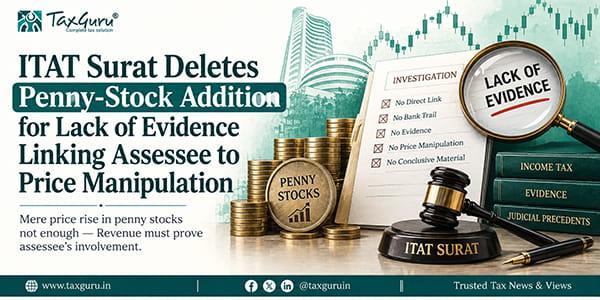
ITAT Surat Deletes Penny-Stock Addition for Lack of Evidence Linking Assessee to Price Manipulation
Land Conversion Into Stock-in-Trade Rejected, 10% Section 50C Relief Granted: ITAT Surat
ITAT Surat Deletes TDS Demand on GIA Diamond Grading Charges under India-USA DTAA
ITAT Surat Deletes Section 68 Addition on Genuine LTCG from Penny Stock Sale
ITAT Surat Deletes Section 271(1)(c) Penalty on Ad Hoc Bogus Purchase Addition
ITAT Surat judgments and orders provide appellate guidance on numerous issues arising under the Income-tax Act. This TaxGuru page brings together decisions concerning assessments, additions, deductions, exemptions, business income, capital gains, unexplained income, reassessment, TDS, penalties, limitation and procedural compliance. Taxpayers, businesses, Chartered Accountants, advocates and consultants can use this category to locate ITAT Surat case laws relevant to their matters. The collection includes recent and important earlier Tribunal decisions published on TaxGuru, helping readers research income-tax precedents and follow developments in appellate jurisprudence.

