
Courts: All High Courts
Read latest High Court judgments and orders on Income Tax, GST, Customs, Company Law and other taxation, corporate, commercial and regulatory matters.

Gujarat HC Allows CENVAT Re-Credit After Cash Payment Through PLA to Prevent Double Recovery

Section 148 Reassessment Upheld After Section 147A Amendment: Madras HC
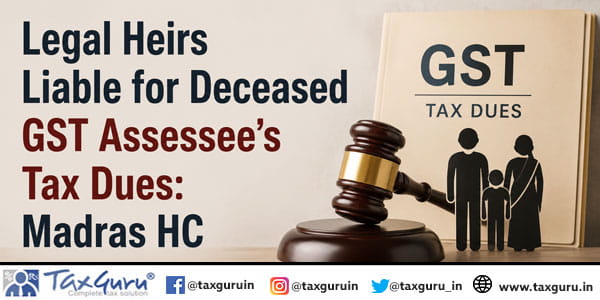
Legal Heirs Liable for Deceased GST Assessee’s Tax Dues: Madras HC

GST Audit & Return Scrutiny Can Lead to Separate Section 73 & 74 Proceedings: Madras HC

Composite GST SCN Quashed for Multiple Assessment Years: Kerala HC
Section 148 Reassessment Set Aside as Based on Change of Opinion: Madras HC
Bogus Agreement & Invalid Invoices Defeat Section 74 ITC Claim: Madras HC
Delayed Allegation of Coercive GST Recovery Cannot Justify Refund: Gujarat HC

Maintenance Fixed at One-Fourth of Husband’s Net Salary with Automatic Revision: Allahabad HC

Unsigned GST Assessment Order Invalid; AP HC Orders Fresh Adjudication
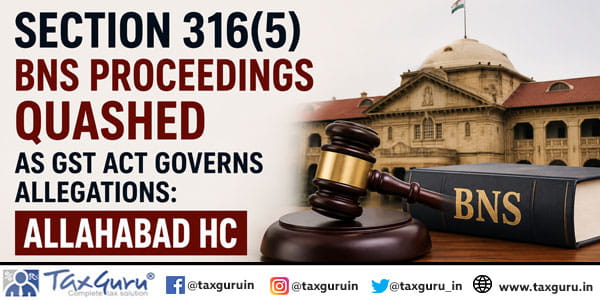
Section 316(5) BNS Proceedings Quashed as GST Act Governs Allegations: Allahabad HC
Section 12AA Registration Upheld as GPU Charitable Status Recognised: Gujarat HC
Section 50(3) Interest Upheld for Wrongful ITC Availment & Utilisation: Madras HC
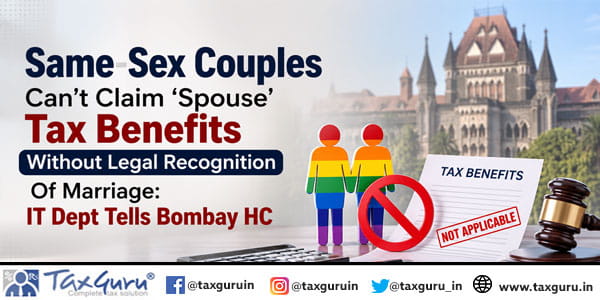
Same-Sex Couples Can’t Claim ‘Spouse’ Tax Benefits Without Legal Recognition Of Marriage: IT Dept Tells Bombay HC
All High Courts brings together judgments and orders of High Courts across India published on TaxGuru. The archive covers Income Tax, GST, Customs, Company Law, Corporate Law, insolvency, commercial laws and other taxation and regulatory matters. Readers can research important questions of law, constitutional challenges, writ petitions, statutory appeals and other proceedings decided by different High Courts. Chartered Accountants, advocates, tax professionals, businesses and legal researchers can use this consolidated archive to follow High Court jurisprudence across India. Separate High Court categories are available for court-specific judgments and orders.

