
Introduction
India has witnessed remarkable social, cultural, and economic transformations over the past few decades, with women stepping into diverse roles across industries. The participation of women in the workforce has been steadily increasing, breaking traditional norms and redefining societal roles. Despite these strides, gender inequality remains a persistent challenge that hinders holistic progress. Women face systemic barriers in access to equal opportunities, fair remuneration, and safe working environments. Labour laws in India have been a cornerstone in the effort to address these disparities and empower women, but significant gaps still exist between legislative frameworks and on-ground realities. This blog delves into the role of labour laws in promoting gender equality, analyzing their effectiveness and the challenges faced in implementation. By examining current trends, challenges, and opportunities, we aim to provide a comprehensive perspective on fostering a more inclusive workforce in India.
The Current Status of Women in the Workforce
Women constitute a vital part of India’s workforce, yet their participation rate remains significantly low compared to global standards. According to the International Labour Organization (ILO), India’s female labour force participation rate was around 24% in 2021, far below the global average of 47%. Societal norms, economic barriers, and workplace challenges contribute to this disparity, underscoring the need for effective legal frameworks that support gender equality.
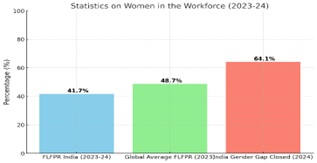
Key Statistics:
- Female Labour Force Participation Rate (FLFPR) in India (2023-24): 7%
- Global Average FLFPR (2023): 7%
- India’s Rank in Global Gender Gap Index (2024): 129th, with 64.1% of the gender gap closed
Labour Laws Protecting Women
Several labour laws in India aim to protect and promote women’s rights in the workplace:
- The Maternity Benefit Act, 1961 (Amended 2017): Provides 26 weeks of paid maternity leave and mandates creche facilities in establishments with 50 or more employees.
- The Sexual Harassment of Women at Workplace (Prevention, Prohibition, and Redressal) Act, 2013: Mandates the establishment of Internal Complaints Committees (ICCs) to address harassment complaints.
- The Equal Remuneration Act, 1976: Prohibits gender-based discrimination in wages and recruitment.
- The Code on Social Security, 2020: Extends benefits to informal sector workers, including maternity and healthcare provisions.
- The Factories Act, 1948: Ensures health, safety, and welfare measures for women in factories, including provisions for separate washrooms and restrooms.
Challenges Faced by Women Despite Legal Protections
Despite these legal protections, Indian women continue to face significant challenges in the workplace:
- Gender Pay Gap: Women earn significantly less than men for similar roles. In high-skill jobs, women earn about 34% less than men.
- Underrepresentation in Leadership: Only 18% of senior leadership roles in corporate India are held by women.
- Barriers to Workforce Re-entry: Many women face difficulties re-entering the workforce after maternity leave due to biases and a lack of flexible opportunities.
- Harassment and Safety Concerns: Sexual harassment remains underreported, and complaints in top private companies increased by 79% in the last five years.
- Informal Sector Vulnerabilities: Approximately 8% of women’s employment in India is in the informal economy, with minimal legal protections.
Recent Developments Addressing Women’s Workplace Challenges
India has made strides in addressing some of these challenges:
- Flexible Work Policies: Companies are introducing flexible working hours and remote work options post-COVID-19.
- Technology-Driven Solutions: Startups like SHEROES and Her Second Innings are providing platforms for flexible work opportunities.
- Judicial Interventions: Courts have expanded the scope of laws, such as extending maternity benefits to adoptive mothers and surrogates.
Global Best Practices and Lessons for India
India can draw inspiration from global best practices:
- Parental Leave Policies: Scandinavian nations offer shared parental leave to promote caregiving equity.
- Pay Equity Laws: Iceland and New Zealand mandate equal pay for equal work.
- Workplace Diversity Mandates: Germany enforces quotas for women in leadership roles.
Recommendations for Bridging Gaps in Implementation
To bridge the gap between legislation and implementation, India needs a multi-faceted approach:
- Strengthen Enforcement: Regular audits and stricter enforcement of existing laws like the Equal Remuneration Act.
- Extend Coverage: Labour law protections should encompass the informal sector.
- Support Workforce Re-entry: Introduce re-skilling programs and return-to-work initiatives for women after career breaks.
- Flexible Work Models: Encourage hybrid, remote, and part-time work options to cater to diverse needs.
- Raise Awareness: Conduct campaigns to educate women about their workplace rights.
- Incentivize Diversity: Offer tax benefits or recognition for organizations that prioritize gender diversity.
Addressing Workplace Challenges through Sensitization
Awareness and sensitization play a crucial role in fostering gender-inclusive workplaces. Employers must ensure training programs that address unconscious biases and emphasize equality. Policymakers must encourage diversity initiatives and provide platforms for open dialogue on gender issues.
Expanding the Role of Technology and Startups
Technology and entrepreneurship can serve as catalysts for inclusion. Platforms like SHEROES have demonstrated how digital tools can connect women with employment opportunities. Investment in women-centric startups and initiatives is essential for empowering marginalized groups.
Conclusion
Labour laws in India have undoubtedly advanced the cause of gender equality, yet significant challenges remain. Addressing these challenges requires concerted efforts from the government, corporate entities, and civil society. Bridging the implementation gap, extending protections to all sectors, and fostering workplace inclusivity are critical steps forward. Achieving true gender parity is not only a moral and social imperative but also an economic one. Empowering women through robust labour laws and inclusive policies will help unlock India’s full potential, ensuring a workforce that is both equitable and dynamic. With strategic reforms and collective action, India can aspire to build a future where gender equality in the workforce is a reality, not a distant goal.







