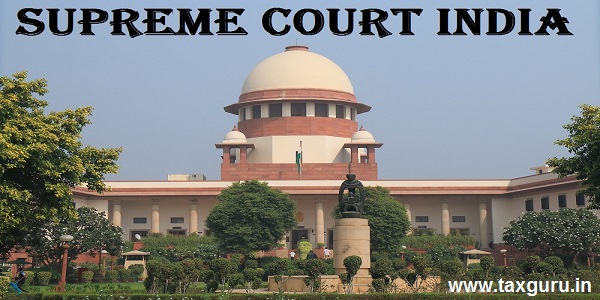
Prakash Industries Ltd. Vs Directorate of Enforecement (Delhi High Court)
Held that the impugned proceedings rest on the second chargesheet which bids us to restrict scrutiny upto 04 September 2003 and there is no allegation that any illegal monetary gains were derived or obtained as on 04 September 2003. Provisional order of attachment held illegal.
Facts-
The petitioners, Prakash Industries Ltd. (PIL), is stated to have applied for the grant of a mining lease on 25 May 1992. The Ministry of Coal is stated to have apprised PIL of its decision to permit it to explore the Hasdeo-Arand coal block for captive development. Accordingly, PIL is stated to have apprised the Ministry of it having undertaken preparatory steps for exploration of the Chotia block falling within the Hasdeo-Arand and Panchvahini coalfields. The application for allocation of the Chotia coal block remained pending for consideration till it was allocated to PIL in 2003.
In terms of first FIR, PIL was alleged to have diverted 2,27,000 tons of coal in the open market and thus earning illegal profits to Rs. 22.7 Crores.
Further from the disclosure made in the counter affidavit which has been filed in these proceedings, it is alleged that PIL mined coal in a wrongful manner between 2006-2015 and extracted coal valued at Rs.951.77 crores. It is further alleged that based on the revenues generated as a result of the said criminal activity, various properties were purchased by PIL acting through its related and sister concerns.
Being aggrieved, by the provisional order of attachment under the provisions of the Prevention of Money Laundering Act, 2002, the petitioner approached the HC.
Conclusion-
The impugned proceedings rest on the second chargesheet which bids us to restrict scrutiny upto 04 September 2003 when the allocation came to be made. The proceedings under the Act thus cannot travel beyond the gamut of that chargesheet. The allegations of money laundering would thus have to be cabined and fenced in upto that date. This since the offense is stated to have been committed and completed on 04 September 2003. Thus, any event or offense that may have been allegedly committed post that date would clearly fall beyond the pale of scrutiny for the purposes of adjudging the validity of the impugned proceedings.
This aspect represents a critical pinion in this case since the criminal activity on which the allegation of money laundering is constructed and raised is the allocation of the coal block. As noted above, there is no allegation that any illegal monetary gains were derived or obtained as on 04 September 2003. This coupled with the fact that the allocation itself would not represent proceeds of crime leads the Court to the unescapable conclusion that the impugned proceedings are rendered patently illegal.
FULL TEXT OF THE JUDGMENT/ORDER OF DELHI HIGH COURT
1. For the purposes of ease of reference, this decision has been divided under the following categories: –
A. INTRODUCTION
B. WHETHER PROCEEDINGS LIABLE TO BE DEFERRED
C. PRELIMINARY OBJECTION
D. THE BACKGROUND
E. SUBMISSIONS
F. MONEY LAUNDERING – A STAND ALONE OFFENSE
G. THE ARTICLE 20(1) ARGUMENT
H. AXIS BANK VS. SEEMA GARG
I. WHETHER ALLOCATION OF COAL IS PROCEEDS OF CRIME
J. THE IMPACT OF QUASHING OF THE FIRST CHARGESHEETK.
K. WHETHER ARTICLE 20(1) IN FACT VIOLATED
L. IMPUGNED ATTACHMENT AND EQUIVALENT VALUE
M. CONCLUSIONS
N. OPERATIVE DIRECTIONS
A. INTRODUCTION
These two writ petitions challenge proceedings initiated by the Directorate of Enforcement, the respondents herein, under the provisions of the Prevention of Money Laundering Act, 20021. The leading writ petition had come to be preferred at a time when a provisional order of attachment came to be made under the Act. The Court, by its order of 06 January 2022, entertained the writ petition and called upon the respondents to file their replies. On 03 March 2022, this Court took notice of the proceedings initiated by the Adjudicating Authority before whom the matter came to be placed for the purposes of confirmation of the provisional order of attachment. Taking note of the rival submissions, this Court on that date allowed the amendments proposed and passed the following detailed order: –
”CM APPL. 10948/2022 (for amendment of petition) in W.P.(C) 14999/2021
CM APPL. 10951/2022 (for amendment of petition) in W.P.(C) 15000/2021
The record reflects that the present petition was instituted at a stage when a Provisional Order of Attachment had come to be made in terms of the provisions of Section 5 of the Prevention of Money Laundering Act, 2002 [PMLA]. The submissions of respective parties were noticed in some detail in the order of 06 January 2022. Pursuant to that order, parties were directed to exchange pleadings. Counter and rejoinder affidavits have subsequently come to be filed. By way of the present application for amendment, the petitioners lay challenge to the notices issued under Section 8 of the PMLA by the Adjudicating Authority.
Learned counsel appearing for the Enforcement Directorate has, at the outset, submitted that in the fitness of things, the petitioners should be called upon to file their replies to the show-cause notices leaving it open to the Adjudicating Authority to decide all contentions which are urged before this Court.
While ordinarily that may have sufficed, this Court notes that, by the order of 06 January 2022, the challenge to the initiation of proceedings under the PMLA on jurisdictional grounds was duly entertained. The Court had taken notice of the challenge mounted on the ground that the offenses which are alleged to have been committed, were not enumerated as a ―scheduled offense‖ at the relevant point of time. In that view of the matter and since the Court has already taken note of the challenge raised, it would be inappropriate to grant liberty to the Adjudicating Authority to independently rule on the questions which are raised here.
The amendments essentially assail further proceedings and steps taken pursuant to the Provisional Order of Attachment. In view of the aforesaid, the amendments as proposed by way of the present application are allowed.
The Court notes that the amended writ petition already exists on the record.
The application shall stand disposed of.
W.P.(C) 14999/2021 & CM APPLs. 47329/2021, 553/2022, 10949/2022
W.P.(C) 15000/2021 & CM APPLs. 47331/2021, 547/2022, 10952/2022
Learned counsel representing the Enforcement Directorate prays for and is granted time to file reply to the added pleadings taken.
For the purpose of considering the prayer for interim relief, the Court takes note of the contentions recorded in the earlier order of 06 January 2022 as well as the submission of Mr. Sibal, learned Senior Counsel appearing for the petitioners, who submits that the offences of which the petitioners are charged did not even form part of scheduled offences as contemplated under the PMLA. Additionally, the Court notes that the recordal of satisfaction by the Adjudicating Authority, prima facie, does not appear to satisfy the requirements of Section 8 of the PMLA. The matter requires consideration.
Till the next date of listing, there shall be stay of further proceedings before the Adjudicating Authority.
Let this matter be posted again on 31.03.2022.‖
3. The aforesaid order was taken in appeal by the respondents in terms of LPA Nos. 179/2022 and 180/2022 which were dismissed by the Court on 22 March 2022 in the following terms: –
”1. Aggrieved by the order dated 3rd March 2022 passed by the learned Single Judge in W.P.(C) Nos. 1499/2021 and 1500/2021, staying the proceedings before the adjudicating authority, the appellant has preferred the present appeals.
2. After some arguments, learned counsel for the appellant, on instructions, confines his relief only to the extent of the observations made in para 3 of the order dated 3rd March 2022 as the apprehension of the appellant is that this direction will be treated as a precedent in all other cases and wherever there is a challenge to the order of the adjudicating authority, it would be deemed to be inappropriate that the adjudicating authority adjudicates the matter.
3. Relevant portion of the impugned order passed by the learned Single Judge is as under:-
“… In that view of the matter and since the Court has already taken note of the challenge raised, it would be inappropriate to grant liberty to the Adjudicating Authority to independently rule on the questions which are raised here”.
4. A perusal of the sentence used in the impugned order clearly shows that the same was passed in view of the grounds urged by the respondents and the particular facts of the case in view and it is an issue to be decided by the Court, it would not be proper to grant liberty to the adjudicating authority to independently rule on the questions which was raised before this Court. It is thus evident that the directions have been passed clearly in the facts of the present cases.
5. With the observations above, learned counsel for the appellant does not press the appeals any further.
6. Appeals and applications are disposed of.
7. Order be uploaded on the website of this Court.”

4. Subsequently and upon parties exchanging pleadings, these two writ petitions with consent were put down for final hearing. Before proceeding to the merits of the questions which fall for consideration and since the respondents have raised certain preliminary objections to the maintainability of the writ petitions as well as of the Court proceeding further, it would be apposite to notice the following salient facts.
5. Proceedings under the Act emanate from an allocation of the Chotia coal block in favour of Prakash Industries Limited, the petitioners in the lead matter2. The aforesaid allocation came to be made in its favour on 04 September 2003. The allocation as made ultimately came to be cancelled in terms of the judgment of the Supreme Court in Manohar Lal Sharma vs. Principal Secretary3. However, and much before that verdict came to be rendered, CBI on 07 April 2010 registered FIR No. RC/AC2/2010/A0001 alleging misrepresentation by PIL in order to obtain the coal allocation as well as diversion of coal extracted from the said block. The Special Judge CBI taking cognizance of the chargesheet which was submitted on conclusion of investigation, framed charges against PIL and other accused in CC No. 3/20124. The aforesaid chargesheet came to be challenged by PIL before this Court which in terms of its judgment of 05 September 2014 quashed the FIR as well as the consequential chargesheet which was submitted. That judgment rendered by this Court presently forms subject matter of challenge before the Supreme Court in SLP (Crl.) 2576/2015. Although that special leave petition remains pending on the board of the Supreme Court as on date, the judgment of this Court has neither been stayed nor placed in abeyance.
6. The record further reflects that subsequent to the allocation of the coal block in favour of PIL coming to be cancelled in terms of the directions issued in Manohar Lal Sharma, a second FIR came to be registered by CBI on 02 December 2016 numbered as RC No.221/2016/E0035. On conclusion of investigation, CBI proceeded to file a chargesheet numbered as 1/20225 before the competent court on 23 January 2020 alleging commission of offence under Section 120B read with Section 420 of the Indian Penal Code6. The allegation in the second chargesheet essentially is that PIL submitted false and forged documents in order to obtain the allocation of the coal block in question, misrepresented facts pertaining to proceedings pending before the Board for Industrial and Financial Reconstruction and thus fraudulently and dishonestly obtained the coal allocation. Upon the competent court taking cognizance on the aforesaid chargesheet, PIL instituted Special Leave to Appeal (Crl.) No. 656657/2022 on which the Supreme Court by an order of 06 May 2022 has stayed further proceedings before the Trial Court. It is on submission of the second chargesheet that the impugned proceedings came to be initiated by the respondents.
B. WHETHER PROCEEDINGS LIABLE TO BE DEFERRED
7. Mr. Raju, learned ASG, has firstly submitted that proceedings on the present writ petitions be stayed and / or deferred till such time as the Supreme Court which is seized of a batch of matters pertaining to the validity of various provisions of the Act renders judgment. The Court was referred to the order dated 15 March 2022 passed on Special Leave to Appeal (Crl.) No. 4634/2014 and other connected matters. Mr. Raju has submitted that judgment on the aforesaid batch of matters has already been reserved and consequently till such time as the aforesaid batch is decided, further proceedings on the present writ petitions may be deferred. Mr. Raju has, in support of the aforesaid submission, drawn the Court‘s attention to the various questions which stand raised before the Supreme Court on behalf of respective parties and submits that since the issues which are being considered by the Supreme Court are identical to those which are raised here, judicial propriety would warrant these writ petitions being called for consideration only after judgment has been rendered by the Supreme Court. Mr. Raju has also invited the attention of the Court to the written submissions submitted by him before the Supreme Court as well as the principal issues which were drafted and submitted by the learned Solicitor General of India in those proceedings.
8. The learned ASG in support of his submissions has also relied upon certain decisions to contend that in similar situations, courts have deferred proceedings awaiting a final verdict being handed down by the Supreme Court. Those decisions are noticed hereinafter. The decision in K. Trivedi & Sons Vs. State of Gujarat7 was dealing with a case where the High Court had dismissed writ petitions challenging the constitutional validity of a particular statutory provision while an identical challenge was pending before the Supreme Court. It was in that backdrop that the Supreme Court observed that since an identical question was engaging the attention of that Court, the High Court should have deferred hearing on the writ petitions rather than dismissing the same and directing parties to approach the Supreme Court. The order of Deepak Talwar8 which was cited pertained to a matter where prayers (b) and (c) and the challenge to the vires of a provision was identical to a challenge pending before the Supreme Court. In Asst. Director, Directorate of Enforcement9 again the Court found that the proposed issues which were filed in proceedings before the Supreme Court were identical to those which arose in the appeals laid before this Court.
9. Having conferred its thoughtful consideration on the aforesaid contention, the Court finds itself unable to accede to the submission of Mr. Raju for the following reasons. It may, at the outset, be noted that the prayer for deferral of proceedings on the present writ petitions was raised for the first time in terms of the counter affidavit which came to be filed by respondents on 16 April 2022. When the amendment application came to be allowed by the Court in terms of its order of 03 March 2022, parties had agreed for the matter being placed for final disposal after exchange of pleadings. It was on the aforesaid understanding that the writ petitions were placed for final arguments on 25 April 2022 at 3.30 pm. However and notwithstanding the above, in order to evaluate the correctness of submission raised by Mr. Raju it would be appropriate to briefly note the principal arguments which were addressed by Mr. Sibal, learned Senior Counsel appearing for the writ petitioners, and compare the same with the issues which are raised before the Supreme Court in the pending batch.
10. The Court notes at the outset that the batch of matters which are pending before the Supreme Court essentially question the validity of the various provisions of the Act. It is not disputed by learned counsels appearing for respective parties that the aforesaid batch of matters essentially call in question the vires of various provisions of the Act. The Court however finds that neither the constitutional validity of the Act nor any of its provisions is called in question in these two writ petitions.
11. Sibal has principally addressed the following submissions. It was contended that undisputedly the second chargesheet relates to events extending only upto the date of allocation of the coal block and thus restricted upto 04 September 2003. This according to Mr. Sibal is manifest from a reading of paragraphs 16.57 and 16.59 of the second chargesheet. Mr. Sibal has urged that the allocation of the coal block cannot fall within the ambit of the expression ”proceeds of crime‖ as defined in Section 2(1)(u) of the Act. Learned Senior Counsel further contended that the allocation cannot possibly be considered or understood as representing property derived or obtained as a result of criminal activity relating to a schedule offence. In view of the aforesaid, it was the submission of Mr. Sibal that the proceedings initiated under the Act are wholly without jurisdiction. It was further contended that activities undertaken by the petitioners post 04 September 2003 including the extraction of coal and its alleged diversion were activities and events which formed subject matter of the first chargesheet. It was in the aforesaid backdrop that Mr. Sibal argued that once that chargesheet had come to be quashed, no proceedings could have been validly initiated under the Act. In any case and without prejudice to the above, Mr. Sibal submitted that since undisputedly the impugned proceedings emanate from the second chargesheet and stand restricted to events upto 04 September 2003 only, and since the allocation of coal cannot constitute proceeds of crime, the writ petitions are liable to be allowed on this short ground alone. It was further urged by Mr. Sibal that admittedly the coal block had came to be allocated on 04 September 2003. It was pointed out that the Act itself came to be enforced subsequently on 01 July 2005. The provisions of Section 120B and 420 of the Indian Penal Code10 came to be included as scheduled offences only on 01 June 2009. In view of the aforesaid facts, Mr. Sibal, learned Senior Counsel, as well as Mr. Chawla, learned counsel, appearing in the connected writ petition contended that any penal action or attachment under the Act for acts of alleged money laundering which occurred prior to 01 July 2005 would be wholly illegal and violative of Article 20(1) of the Constitution. Mr. Chawla, learned counsel, also urged that since the provisions of Section 120B and 420 of the Penal Code came to be included in the Schedule only on 01 June 2009, those properties which were acquired prior to that date cannot be subjected to attachment or confiscation under the Act. It was additionally argued that, in any case, since the alleged criminal activities which occurred post 04 September 2003 cannot form the basis for any action under the Act consequent to the first chargesheet having been quashed, properties which had been purchased post 04 September 2003 also cannot be attached or confiscated. Mr. Chawla additionally also addressed submissions in the backdrop of the decision rendered by a Division Bench of the Punjab and Haryana High Court in Seema Garg Vs. Deputy Director11.
12. The aforesaid submissions may be contrasted with the issues which were argued and are pending consideration before the Supreme Court. The submissions of the learned Solicitor General of India who in his note has formulated the issues which arise in that batch are extracted hereinbelow:-
“1. Whether the offence under the PMLA is a cognizable or a non cognizable offence particularly in view of the Explanation inserted in 2019?
2. Whether the procedure contemplated under all provisions of Chapter XII of the Code of Criminal Procedure, 1973 is required to be followed while commencing and continuing investigation under the Prevention on Money Laundering Act, 2002?
3. Whether the twin conditions for grant of bail as provided for in Section 45 of the Prevention of Money Laundering Act, 2002, as it stands amended, is unconstitutional? Whether the amendment takes away the basis of the judgment in (2018) 11 SCC 1 and revives the twin conditions for grant of bail?
4. In case it is held that the twin conditions stand revived, whether the judgment in (2018) 11 SCC 1, holding that the twin conditions cannot apply to anticipatory bails, lays down the correct proposition of law?
5. Whether the provisions concerning the burden of proof under PMLA violate fundamental rights of the accused persons?
6. What are the contours of the offence under Section 3 of the PMLA? Does the Explanation to Section 3 of PMLA (added by an amendment in 2019) expand the meaning of the offence under Section 3 [as it stood prior to the amendment] and if so, is it permissible to do so?
7. Whether the filing of a chargesheet/complaint/FIR in the predicate offence is a prerequisite for an exercise of power of arrest under the PMLA? Can money laundering not be a standalone offence in the context of Section 3 read with Section 2(u) of the PMLA?
8. Whether the reliance on the statements recorded by the officers of the Enforcement Directorate during the investigation in judicial proceedings, violate Article 20[3] of the Constitution and are inadmissible in light of section 25 of the Evidence Act?
9. Whether the provisions concerning attachment of property under the PMLA violates the right to property under Article 300A?
10. Whether the PMLA can be applied to acts which occurred prior to the addition of offence under the Schedule to the said Act?
11. Whether a writ court can grant blanket no coercive steps order without any factual foundation being pleaded/being examined merely because constitutional validity of certain provisions has been challenged?
12. Whether the Sections 17 and 18 of PMLA, as amended, relating to search and seizure are unconstitutional and void?
13. Is the power of arrest conferred under Section 19 of PMLA violative of Articles 14 and 21 of the Constitution?
14. Whether the offence of money laundering can continue after the predicate offence has taken place? Can the offence of money laundering be committed even if the predicate or scheduled offence was not a scheduled offence on the date when the scheduled offence was committed?‖
13. Raju in his written submissions tendered before the Supreme Court has essentially dealt with the challenge laid by the petitioners there to the provisions of the Act contending that it is an ex post facto legislation and thus violative of Article 20 of the Constitution. Those written submissions also allude to the contention of the Directorate that the offense created under the Act is in the nature of a ―continuing offence” and thus the Act cannot be said to have retrospective application. It is in the aforesaid backdrop that it was urged that if the basis for proceedings be a scheduled offence which is committed before the enactment of the Act or before its addition as an offence in the Schedule thereto, that would not mean that the Act operates retrospectively.
14. As this Court evaluates the written submissions tendered by Mr. Raju before the Supreme Court as well as the issues formulated by the learned Solicitor General of India and compares it with the principal arguments which were addressed on these two writ petitions, it finds that there is no commonality between the issues which are raised here and the challenge to the constitutional validity of the provisions of the Act. Whether an allocation of coal can be viewed as ―proceeds of crime” is not a question which can be said to be even remotely engaging the attention of the Supreme Court. Similarly, the question whether the allocation could be treated as property derived or obtained from criminal activity also does not appear to be an issue raised for the consideration of the Supreme Court. The impact, if any, of the second chargesheet being restricted upto 04 September 2003 on the proceedings impugned in these two writ petitions is again an issue which would have to be adjudged on the facts obtaining in these two writ petitions. A decision on that issue cannot possibly be contended to be connected in any manner with the submissions addressed either by Mr. Raju or the learned Solicitor General of India before the Supreme Court. The arguments addressed by Mr. Sibal as well as Mr. Chawla essentially turn and rest on the facts leading to the filing of the present petitions, the past history of litigation inter partes and the jurisdiction of the Adjudicating Authority to proceed under the Act. In fact the submissions advanced at the behest of the petitioners proceeded on the assumption that the provisions of the Act were valid.
15. As noted hereinabove, these writ petitions do not call in question the constitutional validity of any provision of the Act. The writ petitions as well as the submissions addressed thereon proceed on the basis of the submission that an allocation of a coal block cannot constitute proceeds of crime and that the proceedings impugned here are wholly illegal and arbitrary in light of the facts noticed hereinabove as well as the quashing of the first chargesheet. For the aforesaid reasons, the submission as addressed by Mr. Raju in this respect is negatived.
C. PRELIMINARY OBJECTION
16. The respondents then raised a further preliminary objection and contended that since the writ petitions only assail a show-cause notice issued under the Act, the High Court should refrain from entertaining that challenge leaving it open to the petitioners to raise all objections before the Adjudicating Authority. Mr. Raju urged that courts have consistently taken the view that a challenge at the stage of a show-cause notice should not be entertained by High Courts while exercising their powers under Article 226 of the Constitution. It was further contended that the Act creates a comprehensive statutory mechanism for adjudication of all questions that are raised here before the Adjudicating Authority. Those provisions according to Mr. Raju lay in place an efficacious statutory alternative remedy and thus the writ petitioners should be relegated to follow the procedure as prescribed under the Act. Mr. Raju in support of his submissions has drawn the attention of the Court to the following decisions and submits that the writ petitions are liable to be dismissed and the petitioners directed to raise all available challenges before the Adjudicating Authority. To buttress the aforesaid submission, learned ASG placed reliance on the following decisions, which are as follows:-
In Special Director v. Mohd. Ghulam Ghouse12on the question of maintainability of a writ petition against a show cause notice, the Supreme Court held as follows:
“5.This Court in a large number of cases has deprecated the practice of the High Courts entertaining writ petitions questioning legality of the show-cause notices stalling enquiries as proposed and retarding investigative process to find actual facts with the participation and in the presence of the parties. Unless the High Court is satisfied that the show-cause notice was totally non est in the eye of the law for absolute want of jurisdiction of the authority to even investigate into facts, writ petitions should not be entertained for the mere asking and as a matter of routine, and the writ petitioner should invariably be directed to respond to the show-cause notice and take all stands highlighted in the writ petition. Whether the show-cause notice was founded on any legal premises, is a jurisdictional issue which can even be urged by the recipient of the notice and such issues also can be adjudicated by the authority issuing the very notice initially, before the aggrieved could approach the court. Further, when the court passes an interim order it should be careful to see that the statutory functionaries specially and specifically constituted for the purpose are not denuded of powers and authority to initially decide the matter and ensure that ultimate relief which may or may not be finally granted in the writ petition is not accorded to the writ petitioner even at the threshold by the interim protection granted.
6. In the instant case, the High Court has not indicated any reason while giving interim protection. Though, while passing interim orders, it is not necessary to elaborately deal with the merits, it is certainly desirable and proper for the High Court to indicate the reasons which have weighed with it in granting such an extraordinary relief in the form of an interim protection. This, admittedly, has not been done in the case at hand.
7. While issuing notice on 7-7-2003, this Court had granted interim stay of the impugned interim order. The respondent had entered appearance and we have heard the learned Senior Counsel on either side. In the fitness of things, taking into account the above circumstances, we dispose of the appeal with a direction that the proceedings emanating from the show-cause notice shall be continued, but the final order passed pursuant thereto shall not be communicated to Respondent 1 (writ petitioner) without leave or further orders of the High Court. The writ petition shall be disposed of on merits in accordance with law. Any observation made in this appeal shall not be construed to be expression of any opinion on the merits of the matter pending before the High Court. Since the controversy is of a very limited as well as serious nature, the High Court may explore the possibility of early disposal of the writ petition. The appeal is allowed to the extent indicated with no order as to costs.‖
Learned ASG then referred to the decision of Farida Begum Biswas vs. Union of India13where a similar view was taken, and more particularly to the following passages of that decision:-
“14. In the instant case, the petitioners have received show cause notice dated 19.06.2015 under Section 8 of the PMLA in O.C. No. 501/2015 and the provisional attachment order dated 21.05.2015 under Section 5 of the PMLA issued by the respondent No. 2. The action of coming to this Court is premature and therefore, this Court is of the view that since the petitioners have effective and efficacious remedy under PMLA, necessitating institution of the petition by invoking extraordinary jurisdiction of this Court is not appropriate at this stage.
If this Court were to enter into the merits of this case at this stage, it would amount to scuttling the statutorily engrafted mechanism i.e. PMLA.”
Mr. Raju then relied upon M/s SRJ Infratech Pvt Ltd and Ors vs. Director Directorate of Enforcement 14where the Supreme Court observed as under:-
“6. In the opinion of this Court, mixed questions of fact and law are involved in the present case. Moreover, as a show cause notice has already been issued as to why the provisional attachment order be not confirmed, this Court is of the view that the ends of justice would be met if the petitioners are permitted to take all their pleas and defences in the adjudication proceedings, which are pending under Section 8 of the PML Act.”
17. While it is true that Courts have on more than one occasion refrained from entertaining a writ petition at the stage of issuance of a show cause notice, the principle enunciated in the various judgments rendered on the question is that a challenge at the stage of the issuance of a show-cause notice should not “ordinarily” be entertained. However, those very decisions have also carved out the exceptions in which such a challenge would be sustainable. The Court takes note of the following principles as were enunciated in the celebrated and oft cited decision of the Supreme Court in Whirlpool Corporation Vs. Registrar of Trademarks15:-
“14. The power to issue prerogative writs under Article 226 of the Constitution is plenary in nature and is not limited by any other provision of the Constitution. This power can be exercised by the High Court not only for issuing writs in the nature of habeas corpus, mandamus, prohibition, quo warranto and certiorari for the enforcement of any of the Fundamental Rights contained in Part III of the Constitution but also for “any other purpose.
15. Under Article 226 of the Constitution, the High Court, having regard to the facts of the case, has a discretion to entertain or not to entertain a writ petition. But the High Court has imposed upon itself certain restrictions one of which is that if an effective and efficacious remedy is available, the High Court would not normally exercise its jurisdiction. But the alternative remedy has been consistently held by this Court not to operate as a bar in at least three contingencies, namely, where the writ petition has been filed for the enforcement of any of the Fundamental Rights or where there has been a violation of the principle of natural justice or where the order or proceedings are wholly without jurisdiction or the vires of an Act is challenged. There is a plethora of case-law on this point but to cut down this circle of forensic whirlpool, we would rely on some old decisions of the evolutionary era of the constitutional law as they still hold the field.
16. Rashid Ahmed Municipal Board, Kairana [AIR 1950 SC 163 : 1950 SCR 566] laid down that existence of an adequate legal remedy was a factor to be taken into consideration in the matter of granting writs. This was followed by another Rashid case, namely, K.S. Rashid & Son v. Income Tax Investigation Commission [AIR 1954 SC 207 : (1954) 25 ITR 167] which reiterated the above proposition and held that where alternative remedy existed, it would be a sound exercise of discretion to refuse to interfere in a petition under Article 226. This proposition was, however, qualified by the significant words, ―unless there are good grounds therefor“, which indicated that alternative remedy would not operate as an absolute bar and that writ petition under Article 226 could still be entertained in exceptional circumstances.
17. A specific and clear rule was laid down in State of U.P. Mohd. Nooh [AIR 1958 SC 86 : 1958 SCR 595] as under:
“But this rule requiring the exhaustion of statutory remedies before the writ will be granted is a rule of policy, convenience and discretion rather than a rule of law and instances are numerous where a writ of certiorari has been issued in spite of the fact that the aggrieved party had other adequate legal remedies.”
18. This proposition was considered by a Constitution Bench of this Court in V. Venkateswaran, Collector of Customs v. Ramchand Sobhraj Wadhwani [AIR 1961 SC 1506 : (1962) 1 SCR 753] and was affirmed and followed in the following words:
“The passages in the judgments of this Court we have extracted would indicate (1) that the two exceptions which the learned Solicitor General formulated to the normal rule as to the effect of the existence of an adequate alternative remedy were by no means exhaustive, and (2) that even beyond them a discretion vested in the High Court to have entertained the petition and granted the petitioner relief notwithstanding the existence of an alternative remedy. We need only add that the broad lines of the general principles on which the Court should act having been clearly laid down, their application to the facts of each particular case must necessarily be dependent on a variety of individual facts which must govern the proper exercise of the discretion of the Court, and that in a matter which is thus pre-eminently one of discretion, it is not possible or even if it were, it would not be desirable to lay down inflexible rules which should be applied with rigidity in every case which comes up before the Court.
18. The jurisdictional grounds on which the writ petitions were initially entertained were noticed in the orders of 06 January 2022 and 03 March 2022. It becomes pertinent to note that the writ petition was originally entertained at a time when a provisional order of attachment had come to be issued. It was at that stage that the Court had issued notice and called upon the parties to exchange pleadings. The amendment applications additionally laid challenge to the notice issued by the Adjudicating Authority initiating proceedings under Section 8 of the Act. The challenge to the initiation of those proceedings by the Adjudicating Authority was duly noticed by the Court in its order of 03 March 2022. The objection of the respondents addressed on identical lines was duly noticed and negatived. It becomes further relevant to note that the order of 03 March 2022 was challenged by the respondents in terms of LPA No. 179-180/2022 which came to be dismissed by a Division Bench of the Court in terms of its order dated 22 March 2022.
19. The Court has already detailed the challenge raised on jurisdictional grounds by the petitioners against the proceedings initiated under the Act. In its order of 03 March 2022, the Court has recorded reasons which justified the writ petition being entertained notwithstanding the objection of the respondents that the petitioners should be relegated before the Adjudicating Authority and for those questions being left for its decision in the first instance. The aforesaid order has undisputedly attained finality consequent to the letters patent appeal coming to be dismissed. In view of the aforesaid, the objection noticed above is also rejected.
D. THE BACKGROUND
20. Before proceeding to deal with the merits of the matter, the following salient facts may be noticed. PIL is stated to have applied for the grant of a mining lease on 25 May 1992. Its application is stated to have been taken up for consideration by the Screening Committee while dealing with other proposals relating to captive mining by power generating companies in its meeting held on 14 July 1993. According to the petitioners, PIL installed a Sponge Iron Plant at Chotia in the State of Chhattisgarh with a production capacity of 1.5 LTPA on 01 November 1993. On 30 September 1996, the Ministry of Coal is stated to have apprised PIL of its decision to permit it to explore the Hasdeo-Arand coal block for captive development. Pursuant to the aforesaid communication, PIL is stated to have apprised the Ministry of Coal of it having undertaken preparatory steps for exploration of the Chotia block falling within the Hasdeo-Arand and Panchvahini coalfields. The application for allocation of the Chotia coal block remained pending for consideration till it was allocated to PIL on 04 September 2003. On 07 April 2010, the first FIR came to be registered. That FIR alluded to acts of PIL which were alleged to amount to a misrepresentation with respect to its captive activity, submission of false and incorrect information in order to obtain allotment of the coal block and diversion of coal extracted from that block in the open market. In terms of that first FIR and chargesheet, PIL was alleged to have diverted 2,27,000 tons of coal in the open market and thus earned illegal profits amounting to Rs. 22.7 crores. The allegations forming subject matter of the first chargesheet were succinctly noticed by the Court in its judgment of 05 September 2014 as follows:-
“3. During the course of hearing, the facts adverted to by learned Senior Counsel for petitioners as culled out from the charge-sheet are as under:
I. M/s. Prakash Industries Ltd. (PIL) referred to as AccusedNo.4 installed a sponge iron plant in the year 1993 with an annual production capacity of 1,50,000 MT per annum with one functioning kiln. (Para-17.3 of the Charge-Sheet at page-l46 of Vol.I refers)
II. In the year 1996, accused No.4-PIL added another kiln increasing the annual production capacity to 2,50,000 MT per annum. Therefore, in the year 1996, the production capacity of Accused No.4-PIL was 4,00,000MTper annum.
III. The third kiln having an annual production capacity 0f 2,00,000 MT per annum was installed in the year So, the total capacity of accused No.4-PIL in the year 2009 was 6,00,000 MT per annum.
IV. For the purpose of expansion of sponge iron capacity from 4,00,000 MT per annum to 8,00,000 MT per annum, the Ministry of Coal in the year 2003 allotted Chotia Coal Block to accused No.4-PIL for developing third and fourth kiln. Infact, the kiln No.3 was set up in March 2009 and Kiln No.4 was set by April 2010.
V. While the capacity of accused No.4-PIL was being enhanced, PIL was getting linkage coal which was stopped in January 2007 on its request.
VI. In the year 2006, Ministry of Coal, advertised for allocation of 38 coal blocks for captive use. PIL applied for allocation of Utkan Coal Block and Vijay Central Coal Block (Para-17.4 of the Charge Sheet at Page-147 refers). The application is of January 12, 2007. (at Page 210 in Vol. II).
VII. The document dated 08.10.2009 of the office of the Coal Controller specifically states that Chotia Coal Block was allotted to PIL on September 4,2003 to meet the additional coal requirement for expansion of annual capacity of sponge iron project at Champa from the existing 4,00,000 MT P.A. to 8,00,000 MT P.A. i.e. additional 4,00,000 MT P.A. capacity. (Para-I at page – 367 of Vol.II) [document D-46 (Annexure P-20) refers].
VIII. The afore-referred application reflects that PIL at that point of time i.e. in the year 2006 had an annual production capacity of 4, 00, 000 MT P.A. but had been allocated coal for the increased capacity upto 8,00,000 MT P.A. (at pages-215 and 216 of Vol.II)
IX The aforesaid Application which seeks allocations of Vijay Central beyond the capacity of 8,00,000 MT P.A. clearly states that the capacity in the year 2006 was only 4,00,000 MT P.A. whereas the application also stipulates that its capacity had already been increased to 8, 00, 000 MT P.A. for which coal allocation had already been done from Chotia Coal Block.
X. The above-said Application was forwarded to the Ministry of Steel for examination and recommendation. (Para-17.4 at page-147 of Charge-Sheet refers).
XI. Ministry of Steel vide OM dated December 6, 2007recommended allocation in favour of PIL for Vijay Central Coal Block showing its existing capacity as of 8, 00, 000 MTPA for the proposed additional 12,00,000MTPAfor an over all capacity of 20,00,000 MTPA (Para-17.5 at page-147 of Charge-Sheet refers).
XII. The Screening Committee in meetings of 7th & 8th December, 2008 requested applicants to make individual presentations and on July 3, 2008 met to finalize all recommendations pending with them. The recommendation for allocation of additional 12,00,000 MT P.A. by Ministry of Steel in favour of PIL from Vijay Central Coal Block was cleared. (Para-17.6 atpage-147 of Charge-sheet refers).
XIII. However, before the final orders of allocation were made, M/s. SKS Ispat Power Ltd (SKS) on July 7, 2008 questioned the capacity of PIL as disclosed and accused PIL of inflated capacity and production figures to Secretary Coal. This representation was forwarded· in July 8, 2008 to Ministry of Steel. [Para-17.8 of Charge-sheet on page-148 and D-7(Annexure P-9) at page 250 refers].
XIV. On July 9, 2008 Ministry of Steel sought fresh production figures from PIL for the last 6 months in respect of its sponge iron plant at Champa. (Para-17. 9 at page 148 of Charge-Sheet at page 254 refers).
XV. That PIL responded by letter dated 10.07.2008 under the alleged signatures of Accused No.3-A. K. Chaturvedi, petitioner No. I herein giving excess production figures of sponge iron. Alongwith this letter ER Forms, Surveyors Report and CA‘s certificates were purportedly enclosed. The Ministry of Steel after examining the representation of SKS forwarded it to the Ministry of Coal. (Para-17.9 on page 148 of Charge-Sheet refers).
XVI. The Forensic Report (at page 340) revealed this document of 1O’ July, 2008 does not bear the signatures of A.K. Chaturvedi. However, the Forensic Report states that documents dated 10.07.2008 and 23.07.2008 are on the Letter Head of PIL and the source of origin of the Paper in the two letters is the same. (Para-17.12 on page 150 of Charge-Sheet refers).
XVII. Another representation dated 16.07.2008 was received by Ministry of Steel from SKS and the Steel Ministry sought comments from the Ministry of Coal.
XVIII. On 23.07.2008 PIL responded under the signatures of A.K. Chaturvedi and forwarded copies of ER Forms which showed the production figures at page 153 in Vol.I as reflected in Column II of the table set out therein. (Para-17.11 on page 150 of charge-sheet refers).
XIX. That pursuant to the complaints of SKS and the documents of July 10 and July 23, 2008 the Ministry of Coal and Ministry of Steel held a meeting on July 25,2008, the Minutes of which dated September 1, 2008 were forwarded to the Ministry of Steel by way of furnishing clarifications. Ministry of Coal decided to undertake a spot verification of the production capacity of PIL and directed G.K. Basak Executive Secretary JPC on September 2, 2008 to visit the Factory Premises of PIL and assess its production capacity and forward a report to the Ministry of Steel. (Para-17.13 on page 150 of charge-sheet refers).
XX. A spot Inspection at PIL site was conducted by accused-Mr. G.K. Basak and Mr. Soumen Chatterjee on September 4, 2008. They submitted a verification report on September 5, 2008 and forwarded it to the Ministry of Steel. The Inspection Report indicated that the PIL had four kilns and annual installed capacity of sponge iron at 7.2 lacs MT P.A. The visits and the report of G.K. Basak and Soumen Chatterjee Accused No.1 & 2 are not disputed. (Para-17.14 on page 150 of Charge-Sheet refers).
XXI. The minutes of the joint meeting dated July 25, 2008 (at page 348 in Vol.II), reflect that in the year 2008, both the Ministry of Steel and Ministry of Coal were aware that the then current capacity for production of sponge iron was 6, 00, 000 MT P.A. and that the allege false representation of capacity by PIL is not substantiated. (at Para 6 page 349 in Vol. II refers).
XXII. On further complaints, clarification was sought from AccusedNo.1 &2 on the contents of their spot verification report and they substantially reiterated their position on production capacity of PIL.
XXIII. The crux of the prosecution is that the quantities of sponge iron manufactured by PIL as reflected in the attested copies of ER-1 Forms and in the report of Basak and Soumen Chatterjee on September 5, 2008 are inconsistent with the data forwarded by PIL along with ER-1 Forms in their letter dated July 23, 2008. In fact, according to the charge-sheet, there are no ER-1 forms in original as copies thereof were submitted to the Ministry of Steel along with the alleged communication of 10th July, 2008. The original ER-I Forms are in fact submitted to the Ministry of Steel by PIL on 23rd July, 2008. This fact is admitted by the prosecution Pg 150 of paper book refers).”
The prosecution case on conspiracy angle qua petitioners is based on the following two elements: –