Read all latest corporate law news, articles, notifications & circular on Taxguru.in. News on laws related to DIPP Labour Minimum Wages Gratuity PF Arbitration Negotiable instrument Essential Commodities SRFAESI Competition Act Corporate Law
Corporate Law : The article explains visa requirements, documentation, and compliance obligations for foreign nationals seeking medical treatment ...
Corporate Law : The court ruled that using a registered trademark as a keyword to divert online traffic can amount to trademark infringement. The ...
Corporate Law : LMPC Registration is mandatory for manufacturers, packers, and importers of pre-packaged commodities. The key takeaway is that reg...
Corporate Law : The rise of GDPR, CCPA, and India’s DPDP Act is opening significant opportunities for Chartered Accountants. The key takeaway is...
Corporate Law : The document compiles 85 recent developments across financial regulation, anti-corruption enforcement, corporate investigations, a...
Corporate Law : The Competition Commission of India has proposed amendments to address administrative and procedural issues identified during impl...
Corporate Law : The Ministry of Corporate Affairs highlighted that the IBC resolution process facilitated creditor recoveries exceeding ₹4 lakh ...
Corporate Law : The IBBI has announced contractual vacancies for Research Associates and Consultants in law and business management disciplines. T...
Corporate Law : PFRDA has proposed major reductions in grievance resolution timelines under the NPS framework. The draft aims to improve accountab...
Corporate Law : The Supreme Court upheld joint insolvency proceedings against two interconnected real estate companies due to common management an...
Corporate Law : The Supreme Court ruled that Section 7 of the Prevention of Corruption Act covers attempts to obtain undue advantage through subor...
Corporate Law : The Tribunal held that for a guarantee payable on demand, limitation begins from the date the guarantee is invoked and not from th...
Corporate Law : The Authority found that a pre-selected donation mechanism added charges unless consumers actively opted out, impairing informed c...
Corporate Law : CCPA held that a subscription renewal interface using the phrase Accept Risk amounted to multiple prohibited dark patterns, includ...
Corporate Law : The Supreme Court quashed the removal of a Mathadhipati after finding that relied-upon documents were not properly supplied and th...
Corporate Law : FSSAI has provided a transition period until 1 July 2027 for compliance with new vegan logo specifications. The amendment focuses ...
Corporate Law : FSSAI has amended the Food Safety and Standards (Prohibition and Restrictions on Sales) Regulations, 2011 by removing clause (8) o...
Corporate Law : The case involved a broker implementing substantial shareholding changes without obtaining IRDAI's prior approval as required by r...
Corporate Law : The regulator held that agreements lacking clear fee provisions undermined contractual clarity and regulatory compliance. A penalt...
Corporate Law : The First Appellate Authority held that details of the official who uploaded CIRP documents were exempt from disclosure under Sect...
NCLAT held that invoices with default dates beyond the Section 10A period cannot be barred under the COVID suspension provision. The ₹2.36 crore claim was restored for fresh consideration.
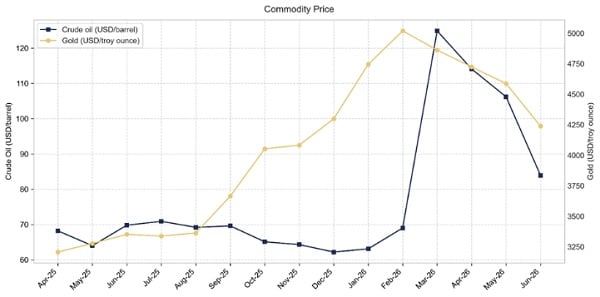
The article links rising tensions involving the USA, Israel, and Iran to long-standing struggles over oil control. It also connects modern geopolitical conflict to escalating global debt and financial instability.
Article Examines corporate separateness in Indian insolvency, group insolvency challenges under the IBC, and the need for a substance-based legal framework.
The Tribunal initiated CIRP under Section 7 after finding undisputed debt exceeding ₹10.91 crore and admission of insolvency by the Corporate Debtor.
The Supreme Court held that a delayed and inoperative scheme under the Companies Act cannot stall CIRP, restoring insolvency proceedings under Section 7 of the IBC.
The Court reiterated that judicial review in contractual matters is limited to cases of arbitrariness, mala fides, or bias. Finding no such infirmity, it upheld the rejection of the technical bid.
Observing a 16-year litigation cycle, the Court deprecated the practice of remanding matters without clear findings. It mandated categorical directions and final adjudication rather than further reconsideration.
The Court held that financial assistance equivalent to pay and allowances under the 2006 Rules must be deducted from Motor Vehicles Act compensation. Only overlapping benefits can be adjusted to avoid double payment.
While declining to interfere with the embankment project, the SC permitted petitioners to submit a comprehensive representation to authorities. Construction of the project was not restrained.
Highlighting repeated flooding and large-scale public benefit, the Court refused to stop the embankment project. It concluded that the scheme was sanctioned after detailed study and served public interest.