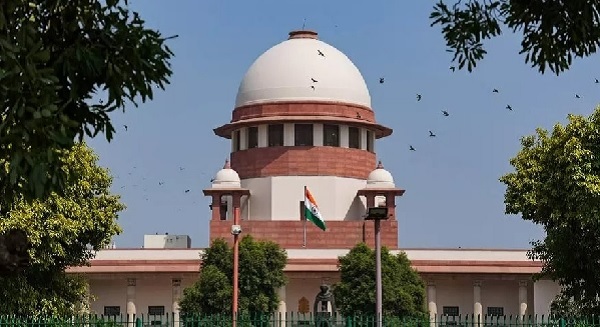
The article discusses extra-judicial killings, including alleged fake encounters and mob lynching, in the context of delays in the criminal justice system and declining public confidence in judicial processes. It refers to incidents involving Vikas Dubey and four persons accused of rape, and examines the legality of such actions with reference to Articles 14 and 21 of the Constitution, provisions of the Indian Penal Code and the Code of Criminal Procedure, including Sections 100, 300 and 46, and Section 102 of the Criminal Procedure Code. The article states that police may invoke statutory provisions relating to private defence and arrest in specified circumstances, while noting that unlawful encounters may amount to culpable homicide. It also discusses Supreme Court observations describing extra-judicial encounters, and outlines the 16-point guidelines issued in People’s Union of Civil Liberties v. State of Maharashtra requiring independent investigation of alleged fake encounters. The article concludes by advocating stricter compliance with Supreme Court and National Human Rights Commission guidelines, legislative review of police laws, and measures to reduce delays in the judicial process.
- Justice Delayed is Justice Denied
- Prevalence of Extra Judicial Killings
- Vikas Dubey Encounter
- Veterinary Doctor Rape Case Encounter
- Are Extra Judicial Killings Legal?
- Provisions and Judgements Regulating Extra-Judicial Killings
- Statutory Provisions
- Judicial Pronouncements
- Supreme Court Guidelines
- Conclusion
Justice Delayed is Justice Denied
“Justice delayed is Justice denied” is a popular legal maxim which almost everybody has heard at some time or the other.
The regularly increasing crime rates and delay in serving of justice to the victims has resulted in the common people taking law in their hand and serving justice as per their own idea of justice. Extra Judicial Killings including fake encounters and mob lynching has been at rise in the recent times. These are the acts of violence carried out by law enforcement agencies and sometimes common public without any judicial authorisation. Such acts are done in order to circumvent the cumbersome procedure of criminal justice system and serve “Instant Justice” as death sentence is only awarded by Indian judicial system in exceptional circumstances and after a long procedure.i
Prevalence of Extra Judicial Killings
The Extra Judicial Killings are increasingly gaining the support of the masses because public feel exhausted when there is long delay in justice served by Indian Judiciary and in most cases the culprits roam free due to lack of evidence. Hence, Mob Lynching and Encounter killings are increasingly perceived as an speedy medium of serving speedy justice.
Far from Criticism of these killings, people celebrate these high profile encounters. The politicians advertise such encounters as their badges of honour. Such acts by general public and people at high positions also shows the decreasing faith on Judiciary. It has emerged as a ubiquitous concept which the central as well as the state government resort to, as per their whims, so as to assuage their various political agendas.
Vikas Dubey Encounter
The recent encounter of Vikas Dubey, a dreaded gangster took place in Utter Pradesh on 10th July, 2020, in which it was claimed that the police killed in defence was celebrated by the masses but there are many questions on the veracity of claim of innocence of UP police. It is seen by many as a extra judicial killing on the whims of UP governmentii.
Veterinary Doctor Rape Case Encounter
Another controversial encounter killing was that of the four accused of raping a veterinary doctor. The four accused were shot dead in an encounter and the police claimed that they were escaping and the police killed them in defence. In this case also, the police is alleged to be involved in extra judicial encounter killing so as to serve speedy justice and cover their mistake of not taking any preventive action when the victim could have been saved.
Are Extra Judicial Killings Legal?
These Extra Judicial killings are grossly violative of Fundamental Rights enshrined in the constitution. They violate Article 14 that grants Right to Equality as well as Article 21 that grants Right to Life to an individual. Article 14 and article 21 grants every person entitlement to free and fair trial and extra judicial killings as a means of serving instant justice violates this right of fair trial.
It has also been held by the Supreme Court in 1978 that any form of state action which goes against the principle of natural justice is violative of Article 21.
In fake encounters as well as mob lynching cases, the police and common public assumes the role of judiciary and executioner, thereby violating the principle of Audi Alteram Partem.
The Perpetrators of these extra judicial killings are able and have been able to get away with such killings because in such cases, it is the police itself who investigate its matter and thus enters a biased approach in the investigation of these killings. It has been also seen that the police has many a time refrained from initiating proceeding against their fellow policemen. This, in turn, encourages further engagement of police in such extra judicial encounters.
In some cases, even the government has encouraged the encounters of suspected criminals. In 2017, Uttar Pradesh Government had announced a reward up to Rs. 1 Lakh to police teams which carry out encounters of suspected criminals. This was blatant violation of Rule of law and Fundamental Rights of citizen and brought forward the extent of arbitrariness present in Police Laws of India.
Provisions and Judgements Regulating Extra-Judicial Killings
There are certain legal provisions which provide few exceptions to criminality of such killings. Thus, the Indian Laws allows encounter killings in few cases.
Statutory Provisions
As per Section 100 of the Indian Penal Code (IPC), the right to private defence extends to voluntarily causing the death or any other form of harm to the assaulting party and thus in case the arrested or alleged person threatens the life of policemen, they can use their right of private defence.
Section 46 of the Code of Criminal Procedure also provide the police with the authority to kill the accused at the time of arrest, if the offence alleged against him is of such a nature as is punishable with death or life sentence.
Section 102 of Criminal Procedure Code limits the right of self-defence to be exercised only till the apprehension persists.
In case none of the above provision is applicable and invoked, the police officer, who circumvents the judicial procedure and causes death of accused in the encounter, would be guilty for the offence of Culpable Homicide.
The exception provided under Section 300 of the Indian Penal Code lays down that culpable homicide does not amount to murder in case public servant, for the purpose of advancement of public justice in good faith, exceeds the amount of power which he possess under law, thereby causing the death of the accused or arrested.
Despite this, there have been multiple instances in which the police exceeded its powers beyond limit and received condemnation from courts.iii
Judicial Pronouncements
In the case Om Prakash v. State of Jharkhandiv, the court rebuked this well established practice of extra judicial encounters and even called it “State Sponsored Terrorism”. It further noted that India is a welfare state and there is a system of strict compliance of Rule of Law for proper governance and it is well established in our criminal justice system that a person is innocent until proven guilty. Subjecting the alleged criminal to extra judicial killing departs from this assumption and thus is in gross violation of human rights.
In the case of People’s Union of Civil Liberties v. State of Maharashtrav, the two judge bench of The Supreme Court consisting of the then Chief Justice of India R M Lodha and Justice Rohinton Fali Nariman held on Sep 23, 2014 also took notice of this issue and came up with certain guidelines to regulate such encounters as well as prescribed the procedure for investigation in such cases where extra judicial measures have been used by the police.
Supreme Court Guidelines
The Supreme Court bench came out with a set of 16 point guidelines which have to be followed in every investigation regarding extra judicial encounter death. The Supreme Court has mandated that the investigation in cases involving allegation of fake encounters on police need to be carried out by a separate team of Crime Investigation Department (CID) or police team belonging to some other police station than those involved in encounter.
However, the people in power find and enjoy the loopholes in these guidelines as police and CID comes under State Government which act as a barrier in fair investigation and trial. For instance, out of 74 encounters inquires against U.P. Police officer, 61 have already been closed, pointing towards the power and influence which violates the principles of justice and fairnessvi.
The above process, in fact, encourages such killings and the public support to such killings adds fuel to the fire. The existing police laws and the power to kill in self-defence is although required in genuine encounter cases, but there needs to be evolution of a better procedure to determine which extra judicial if genuine and legal and which are not. Strict following of Supreme Court guidelines as well as the guidelines issued by National human Right Commission can be a good solution in such cases.
Conclusion
The phenomenon of extra judicial encounter killings brings with them great disrepute to the nation and tarnishes the reputation image of the country at the international level. Such kinds of violation of fundamental rights as well as human rights of citizens and acts showing less faith on judicial system reflect to the world a destructive law and order situation in the country.
There is a great need for the legislature to look back at the police laws present in India and come up with suitable legislative measures to ensure the protection of masses from such extra judicial killings. Proper legislative measures are required in order to ensure that the country is governed by rule of law and also to ensure that justice is served through constitutional ideals and procedures.
Along with this, the judicial institutions also need to win back the trust of the common people. The judiciary needs to take strong measures to minimize the delay in judicial process and maximise justice served to people.
The policemen and other responsible people involved in such extra judicial measures should not be allowed to set free and let off by hook or crook and example should be set in order to deter them from such barbaric acts and assure citizens of reasonableness as well as fairness in judicial decision making.
References
i. https://www.legalbites.in/killings-and-a-cry-for-justice/
ii. https://blog.lawtantra.org/2021/02/ENCOUNTER-KILLING.html
iii. https://www.barandbench.com/columns/debriefed-law-on-encounters-and-where-guidelines-dont-matter
iv. Om Prakash v. State of Jharkhand, (2012) 12 SCC 72.
v. People’s Union of Civil Liberties v. State of Maharashtra, Criminal Appeal No. 1255 of 1999.
vi. https://www.jurist.org/commentary/2020/07/akshat-bhushan-extrajudicial-killings-and-police-impunity/