

Articles by this Author
Corporate Law
Corporate Law
Incomplete Information Memorandum and Unverified SEZ Approval Derail CIRP Plan: NCLAT
Goods and Services Tax
Goods and Services Tax
Blocked GST Credit Cannot Be Used for Appeal Pre-Deposit: Madras High Court
Corporate Law
Corporate Law
Liquidity Constraints Cannot Defeat Admitted Operational Debt: NCLT Ahmedabad Orders CIRP
Service Tax
Service Tax
FIRC Quarter-End Is Relevant Date for CENVAT Refund Limitation: CESTAT Mumbai
Income Tax
Income Tax
Supreme Court Stays Section 276C Prosecution in Ambey Constructech Case
Income Tax
Income Tax
Technical Quashing of Reassessment Does Not End Tax Prosecution: P&H HC
Corporate Law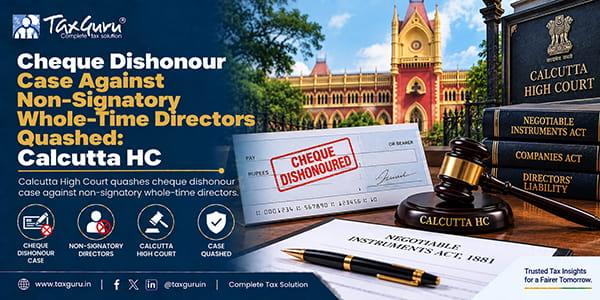
Corporate Law
Cheque Dishonour Case Against Non-Signatory Whole-Time Directors Quashed: Calcutta HC
Custom Duty
Custom Duty
Consent to Enhanced Customs Value Does Not Bar Statutory Appeal: CESTAT Allahabad
Excise Duty
Excise Duty
Only Amortized Value of Tools and Dies Can Be Added to Auto Parts’ Assessable Value: CESTAT Delhi
Custom Duty
Custom Duty
Customs Cannot Sustain EPCG Duty Demand After DGFT Issues EODC: CESTAT Mumbai
Company Law
Company Law
Mudra Denim Ordered Into Liquidation After 99.89% CoC Approval: NCLT Mumbai
Income Tax
Income Tax
ITAT Delhi Remands ₹75.33 Lakh Section 69A Addition After Finding CIT(A)’s Order Cryptic
Excise Duty
Excise Duty
Adjudicating Authority Cannot Ignore Operative CESTAT Refund Order: Delhi High Court
Goods and Services Tax
Goods and Services Tax

