
Month: June 2026
2,704 articlesService Tax
Service Tax
Transportation of Newspapers Not Taxable as Cargo Handling as Road Transport Falls Under Negative List
Income Tax
Income Tax
ITAT Deletes Additions as AO Ignored Income From Sale of Amway Products
Income Tax
Income Tax
ITAT Upholds Bogus Loan Addition Deletion Due to Prior Disclosure by Borrower
Income Tax
Income Tax
Mumbai ITAT Quashes Section 263 Revision: AO’s 25% Bogus Purchase Addition Held to Be a Possible View
Income Tax
Income Tax
ITAT Deletes ₹3.85 Cr Addition Made on a Dissolved Partnership Firm
Income Tax
Income Tax
ITAT Deletes Section 68 Addition as Opening Share Application Money converted in Loans cannot be Taxed as Fresh Credits
Income Tax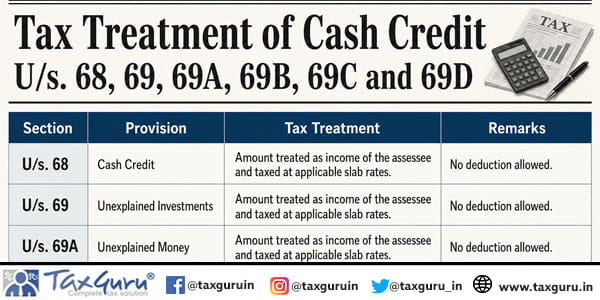
Income Tax
Tax Treatment of Cash Credit U/s. 68, 69, 69A, 69B, 69C and 69D
Goods and Services Tax
Goods and Services Tax
Madras HC Sets Aside Ex Parte GST Assessment Due to Opportunity Denial in GSTR-3B vs GSTR-2A Mismatch
Income Tax
Income Tax
No Reopening for Fishing & Roving Enquiries: ITAT Invalidates Section 147 Proceedings
Income Tax
Income Tax
Foreign Tax Credit Cannot Be Denied Merely for Delay in Filing Form 67: ITAT Pune
Income Tax
Income Tax
Minimum Alternate Tax (MAT) & Alternate Minimum Tax (AMT)
Income Tax
Income Tax
Tax Free / Exempt Income Under Income Tax Act, 1961
Income Tax
Income Tax
Entire E-Seva Cash Deposits Not Taxable Under Section 69A: ITAT Chennai
Income Tax
Income Tax

