
Month: June 2026
2,704 articlesFema / RBI
Fema / RBI
Foreign Exchange Management (Mode of Payment and Reporting of Non-Debt Instruments) (Amendment) Regulations, 2026
Goods and Services Tax
Goods and Services Tax
GSTAT Upholds Anti-Profiteering Order Against Vishwanath Cinema for not passing GST Cut Benefit
CA, CS, CMA
CA, CS, CMA
ICSI Expands Alternative Mode CLDP Eligibility to Address Training Gaps for Students
Income Tax
Income Tax
Denial of Section 11 Exemption Doesn’t Trigger Section 115BBE: ITAT Mumbai
Income Tax
Income Tax
Mumbai ITAT Deletes ₹23.98 Crore Section 68 Addition: Proved Share Capital Cannot Be Taxed as Unexplained Cash Credit
Income Tax
Income Tax
ITAT Quashes Reassessment: Approval from PCIT Instead of PCCIT Proves Fatal
Income Tax
Income Tax
ITAT Condoned 134-Day Delay: Waiting for Section 154 Outcome Held a Bona Fide Reason
Income Tax
Income Tax
Bangalore ITAT Quashes Section 263 Order: No Revision Possible When Alleged Expenditure Was Never Claimed
Income Tax
Income Tax
Mumbai ITAT: Reassessment Must Tax Real Income, Not Duplicate Salary Entries; CCM Addition Deleted for Want of Evidence
Income Tax
Income Tax
Interest Disallowance Deleted as Own Funds Exceeded Advances: ITAT Pune
CA, CS, CMA
CA, CS, CMA
ICAI Invites Nominations for 40 Under 40 Awards to Recognize Young CA Business Leaders
Corporate Law
Corporate Law
Allahabad HC Grants ₹25000 Per Day Compensation for Illegal Detention of Disabled Advocate
Income Tax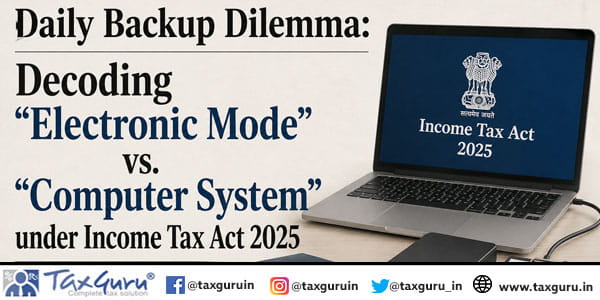
Income Tax
Daily Backup Dilemma: Decoding “Electronic Mode” vs. “Computer System” under Income Tax Act 2025.
Goods and Services Tax
Goods and Services Tax

