
Month: June 2026
2,704 articlesIncome Tax
Income Tax
DTVSV Settlement Does Not Render Reassessment Order Non Est for Section 154 Limitation
Excise Duty
Excise Duty
CESTAT Delhi Sets Aside Excise Demand as Department Had Consistently Classified Product as Chewing Tobacco
Income Tax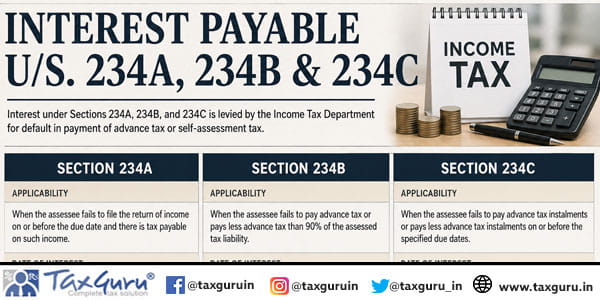
Income Tax
All about Interest Payable U/s. 234A, 234B & 234C
Service Tax
Service Tax
CESTAT Confirms Franchise Service Tax Liability Due to Lack of Evidence on Unreceived Payments
Corporate Law
Corporate Law
Composite GST Show Cause Notice Across Multiple Years Invalid: Kerala HC
Income Tax
Income Tax
Business Expenses Cannot Be disallowed on Mere Suspicion: ITAT Mumbai
Corporate Law
Corporate Law
Consolidated GST Notice & Assessment Order Invalid for Covering Multiple Years: Kerala HC
Income Tax
Income Tax
Section 271(1)(c) Penalty Deleted for Cash Deposits Linked to Earlier Withdrawals
Income Tax
Income Tax
ITAT Pune Directs Exclusion of Mutual Funds & Tax-Free Bonds While Computing Rule 8D Disallowance
Income Tax
Income Tax
Chennai ITAT Quashes Section 263 Revision on Excess Stock Taxation
Income Tax
Income Tax
ITAT Agra Quashes Reassessment for initiation on a Non-Existent PAN
Income Tax
Income Tax
Section 54 Allowed on Flat Booking Rights, But Capital Gains on Gifted Share to Wife Clubbed Under Section 64(1)(iv)
Income Tax
Income Tax
ITAT Agra Quashes EPF/ESI Disallowance as Section 143(1) Adjustment not allowed for Debatable Issues
Income Tax
Income Tax

