
Day: February 2, 2026
136 articlesIncome Tax
Income Tax
Section 12A/80G Registration Rejected Without Examining Activities, Matter Remanded
Service Tax
Service Tax
Service Tax Exemption Restricted to PGP Only, Revenue Appeal Dismissed by SC
Service Tax
Service Tax
Service Tax Payable on PGPPM, PGPEM & EPGP Course Due to Lack of Recognition
Income Tax
Income Tax
SC Upholds Rejection of Time-Barred Income Tax Revision for Lack of Sufficient Cause
Income Tax
Income Tax
IT Revision Application Rejected Due to 7 Year Delay Without Sufficient Cause
CA, CS, CMA
CA, CS, CMA
Budget 2026: Key CGST/IGST Changes (Discounts, Refunds, Intermediary POS)
Income Tax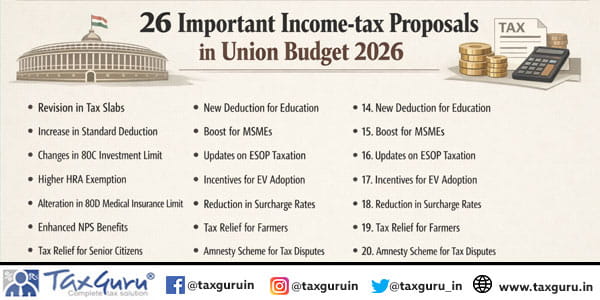
Income Tax
26 Important Income-tax Proposals in Union Budget 2026
Company Law
Company Law
ROC Kanpur Imposed Penalty for Failure to File MGT-14 for Board Approval of Accounts
Company Law
Company Law
ROC Kanpur Imposed Penalty for Non-Filing of DIR-3 KYC Leading to DIN Deactivation
Company Law
Company Law
ROC Mumbai Imposed Penalty for Incorrect AGM Date in Annual Return Filing
Custom Duty
Custom Duty
Budget 2026: Impact Analysis of Changes in Customs Law & Tariff
Corporate Law
Corporate Law
SC Orders Better Menstrual Hygiene Arrangements for Girl Students
Income Tax
Income Tax
Rajasthan HC Quashed Reassessment for Being Issued by JAO Instead of FAO
Income Tax
Income Tax

