
Day: December 12, 2025
124 articlesCorporate Law
Corporate Law
Kerala HC Upholds New Building Tax Assessment for Expanded Plinth Area
Goods and Services Tax
Goods and Services Tax
Delhi HC Flags Errors in GST SCNs; ITC Fraud Issues to Be Raised in Statutory Appeal
Corporate Law
Corporate Law
Supreme Court Sets Aside Contempt Punishment for Genuine Remorse
Goods and Services Tax
Goods and Services Tax
Ayurvedic Centre Classified as Hospital, Not Hotel: Kerala HC Sets Aside Luxury Tax
Custom Duty
Custom Duty
Delhi HC Pulls Up Customs for Delay in Court-Ordered Release of Gold Chain & iPhone
Income Tax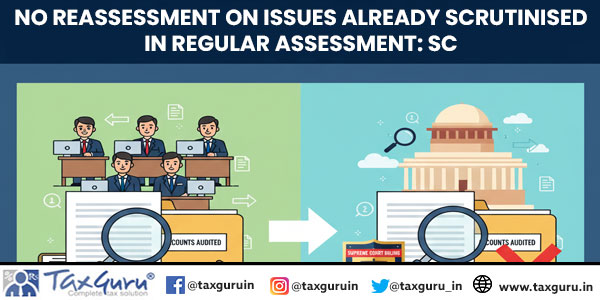
Income Tax
No Reassessment on Issues Already Scrutinised in Regular Assessment: SC
Income Tax
Income Tax
Reopening Beyond Four-Year Limit Invalid if Original Assessment Fully Disclosed Facts
Income Tax
Income Tax
ITAT Bangalore Upholds Tax on Waived Trade Liabilities and Unexplained Purchases
CA, CS, CMA
CA, CS, CMA
ICAI UDIN Portal Migrates to DigiCA Platform
Income Tax
Income Tax
Assessment Notices Quashed for Violating Clean-Slate Effect of Approved Resolution Plan
Goods and Services Tax
Goods and Services Tax
Rajasthan HC Grants Bail Due to Long Custody & Completed GST Probe
Goods and Services Tax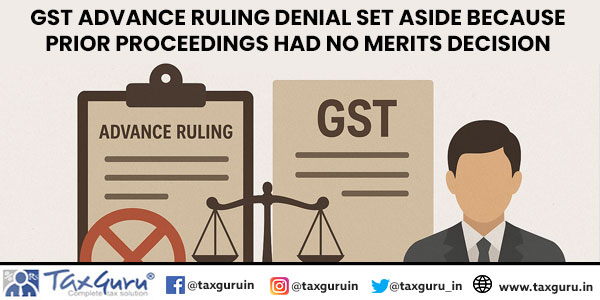
Goods and Services Tax
GST Advance Ruling Denial Set Aside Because Prior Proceedings Had No Merits Decision
Income Tax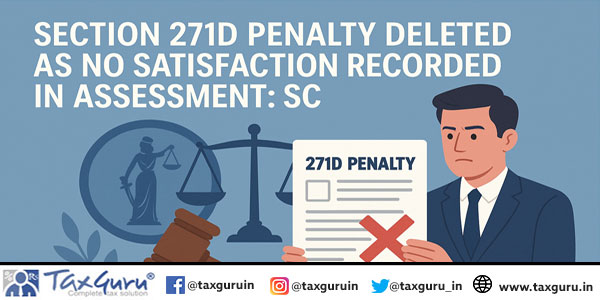
Income Tax
Section 271D Penalty Deleted as No Satisfaction Recorded in Assessment: SC
Income Tax
Income Tax

