
#Section 144
Log in to FollowLatest Section 144 updates, provisions, case laws, compliance requirements, tax implications and expert analysis under Income-tax law on TaxGuru.
Income Tax
Income Tax
Salary TDS May Eliminate Section 249(4)(b) Advance-Tax Requirement: ITAT Visakhapatnam
Income Tax
Income Tax
Assessment against deceased assessee null & void under Section 153A: ITAT Amritsar
Income Tax
Income Tax
ITAT Hyderabad Quashes Reassessment for Invalid Section 151 Approval, Penalty Deleted
Income Tax
Income Tax
Post-Polio Disability Justifies 607-Day Appeal Delay: ITAT Rajkot
Income Tax
Income Tax
Reassessment Void for Absence of Mandatory Section 143(2) Notice: Gujarat HC
Income Tax
Income Tax
ITAT Mumbai Upholds Section 270A Penalty After Return Filed Only Following Reassessment Notice
Income Tax
Income Tax
ITAT Delhi Deletes Rs 60 Lakh Marriage Expenditure Addition for Lack of Evidence
Income Tax
Income Tax
ITAT Pune condones delay and remands appeal to CIT(A) for fresh adjudication
Income Tax
Income Tax
ITAT Condones 163-Day Delay and Remands Section 69A Assessment for Fresh Adjudication
Income Tax
Income Tax
6.2% Stamp Valuation Difference Cannot Trigger Deemed Income Addition: ITAT Mumbai
Income Tax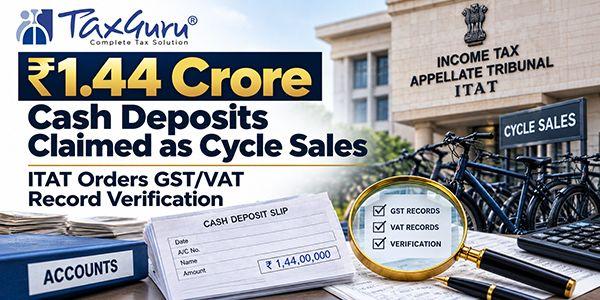
Income Tax
₹1.44 Crore Cash Deposits Claimed as Cycle Sales: ITAT Orders GST/VAT Record Verification
Income Tax
Income Tax
Section 68 Cannot Turn Both Loan & Repayment Into Income: ITAT Mumbai
Income Tax
Income Tax
No Passport Needed for Every Dollar: ITAT Accepts Foreign Cash Savings, Deletes ₹30 Lakh Addition
Income Tax
Income Tax
No 8% Profit Estimate Without Rejecting Audited Books U/s 145(3)
Explore the latest Section 144 updates on TaxGuru, including relevant Income-tax Act provisions, rules, notifications, circulars, judicial decisions and compliance guidance. The coverage highlights important tax positions, procedural requirements, assessments, deductions, penalties and litigation developments to help taxpayers and professionals understand the practical implications of changes in income-tax law.

