Company Law India: Read latest Company law news & updates, acts, circular, notifications & articles issued by MCA amendment in companies Act 2013. Article on Loans Company formation XBRL, Schedule VI IFRS.
Company Law : Overview of Form STK-2 under Section 248(2), covering eligibility, ineligible companies, documents, process, filing fee and ROC pr...
Company Law : Step-by-step procedure for redemption of preference shares under Section 55, including CRR, ROC filings, statutory registers and f...
Company Law : Step-by-step procedure for altering the Object Clause under Section 13, filing Form MGT-14, and SEBI LODR compliance for listed co...
Company Law : Article explains the provisions governing appointment of proxies under Section 105 of the Companies Act, 2013 and Rule 19 of the C...
Company Law : Legal Provision and Obligations for a company with respect to Securities issues by Private Placement This Article outlines the leg...
Company Law : ICSI will provide CSEET June 2026 evaluated answer books through its portal from 16 July 2026 without RTI, subject to prescribed t...
Company Law : ICSI declared the CSEET June 2026 results on 15 July 2026. The pass percentage is 67.59%, and e-Result-cum-Marks Statements are av...
Company Law : MCA has cautioned stakeholders against phishing calls, WhatsApp messages, emails, fake websites, and ZIP attachments impersonating...
Company Law : ICSI has urged PESB to recognize Company Secretaries as eligible for Board-level and Functional Director positions in CPSEs. The r...
Company Law : ICSI has urged the Government to amend the law to allow Company Secretaries in Practice to appear before DRTs and DRATs. It argues...
Company Law : NCLAT set aside directions to hand over two properties to the RP, holding Civil Court-recognised possessory rights could not be di...
Company Law : NCLAT dismissed the IRP's appeal, upheld ₹3 lakh remuneration and held reliance on K. Sashidhar was distinguishable in the fee d...
Company Law : Companies and individuals prosecuted by the Serious Fraud Investigation Office (SFIO) under the Companies Act, 2013 were not entit...
Company Law : NCLT Mumbai sanctioned a composite scheme under Sections 230–232 and 66 after finding statutory compliance and no objections fro...
Company Law : NCLT Chennai sanctioned the amalgamation scheme after statutory compliance, undertakings on regulatory observations, and absence o...
Company Law : ROC Delhi I directed rectification of Section 92(4) non-compliance within 30 days after examining defective MCA filings relating t...
Company Law : ROC Delhi I directed rectification of Section 137(1) non-compliance within 30 days and recorded zero penalty under the proviso to ...
Company Law : ROC Delhi II imposed maximum penalties under Section 117(2) for five delayed MGT-14 filings and directed rectification within 90 d...
Company Law : ROC Gwalior imposed penalty under Section 203(5) after holding simultaneous appointment of the same person as CFO and Whole-Time D...
Company Law : ROC Gwalior imposed penalty under Section 124(7) after finding non-compliance with IEPF-2 filing requirements under Section 125(2)...
Failure to explain auditor-noted violations of Nidhi Rules resulted in penalties on the company and directors. The order reinforces strict disclosure duties under company law.
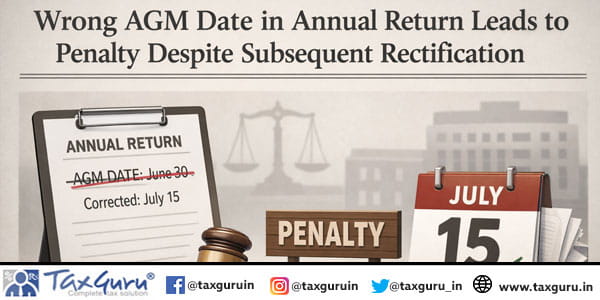
The order confirms that filing incorrect financial statements triggers penalties even if errors are later admitted and rectified. Post-filing administrative correction does not erase liability under the Companies Act.
Authorities held that failure to display a complete registered office address violated Section 12(3)(a) of the Companies Act. The case reinforces that even procedural lapses can attract the maximum statutory penalty if left unrectified.
This article breaks down Section 12 requirements on maintaining and verifying a registered office. The key takeaway is that non-compliance can trigger penalties and strike-off action.
The tribunal held that a petition is not maintainable where the applicant is neither a shareholder nor member, and where disputes stem from a private MoU rather than company affairs.
The Court held that compounding under the Companies Act requires payment by the concerned officer himself and directed correction of records where a third party had paid.
The appellate tribunal upheld dismissal of a belated company appeal, holding that limitation ran from the date the appellant admitted knowledge of the transfer. Time spent in a prior civil suit could not be excluded, and the appeal remained time-barred.
An unregistered Agreement to Sell (A2S) did not prevent recognition of asset transfer in the context of Corporate Insolvency Resolution Process (CIRP) as once consideration was paid and possession transferred
The case highlights how inadequate communication between auditors and those charged with governance violates auditing standards. The key takeaway is that timely, documented, and two-way communication is mandatory, not optional.
Courts and regulators now treat related party transactions as a core governance issue rather than procedural compliance. The key takeaway is that boards must demonstrate real oversight under Section 188.