
Type: Featured
10,042 articlesCorporate Law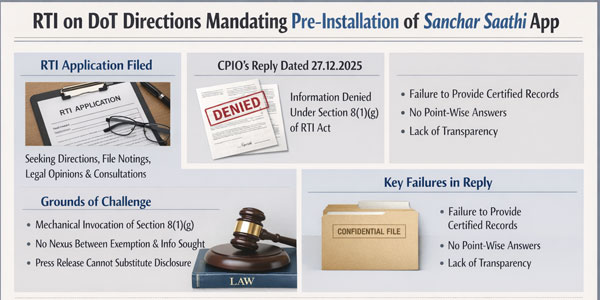
Corporate Law
RTI on DoT Directions Mandating Pre-Installation of Sanchar Saathi App
Finance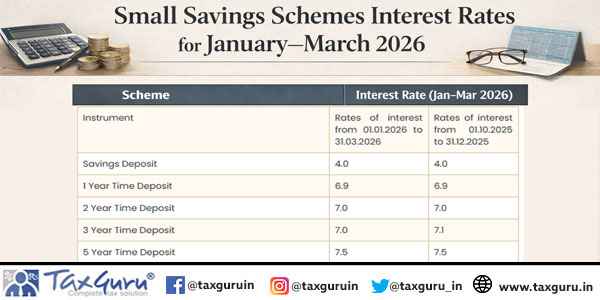
Finance
Small Savings Schemes Interest Rates for January–March 2026
Goods and Services Tax
Goods and Services Tax
Annual GST Returns Deadline Sought to Be Extended Due to Complex ITC Reporting
Goods and Services Tax
Goods and Services Tax
Relevance of Statements under Section 136 of CGST Act, 2017
Income Tax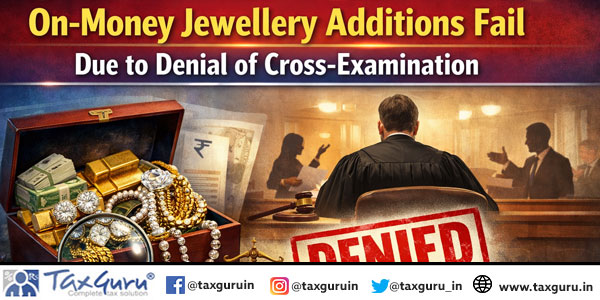
Income Tax
On-Money Jewellery Additions Fail Due to Denial of Cross-Examination
Goods and Services Tax
Goods and Services Tax
25 Major Tax and GST Reforms in 2025: A Year of Change
Company Law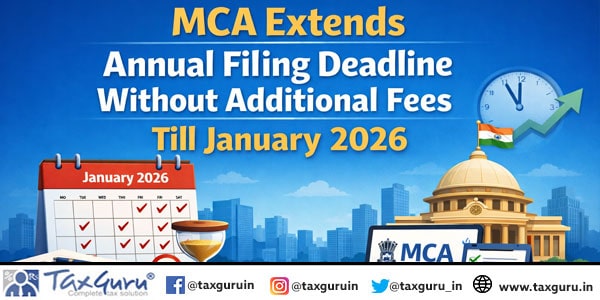
Company Law
MCA Extends Annual Filing Deadline Without Additional Fees Till January 2026
Goods and Services Tax
Goods and Services Tax
GST Advisory & FAQ on Electronic Credit Reversal & Re-claimed Statement & RCM Liability/ITC Statement
Goods and Services Tax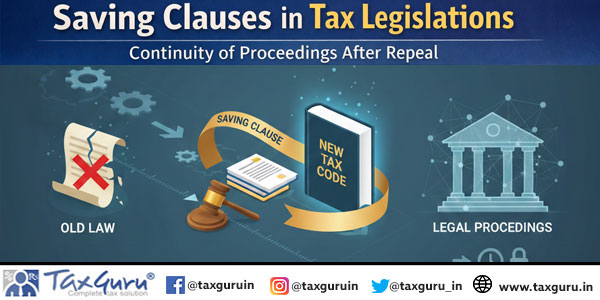
Goods and Services Tax
Saving Clauses in Tax Legislations: Continuity of Proceedings After Repeal
Income Tax
Income Tax
Entire Assessment Collapses Due to Non-Jurisdictional 143(2) Notice
Company Law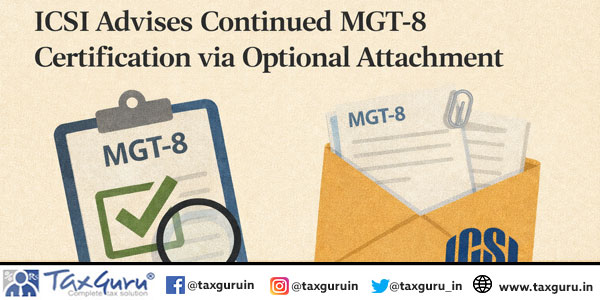
Company Law
ICSI Advises Continued MGT-8 Certification via Optional Attachment
Income Tax
Income Tax
Can Interest on home loan be added to cost of acquisition when computing capital gains?
Income Tax
Income Tax
SC Upholds Bar on Clubbing Syndicate Income With Individual Assessee
Corporate Law
Corporate Law

