
Type: Featured
10,042 articlesIncome Tax
Income Tax
11 Situations Where Filing ITR Is Mandatory for AY 2026-27
Income Tax
Income Tax
SC Remands Over 1000 Reassessment Appeals After Finance Act 2026 Changed Law
Corporate Law
Corporate Law
Annual Survey of Incorporated Services Sector Enterprises (ASISSE): FAQs
Goods and Services Tax
Goods and Services Tax
Tax Bar Seeks GSTAT Appeal Deadline Extension as Portal Issues Hinder Filing
CA, CS, CMA
CA, CS, CMA
KSCAA Seeks GSTAT Appeal Deadline Extension Due to Portal Deficiencies
Corporate Law
Corporate Law
CCPA Penalises Narayana Coaching Institute for Misleading JEE Rank Advertisement
Corporate Law
Corporate Law
CCPA Orders Removal of ‘100% Tender Coconut Water’ Claim for Misleading Consumers
CA, CS, CMA
CA, CS, CMA
Analysis of Notifications and Circulars for Week Ending 21st June 2026
Goods and Services Tax
Goods and Services Tax
GSTAT Bar Seeks Extension of GST Appeal Deadline to 31 December 2026
Income Tax
Income Tax
Commercial Label in Sale Deed Not Enough to Deny Section 54 Relief: ITAT Delhi
Income Tax
Income Tax
Non-Disclosure of Tally Data and Forensic Report Violates Natural Justice: ITAT Kolkata
Corporate Law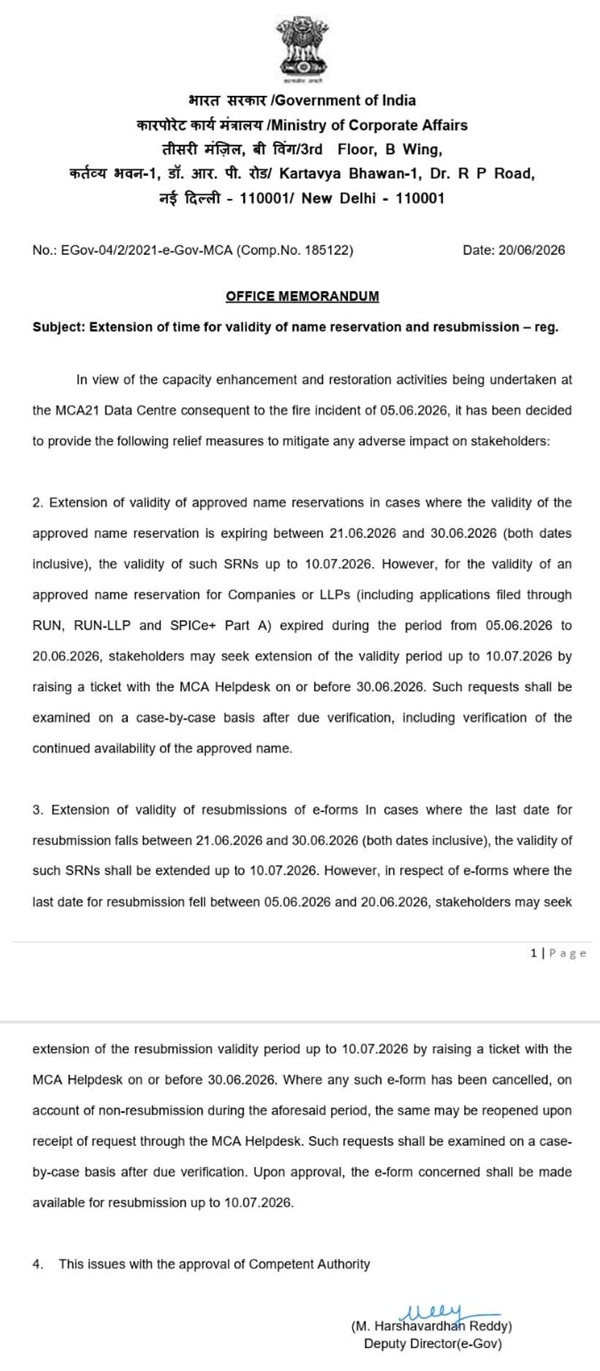
Corporate Law
MCA Extends time period for validity of name reservation and resubmission
Income Tax
Income Tax
Nil LTCG Tax or Higher Demand? Section 112 Utility Computation Sparks Legal Debate
Corporate Law
Corporate Law

