
Courts: All High Courts
Read latest High Court judgments and orders on Income Tax, GST, Customs, Company Law and other taxation, corporate, commercial and regulatory matters.

Subsidiary Not Agent of HO; GST Refund Allowed on Services to Foreign HO: Bombay HC
Majority Consent of Legal Heirs Supports Membership; Revisional Order Quashed: Bombay HC

Calcutta HC Sets Aside GST ITC Demand for Lack of Reasoned Order & Hearing

Assessment Order Set Aside for Ignoring Valid Invoices and GST Returns: Karnataka HC
Advocate Presence and Videography Allowed in GST Summons Due to Medical Grounds

Service Tax Cannot Be Levied Solely on Form 26AS Data; HC Orders Fresh Adjudication

Rajasthan High Court Upholds Section 11 Exemption as Activities Held Charitable
Calcutta HC Entertains GST Writ as No ‘Force Majeure’ Shown for Section 168A Time Extension
Computer-Generated Return Rejection Quashed; HC Directs Review of ₹10 Crore Tax Audit Threshold Issue

ITAT Order Set Aside for Granting Section 12A Registration Without Evidence of Charitable Activities

Ex Parte GST Order Quashed for Not Exploring Alternate Service Modes Under Section 169

Notice Under Section 148 Quashed for Exceeding Limitation Computed Under TOLA
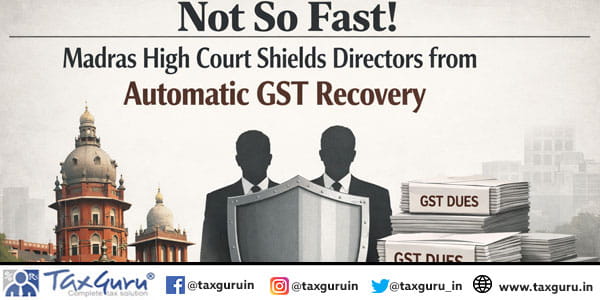
Not So Fast! Madras High Court Shields Directors from Automatic GST Recovery
GST Show Cause Notice Cannot Cover Multiple Financial Years: Madras HC
All High Courts brings together judgments and orders of High Courts across India published on TaxGuru. The archive covers Income Tax, GST, Customs, Company Law, Corporate Law, insolvency, commercial laws and other taxation and regulatory matters. Readers can research important questions of law, constitutional challenges, writ petitions, statutory appeals and other proceedings decided by different High Courts. Chartered Accountants, advocates, tax professionals, businesses and legal researchers can use this consolidated archive to follow High Court jurisprudence across India. Separate High Court categories are available for court-specific judgments and orders.

