
Corporate Law
Log in to FollowRead all latest corporate law news, articles, notifications & circular on Taxguru.in. News on laws related to DIPP Labour Minimum Wages Gratuity PF Arbitration Negotiable instrument Essential Commodities SRFAESI Competition Act Corporate Law

Jharkhand HC Refuses Writ as Statutory Appeal Available Despite Tribunal Vacancies

SC Remands 27% OBC Quota Challenge to MP HC for Expeditious Decision

SC Refuses to Condon Government Appeal Delay for Procedural Approvals & Red Tape

SC Issues Nationwide Directions for Proper Enforcement Of Solid Waste Management Rules 2026
WB SIR: SC Invokes Article 142 to Break Deadlock in West Bengal Voter List Revision
SC Allowed Bail as Accused Joined Probe Despite Not Surrendering his Mobile Phone

UP Conversion Law Does Not Bar Interfaith Marriage or Live-In Relationships: Allahabad HC
No Court inferior to Sessions Court shall try offence under Chapter IV of Drugs and Cosmetics Act

Criminal Liability Cannot Arise from Strained Relations or Suspicion on Deceased’s Character: Uttarakhand HC
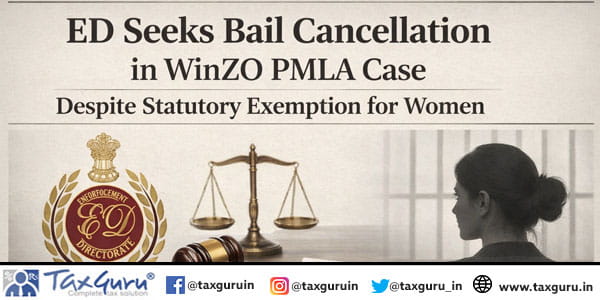
ED Seeks Bail Cancellation in WinZO PMLA Case Despite Statutory Exemption for Women
IBBI Suspends Insolvency Professional for 3 Years Due to Unauthorized CoC Reconstitution
Possession without Occupancy Certificate cannot be forced upon homebuyers
Arrest Illegal if Written Grounds Not Supplied Before Remand: Supreme Court

NCLAT Rejects Contempt Appeal Due to Two-Year Delay in Newspaper Publication Dispute
Corporate Law News
Corporate law deals with the operations and formation of corporations and is related to contract and other commercial law. Corporations are legal entities which are created through the incorporation laws of the state, the corporation is a legal and a distinct person which can sue and can be sued, separate from the stockholders. Until a corporation formally dissolves, it has a perpetual life; the demise of its stockholders or officials does not amend the structure of the corporation. Creation, operation, and their dissolution are governed by several laws such as the Company Law, Insolvency and the Bankruptcy law, Real Estate law, Gratuity Act, Minimum wages Act, Negotiable Instrument Act, Essential Commodities, SRFAESI Act, Competition Act, FDI Regulations etc.
At Taxguru, we provide you the latest corporate law news and corporate law articles. Learn about all the important developments in the corporate laws with our extensive coverage of the latest news on corporate law. Our group of expert law professionals provides a cohesive and comprehensive understanding of all the Indian corporate and other allied laws. At Taxguru, we cover all the aspects of corporate law and all the major laws and regulations as mentioned above. We regularly post blogs and articles on corporate law for the benefit of our viewers. Keep a track of all the significant notifications and updates on corporate law with us. Get to know more on the corporate law here at Taxguru.

