
Corporate Law
Log in to FollowRead all latest corporate law news, articles, notifications & circular on Taxguru.in. News on laws related to DIPP Labour Minimum Wages Gratuity PF Arbitration Negotiable instrument Essential Commodities SRFAESI Competition Act Corporate Law
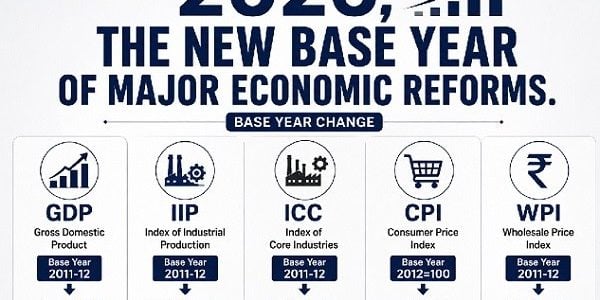
2026: India’s New Base Year for Key Economic Indicators

SC Cuts Law Practice Criterion From 3 to 1 Year, Adds Training & Clerkship

Limitation Runs From Filing of Complaint, Not Magistrate’s Cognizance: SC

High Court Cannot Conduct Factual Trial While Quashing FIR: SC

Civil Dispute Cannot Be Given Criminal Colour, Quashes FIR: SC
IBBI Suspends Insolvency Professional for Non-Cooperation & CIRP Compliance Lapses

PFRDA Drops Penalty on NPS PoP Over Alleged Compliance Failures
Employee Accepting CPF Benefits Cannot Claim GPF Pension After Retirement: SC

Criminal Acquittal Does Not Negate Civil Negligence in Accident Claims: SC
Supreme Court Relaxes 3-Year Bar Practice Rule for Civil Judge Recruitment

Political Patronage Cannot Ensure Permanent Employment: SC Orders Repatriation

SC Dismisses NSEL Plea For Joint Trial In Two CBI Cases Over 2013 Payment Crisis

Separate NSEL Fraud Cases Cannot Be Jointly Tried Without Same Transaction Nexus: Bombay HC

SC Constitutes Five-Member High Power Enquiry Committee To Probe Various Aspects
Corporate Law News
Corporate law deals with the operations and formation of corporations and is related to contract and other commercial law. Corporations are legal entities which are created through the incorporation laws of the state, the corporation is a legal and a distinct person which can sue and can be sued, separate from the stockholders. Until a corporation formally dissolves, it has a perpetual life; the demise of its stockholders or officials does not amend the structure of the corporation. Creation, operation, and their dissolution are governed by several laws such as the Company Law, Insolvency and the Bankruptcy law, Real Estate law, Gratuity Act, Minimum wages Act, Negotiable Instrument Act, Essential Commodities, SRFAESI Act, Competition Act, FDI Regulations etc.
At Taxguru, we provide you the latest corporate law news and corporate law articles. Learn about all the important developments in the corporate laws with our extensive coverage of the latest news on corporate law. Our group of expert law professionals provides a cohesive and comprehensive understanding of all the Indian corporate and other allied laws. At Taxguru, we cover all the aspects of corporate law and all the major laws and regulations as mentioned above. We regularly post blogs and articles on corporate law for the benefit of our viewers. Keep a track of all the significant notifications and updates on corporate law with us. Get to know more on the corporate law here at Taxguru.

