
Type: Press Releases
Find latest government and regulatory press releases covering taxation, corporate affairs, banking, finance, securities, trade and professional developments.
Goods and Services Tax
Goods and Services Tax
GSTN Advisory on Re-Computation of Interest under Table 5.1 of GSTR-3B
SEBI
SEBI
SEBI and DoT Sign MoU to Combat Financial Fraud Through Real-Time Data Sharing
SEBI
SEBI
Launch of various IT platforms by Chairman, SEBI to improve ease-of-doing business
Fema / RBI
Fema / RBI
RBI Invites Comments on Draft Directions for NBFC-UL Identification & Govt NBFC Inclusion
Goods and Services Tax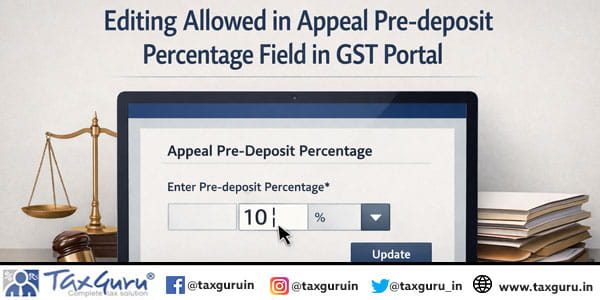
Goods and Services Tax
Editing allowed in Appeal Pre-deposit Percentage Field in GST Portal
Fema / RBI
Fema / RBI
RBI Seeks Public Comments on Digital Payment Fraud Safeguards Paper
Fema / RBI
Fema / RBI
RBI invites public comments on draft Amendment Directions on ‘Investment Fluctuation Reserve’
Fema / RBI
Fema / RBI
RBI Proposes Removal of NPA Condition for Including Quarterly Profits in CET1 Capital
Fema / RBI
Fema / RBI
RBI Eases CRAR Norms by Removing NPA Provisioning Condition
Fema / RBI
Fema / RBI
626 Circulars to be Repealed as RBI Streamlines Supervisory Framework
Fema / RBI
Fema / RBI
RBI invites comments on Draft RBI (Governance) Amendment Directions, 2026
Fema / RBI
Fema / RBI
RBI Issues Draft Directions for ‘Trade Receivables Discounting System’
Fema / RBI
Fema / RBI
RBI invites comments on Draft RBI (Branch Authorisation) Amendment Directions, 2026
Corporate Law
Corporate Law
IBBI Study Highlights Need for Stronger MSME Insolvency Framework Due to Pre-Admission Settlements
Press Releases provides official announcements and information issued by government departments, regulators and other authorities across subjects covered by TaxGuru. Releases may concern Income Tax, GST, Customs, Company Law, DGFT, Excise, FEMA/RBI, SEBI, finance, professional bodies and other regulatory developments. They may announce policy decisions, compliance statistics, deadlines, regulatory measures and other developments relevant to taxpayers, businesses and professionals.

