
Type: Press Releases
Find latest government and regulatory press releases covering taxation, corporate affairs, banking, finance, securities, trade and professional developments.
SEBI
SEBI
SEBI Appoints Prasanta Mahapatra as Executive Director
Goods and Services Tax
Goods and Services Tax
July 2026 Gross GST Revenue Collections Shows 15.4% Growth in Revenue
Goods and Services Tax
Goods and Services Tax
GSTN Keeps Proposed e-Way Bill Enhancements on Hold Until Further Notice
Fema / RBI
Fema / RBI
Delhi HC Orders Paytm Payments Bank Winding Up After RBI Licence Cancellation
CA, CS, CMA
CA, CS, CMA
CA Not Guilty as Company Management Misconduct Was Not Proved: ICAI BOD
Corporate Law
Corporate Law
DPIIT Allows FDI in Inventory-Based E-Commerce Model for Exports
Fema / RBI
Fema / RBI
RBI Invites Comments on Draft Foreign Investment Rules 2026 Replacing NDI Rules
SEBI
SEBI
SEBI Warns Regulated Entities and Listed Companies About Boss Scam Fraud
SEBI
SEBI
SEBI Simplifies Mutual Fund Transmission Process for Claims After Death of Unit Holder
Fema / RBI
Fema / RBI
RBI issues draft Guidance on Regulatory Expectations for Data Governance
Fema / RBI
Fema / RBI
RBI Seeks Comments on Draft Bank Shareholding Approval Framework
Goods and Services Tax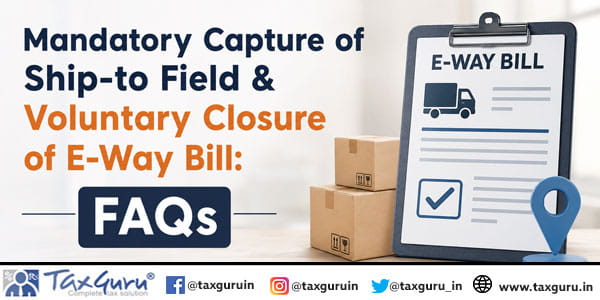
Goods and Services Tax
Mandatory Capture of Ship-to Field & Voluntary Closure of E-Way Bill: FAQs
Corporate Law
Corporate Law
IBBI publishes syllabus for Phase 10 of Limited Insolvency Examination
Goods and Services Tax
Goods and Services Tax
GSTN Advisory on Revision of Timeline for Amendment of AATO, 2026
Press Releases provides official announcements and information issued by government departments, regulators and other authorities across subjects covered by TaxGuru. Releases may concern Income Tax, GST, Customs, Company Law, DGFT, Excise, FEMA/RBI, SEBI, finance, professional bodies and other regulatory developments. They may announce policy decisions, compliance statistics, deadlines, regulatory measures and other developments relevant to taxpayers, businesses and professionals.

