
Type: Featured
10,042 articlesIncome Tax
Income Tax
Form 41 for DTAA Claims: Complete Guide under Income Tax Act 2025
Goods and Services Tax
Goods and Services Tax
Representation on Top 10 Issues in GST Enforcement Actions
CA, CS, CMA
CA, CS, CMA
No New Exam Authority Due to Misleading Media Reports Creating Panic: ICAI
Goods and Services Tax
Goods and Services Tax
Late Fee Waiver Granted Due to System Glitches in Maharashtra PT Return Filing
Goods and Services Tax
Goods and Services Tax
GST Deposit During Investigation Not Voluntary Due to Alleged Coercion: Bombay HC
Income Tax
Income Tax
Not Every Bank Credit or AIS entry is Taxable: ITAT Nagpur
Goods and Services Tax
Goods and Services Tax
GSTN Advisory on Re-Computation of Interest under Table 5.1 of GSTR-3B
Income Tax
Income Tax
No Section 87A Rebate on STCG Under 111A: Tax Planning for FY 2025–26
Goods and Services Tax
Goods and Services Tax
Intermediary Services: New Place of Supply Rules (Effective March 30, 2026)
CA, CS, CMA
CA, CS, CMA
Analysis of Notifications and Circulars for Week Ending 12th April 2026
Income Tax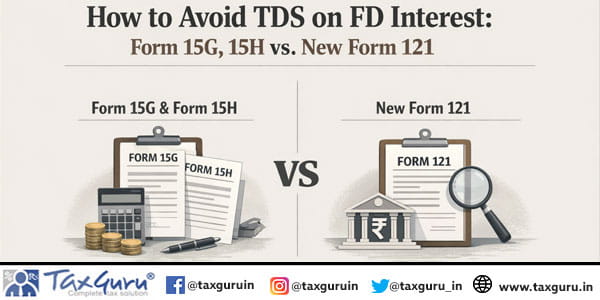
Income Tax
How to Avoid TDS on FD Interest: Form 15G, 15H v/s. New Form 121
Income Tax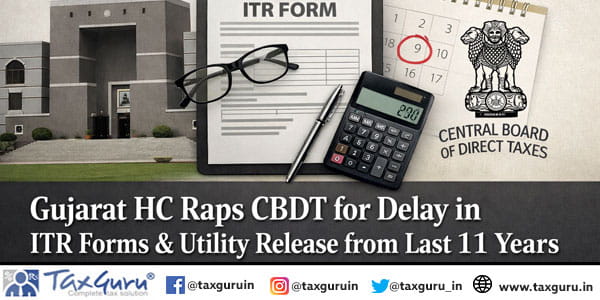
Income Tax
Gujarat HC raps CBDT for delay in ITR forms & utility release from last 11 years
Goods and Services Tax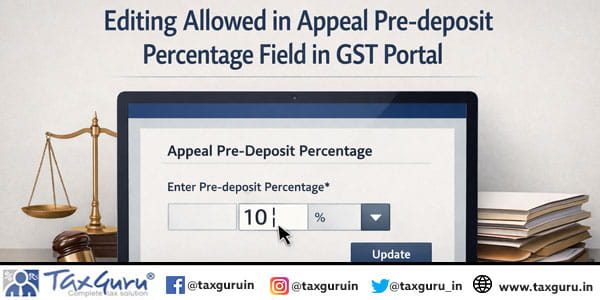
Goods and Services Tax
Editing allowed in Appeal Pre-deposit Percentage Field in GST Portal
Income Tax
Income Tax

