Income Tax : This examines why deductions under section 80GGC are being questioned in assessments. The key takeaway is that compliance with sta...
Income Tax : The issue concerned whether deductions under section 80GGC could be denied solely on investigation inputs alleging accommodation e...
Income Tax : India's Income Tax Department initiates nationwide verification against bogus deduction and exemption claims, warning taxpayers of...
Income Tax : Understand tax benefits under Sections 80GGB & 80GGC for political donations, eligibility rules, compliance needs, and recent lega...
Income Tax : Received an IT notice on political donations? Understand why, what to do, and avoid penalties. Expert advice to respond effective...
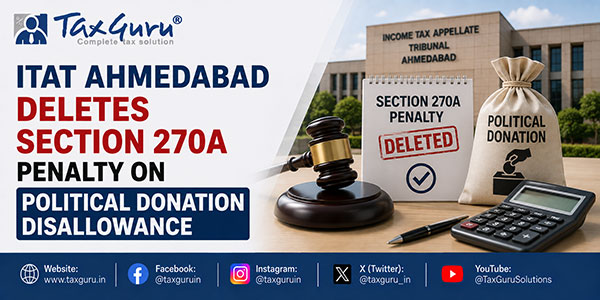
Income Tax : The issue was whether penalty applies when a bogus donation claim is withdrawn after detection. The Tribunal held that post-detect...
Income Tax : The Tribunal held that failure of the Assessing Officer to verify genuineness of a ₹30 lakh donation under Section 80GGC rendere...
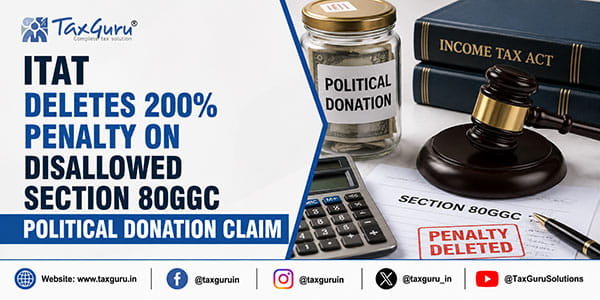
Income Tax : The Tribunal upheld 200% penalty under Section 270A for misreporting income through ineligible deductions. Admitted incorrect clai...
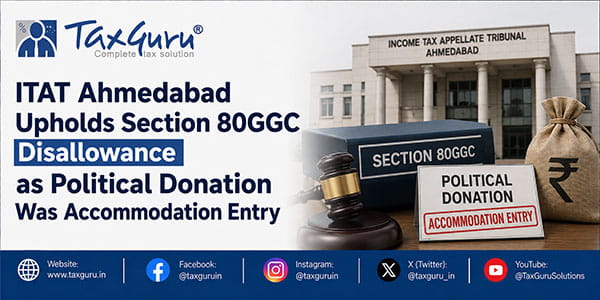
Income Tax : The Tribunal upheld disallowance of political donation deductions where the assessee failed to prove genuineness and the transacti...
Income Tax : The Tribunal upheld deletion of disallowance where the tax authority failed to produce direct evidence linking the taxpayer to any...
The Tribunal sustained reassessment based on search information but faulted the disallowance of political donations. The key takeaway is that additions cannot rest solely on untested third-party statements without cross-examination.
Where real estate sale proceeds and donations are transparently reflected in financial statements, unexplained money provisions fail. The decision reinforces limits on Revenues powers based on conjecture.
The Tribunal held that reassessment fails when the show-cause notice is issued on an incorrect factual premise. Jurisdiction under section 147 collapses if the foundation under section 148A is flawed.
The Tribunal held that the entire political donation could not be treated as bogus in the absence of incriminating evidence. To balance equities, only 10% of the alleged on-money was directed to be taxed on an estimated basis.
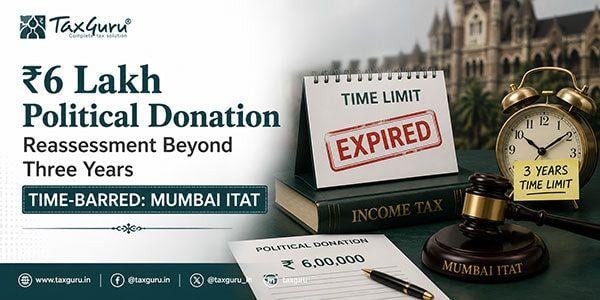
The Tribunal held that reassessment beyond three years is invalid where the alleged escaped income is below ₹50 lakh. A notice issued for a ₹5 lakh donation was declared void ab initio.
The issue concerned whether deductions under section 80GGC could be denied solely on investigation inputs alleging accommodation entries. It was held that such information is only a trigger for enquiry, not conclusive proof. The key takeaway is that disallowance requires assessee-specific evidence and compliance with natural justice.
The ITAT held that the AO’s allowance of an 80G deduction without examining the background of M/s. Aadhar Foundation was erroneous. The decision reinforces that Explanation-2 to Section 263 requires verification when there is material indicating possible bogus donations.
The tribunal ruled that funds donated to certain political parties were routed back to the donor, lacking genuineness. Deductions under Section 80GGC were disallowed as a result.
The Tribunal held that a reopening made after three years is void when approval is granted by the PCIT instead of the PCCIT/CCIT. The entire reassessment and related disallowance were struck down.
ITAT Rajkot’s ruling in Milind Pankajbhai Shroff vs. PCIT confirms the Principal Commissioner’s authority under Section 263 to revise an assessment where the AO failed to inquire into a ₹30 Lakh deduction claimed for bogus political donations,