

The 2025 amendments to the Capital Gains Account Scheme (CGAS) modernize a system that had remained largely manual since 1988, making it significantly easier for taxpayers to claim capital-gains exemptions. Previously dependent on physical deposits, limited authorized banks, and in-person account closures, the scheme now allows digital deposits through UPI, NEFT, RTGS, IMPS, cards, and net banking. Nineteen private banks have been added, greatly widening access. From April 1, 2027, CGAS accounts can be closed online via the Income Tax portal using DSC or EVC, and electronic statements are now valid replacements for physical passbooks. The amendments also clarify the effective deposit date for exemptions and extend CGAS applicability to Section 54GA involving relocation of industrial undertakings to SEZs. Overall, the changes enhance convenience, increase transparency, reduce paperwork, and provide more flexibility to taxpayers—especially property sellers—seeking capital-gains exemption.
Arjuna (Fictional Character): Krishna, the government has introduced changes in the Capital Gains Account Scheme. Could you explain the key features and amendments?
Krishna (Fictional Character): Arjuna, the Capital Gains Account Scheme (CGAS) was initially introduced in 1988 to help taxpayers who want to claim exemptions on long-term capital gains (LTCG) but face challenges in reinvesting the capital gains before the income tax return filing deadline. The scheme allows them to deposit unutilized capital gains in a CGAS account to claim exemptions under sections like 54, 54B, and others.
Arjuna (Fictional Character): Krishna, how was the scheme structured before the 2025 amendments?
Krishna (Fictional Character): In the old scheme, deposits were mainly made through physical methods like cheques or demand drafts. The authorized banks were restricted to select public sector banks, including IDBI. Account closures had to be done manually, requiring a visit to the bank with Form G, and passbooks were issued as the only valid account statements. The process was entirely manual and cumbersome.
Arjuna (Fictional Character): Krishna, how have things changed with the new amendment in 2025?
Krishna (Fictional Character): Arjuna, the new amendments have made things far more convenient. The changes brought through amendment in 2025 are as below:
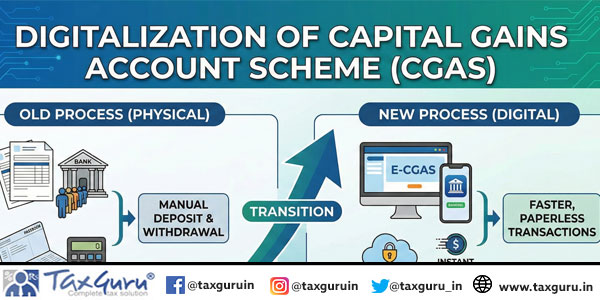
1. Expanded Deposit Modes: Previously, only physical cheques and demand drafts were allowed. Now, you can make deposits using UPI, NEFT, RTGS, IMPS, debit/credit cards, and net banking. This opens up several electronic payment options, making it easier for taxpayers to deposit.
2. Authorized Banks Expanded: Earlier, only a handful of public sector banks and IDBI Bank were authorized. Now, 19 private sector banks, such as HDFC, ICICI, Axis, and others, have been added to the list. This greatly enhances accessibility for taxpayers.
3. Online Account Closure: Before the amendment, you had to visit the bank physically to close the account. But now, starting from April 1, 2027, taxpayers can close their CGAS accounts online through the Income Tax portal, using either a digital signature or an electronic verification code (EVC). This is a huge leap towards digital convenience.
4. Electronic Statements: In the old scheme, you were issued a physical passbook. Now, electronic statements are considered valid. This shift to digital documentation reduces paperwork and makes managing the account easier.
5. Clarified Deposit Date: Earlier, the effective date for claiming the exemption was ambiguous for non-cash deposits. Now, the effective date is clarified as the date the bank receives the payment instrument or electronic instruction, along with the application for the CGAS account.
6. Expansion to Section 54GA: The new amendments also expand the scope of CGAS to cover Section 54GA, which provides tax exemptions for capital gains arising from shifting industrial undertakings from urban areas to Special Economic Zones (SEZs).
Arjun (Fictional Character): Krishna, how does this help taxpayers, especially property sellers?
Krishna (Fictional Character): Arjuna, the major benefit is that taxpayers now have more flexibility in making deposits, more options for account closure, and the ability to manage their accounts digitally. The inclusion of more banks and electronic modes of payment simplifies the process significantly.
Arjun (Fictional Character): What should taxpayers from this?
Krishna (Fictional Character): Arjuna, the government has made these changes to streamline the process, ensuring taxpayers have a smoother experience when claiming exemptions on long-term capital gains. It’s a clear step towards promoting digital payments and enhancing transparency in the tax system.

Author Bio



congratulations Feedback
Thank you sir 🙏