
Goods and Services Tax
Courts: GSTAT
Read latest GSTAT judgments and orders on input tax credit, classification, taxability, valuation, refunds, demands, penalties and other GST disputes.

Goods and Services Tax
DRC-01 Cannot Substitute Mandatory GST Show Cause Notice: GSTAT Lucknow
Goods and Services Tax
Wrong Taxpayer’s Show Cause Notice Invalidates GST Demand: GSTAT Lucknow
Goods and Services Tax
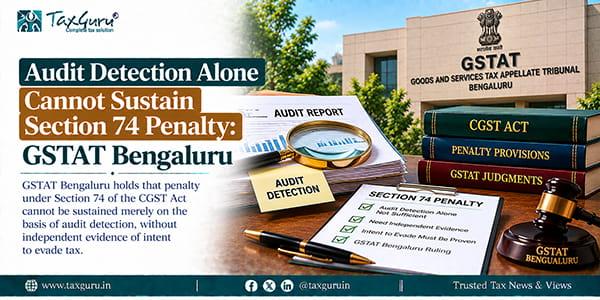
Audit Detection Alone Cannot Sustain Section 74 Penalty: GSTAT Bengaluru
Goods and Services Tax
Mere GSTR-3B and GSTR-2A ITC Mismatch Cannot Attract Section 74 Penalty: GSTAT
Goods and Services Tax
Interest Amount Governs ₹20 Lakh Limit in Interest-Only Revenue Appeal: GSTAT Ernakulam
Goods and Services Tax
GST First Appellate Authority Cannot Remand Demand Verification: GSTAT Ernakulam

Goods and Services Tax
Higher GST on Packing Materials Entitles Tea Supplier to Inverted Duty Refund: GSTAT Kolkata
Goods and Services Tax
GSTAT Confirms Rs. 2.34 Lakh ITC Profiteering Demand Against Maruti Developers
Goods and Services Tax
Excess GST Realisation Irrelevant to Profiteering Under Section 171: GSTAT
Goods and Services Tax
GSTAT Upholds ₹10.19 Lakh Cinema Ticket Profiteering, Orders Consumer Fund Deposit
Goods and Services Tax
GSTAT Accepts DGAP Report and Confirms Rs. 81,722 Cinema Ticket Profiteering
Goods and Services Tax
Merger-Related ITC Dispute Requires Division Bench Hearing: GSTAT Chennai
Goods and Services Tax
GSTAT Bengaluru Remands GSTR-2A vs GSTR-3B ITC Dispute for Fresh Adjudication
GSTAT brings together judgments and orders of the Goods and Services Tax Appellate Tribunal published on TaxGuru. The archive covers GST appellate disputes involving input tax credit, classification, taxability, valuation, refunds, registration, demands, penalties and other issues arising under the GST laws. Taxpayers, businesses, Chartered Accountants, advocates and GST professionals can use this consolidated category to research GSTAT jurisprudence and follow developments emerging from Tribunal benches across India. Dedicated GSTAT bench categories provide access to judgments and orders from individual benches.

