The Income Tax Act, 2025 introduces a significant structural reform by relocating the exempt income provisions previously contained in Section 10 of the Income-tax Act, 1961, into Section 11 supported by a schedule-based framework. While the legislative architecture has changed, the substantive policy governing exemptions remains largely intact. Key exemptions, including agricultural income, life insurance […]
Addition of capital gain was deleted as impugned land being agricultural land situated beyond the prescribed municipal limits and having retained its agricultural character, was outside the ambit of “capital asset” under section 2(14)(iii) and therefore no capital gains could have been charged on transfer thereof.
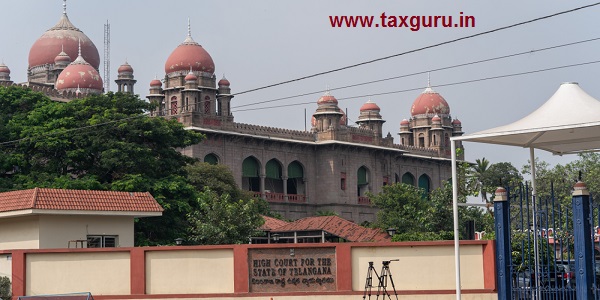
The Telangana High Court declined to examine the merits of GST refund rejection orders and directed the taxpayer to avail the statutory appellate remedy. The Court clarified that delay condonation applications should be considered by the appellate authority in accordance with law.
The Telangana High Court refused to entertain a writ petition challenging a GST appellate order due to delay and the availability of an alternate statutory remedy. The Court directed the petitioner to approach the GST Appellate Tribunal within the prescribed window period after complying with the pre-deposit requirement.
The Telangana High Court dealt with a case where a taxpayer’s GST registration was cancelled for non-filing of returns and the subsequent appeal was rejected as time-barred. The Court granted liberty to seek revocation before the proper authority, emphasizing that statutory remedies may still be pursued subject to compliance with legal requirements.
This article outlines major penalties under the Income-tax Act for defaults involving tax payments, return filing, TDS compliance, and record maintenance. It highlights the circumstances that attract penalties and the relief available in deserving cases.
This guide explains the key provisions of the COFEPOSA Act, 1974 and the 1976 amendment. It highlights how the amendment strengthened preventive detention powers, extended detention periods, and modified procedural safeguards.
The Telangana High Court upheld termination of a government employee whose degree lacked UGC recognition during the relevant study period. The Court held that absence of an essential educational qualification strikes at the root of eligibility and cannot be cured by equitable considerations.
The article explains how transactions between associated domestic entities exceeding ₹20 crore must comply with arm’s length pricing rules. Failure to do so may result in recomputation of income and penalties for under-reporting or misreporting under Section 270A.
The ITAT held that investments which did not generate exempt income during the year cannot be considered for Rule 8D disallowance. The ruling reiterates that only income-yielding investments are relevant for Section 14A computation.