
Month: June 2026
2,704 articlesIncome Tax
Income Tax
No Double Deduction If Loan-Funded Application Was Excluded Earlier: Bangalore ITAT Allows Trust’s Loan Repayment Claim
Income Tax
Income Tax
No Exempt Income, No Section 14A Disallowance: Bangalore ITAT Deletes ₹43.42 Lakh Addition
Income Tax
Income Tax
Bangalore ITAT Rules SBN Deposits Received Before 31.12.2016 Are Not Unexplained Cash Credits
Goods and Services Tax
Goods and Services Tax
Why GST Authorities Cannot Retain Redemption Fine After Dropping Section 130 Penalty
Company Law
Company Law
ROC Imposes Penalty as Incorrect AGM Due Date Was Filed in AOC-4
Company Law
Company Law
Duplicate DIN Attracts Penalty Because Companies Act Prohibits Possessing More Than One DIN
Company Law
Company Law
ROC Imposes Penalty as Incorrect Director Appointment Date Was Filed in DIR-12
Company Law
Company Law
ROC Imposes Heavy Penalty for Failure to Dematerialize Shares and Obtain ISIN
Company Law
Company Law
ROC Imposes Maximum Penalty as PAS-6 Remained Unfiled Beyond Due Date
Company Law
Company Law
ROC Imposes Penalty for Failure to File Share Capital Audit Report on Time
Company Law
Company Law
ROC Imposes ₹3.5 lakh Penalty for Delayed PAS-6 Filing
Goods and Services Tax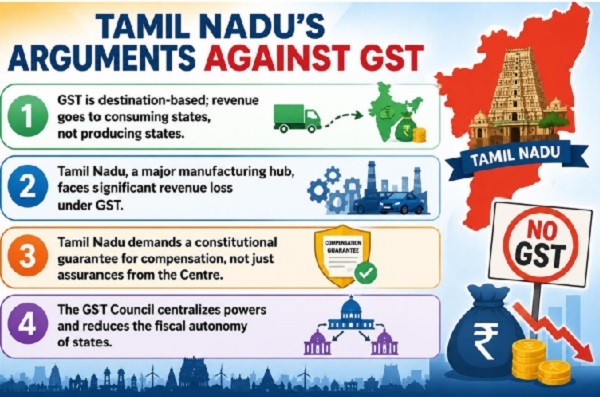
Goods and Services Tax
GST in India: Shift toward Destination based Taxation
Goods and Services Tax
Goods and Services Tax
Can Section 74 Be Invoked for Form 26AS & GSTR-1 Mismatches?
Company Law
Company Law

