
Courts: Telangana High Court
Find latest Telangana High Court judgments, orders and case laws on Income Tax, GST, Customs, Company Law and other taxation and commercial matters.
Telangana HC Allows GST Registration Revocation Application After Cancellation

Section 264 Can Remedy Double Taxation Despite No Revised Return: Telangana HC
Telangana HC Grants Two Weeks to Appeal GST Order, Stays Coercive Recovery

Telangana HC Sets Aside GST SCN & Order for Section 73(2) Timeline Violation
Telangana HC Allows GST Rectification for GSTR-3B & GSTR-8 Turnover Variation
Section 148A Reassessment Cannot Be Challenged at Preliminary Stage: Telangana HC
Share Premium From Non-Resident Is Capital Receipt, Reassessment Quashed: Telangana HC
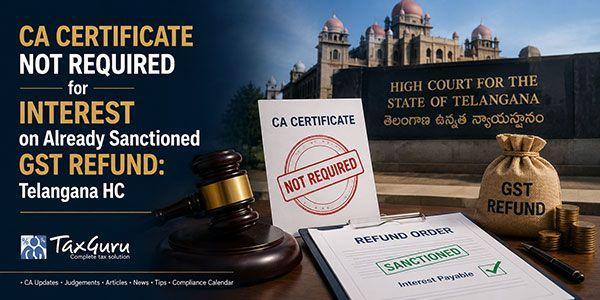
CA Certificate Not Required for Interest on Already Sanctioned GST Refund: Telangana HC
Industrial Land Tax under NALA Applies Only to Land Actually Used: Telangana HC
Telangana HC Sets Aside Rule 86A ITC locking Without Adequate Reasons & Hearing
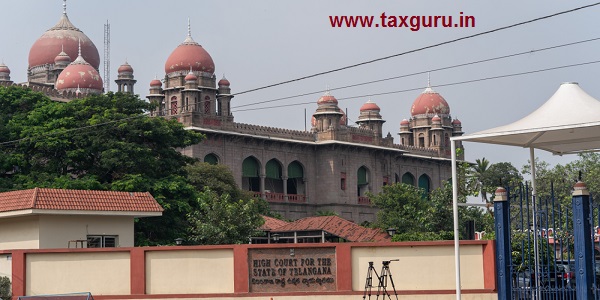
Telangana HC Allows Appeal Against GST SPL-07 Order With Delay Condonation Plea
Telangana HC Revives GST Appeal After 10% Pre-Deposit Made Before Dismissal
Telangana HCt Allows Fresh GST Revocation Application After Bank Details Omission
Telangana HC Quashes Income Tax Reassessment Order After IBC Resolution Plan Approval
Telangana High Court judgments and orders cover significant taxation, corporate, commercial and regulatory disputes. This TaxGuru page brings together Telangana High Court case laws concerning Income Tax, GST, Customs, input tax credit, refunds, tax demands, reassessment, penalties, Company Law and other legal matters. Taxpayers, companies, Chartered Accountants, advocates and tax professionals can use the collection to research judicial precedents and monitor important legal developments. TaxGuru publishes recent and significant earlier Telangana High Court decisions with summaries and analysis explaining the issues and legal principles involved. The page serves as a convenient resource for readers researching taxation and business-related litigation before the Telangana High Court.

