
Courts: GSTAT
Read latest GSTAT judgments and orders on input tax credit, classification, taxability, valuation, refunds, demands, penalties and other GST disputes.
Audit Detection Alone Cannot Establish Suppression for Section 74 Penalty: GSTAT Bengaluru
Interstate E-Way Bill Requirement Was Not Mandatory in November 2017: GSTAT Agra
Restored GST Registrations Render Departmental Appeals Infructuous: GSTAT Hyderabad
GSTAT Chandigarh Declines to Admit Penalty Appeal Falling Within ₹50,000 Statutory Threshold
Invoice Period Governs Zero-Rated Turnover for Export ITC Refund: GSTAT
GSTAT Can Refuse Appeal Where Disputed Penalty Does Not Exceed ₹50,000: GSTAT Chandigarh
Department Cannot Challenge FAA Orders After Restoring GST Registrations: GSTAT Hyderabad
Mere Ineligible ITC Availment Not Suppression for Section 74: GSTAT Thiruvananthapuram
GSTAT Delhi Orders ₹31.20 Lakh ITC Benefit Refund to 66 Homebuyers With 18% Interest

Revenue Cannot Reduce Export Refund Using Historical ITC Reversal: GSTAT Ranchi
GSTAT Agra Upholds GST Penalty for Expired E-Way Bill With Different Vehicle Number
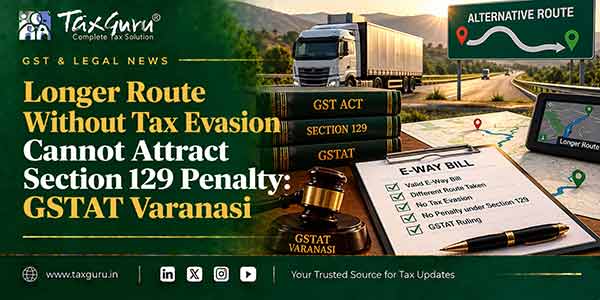
Longer Route Without Tax Evasion Cannot Attract Section 129 Penalty: GSTAT Varanasi
Written-Off Housing Loan Recovery Eligible for GST Exemption: GSTAT Raipur
GSTAT brings together judgments and orders of the Goods and Services Tax Appellate Tribunal published on TaxGuru. The archive covers GST appellate disputes involving input tax credit, classification, taxability, valuation, refunds, registration, demands, penalties and other issues arising under the GST laws. Taxpayers, businesses, Chartered Accountants, advocates and GST professionals can use this consolidated category to research GSTAT jurisprudence and follow developments emerging from Tribunal benches across India. Dedicated GSTAT bench categories provide access to judgments and orders from individual benches.

