Read all latest corporate law news, articles, notifications & circular on Taxguru.in. News on laws related to DIPP Labour Minimum Wages Gratuity PF Arbitration Negotiable instrument Essential Commodities SRFAESI Competition Act Corporate Law

Corporate Law : The issue highlights mandatory annual return filing for LLPs. The key takeaway is that delayed filing attracts heavy daily penalti...
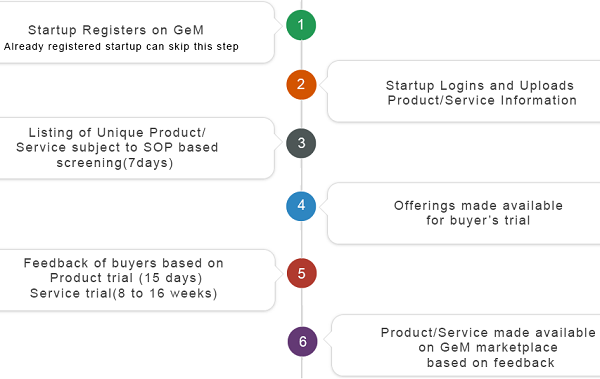
Corporate Law : The issue explains how businesses qualify as local suppliers under procurement rules. The key takeaway is that proper local conten...
Corporate Law : The Court noted that the temple was built and used by local residents for decades. It held that such collective acceptance negates...
Corporate Law : Economic reforms have reshaped employer-employee dynamics and legal structures. The analysis underscores balancing efficiency with...
Corporate Law : Organized crime laws relax traditional evidence rules to secure convictions. Courts balance this with safeguards against misuse. K...
Corporate Law : The amendments replace the consultation committee with CoC oversight, giving creditors greater control over liquidation decisions....
Corporate Law : The proposal focuses on enabling creditors to initiate resolution while retaining debtor management under supervision. It sets out...
Corporate Law : The amendments arise from the inclusion of a unified “service provider” definition under the Code. The move expands regulatory...
Corporate Law : The issue addressed is ambiguity in authentication and evidentiary value of financial information in insolvency cases. The propose...
Corporate Law : The proposal aligns grievance regulations with the newly introduced definition under the amended Code. It aims to ensure uniform a...
Corporate Law : The Court held that repeated dishonour of cheque and non-payment after notice established a prima facie case. It refused to quash ...
Corporate Law : Bank of India Vs Neurostar Hospital Private Limited (NCLT Mumbai) The application was filed under Section 7 of the Insolvency and ...
Corporate Law : The Tribunal held that appeals filed beyond the statutory 45-day limit cannot be entertained. It ruled that delay exceeding the co...
Corporate Law : The Tribunal held that insolvency proceedings cannot be avoided when total debt is higher than the arbitral claim. It ruled that u...
Corporate Law : The issue involved rejection of a delayed claim in bankruptcy proceedings. The Tribunal held that concealment of material facts by...
Corporate Law : IRDAI delegates Section 34 powers between Whole Time Members and Chairperson. The move aims to streamline enforcement actions and ...
Corporate Law : The Bill mandates seat allocation using updated census figures, replacing decades-old data. It ensures fair representation aligned...
Corporate Law : The notification addressed mandatory reinsurance cession for general insurance policies. It mandates 4% cession to GIC Re, ensurin...
Corporate Law : The government approved a major fund to enhance startup funding through AIFs. The scheme aims to strengthen innovation, especially...
Corporate Law : EPFO permits de-linking of wrongly linked Member IDs even when contributions exist, subject to limits. The circular outlines a str...
In absence of law prohibiting transfer, no restriction to transfer the land can be directed by respondent No.2 as right to property under Article 300-A of the Constitution of India is not only constitutional or legal right, but it is also human right and a person can be deprived of that right only by authority of law.
The year 2017 has marked the beginning of the dream of a New India. The present Government under the leadership of Prime Minister Narendra Modi is forging ahead to usher a revolution of world-class infrastructure, enhanced connectivity and an India that shines on the global map.
Government of India has announced that during the Financial Year 2017-18, accumulations at the credit of subscribers to the General Provident Fund (GPF) and other similar funds shall carry interest at the rate of 7.8% (Seven point eight per cent) with effect from 1st October, 2017 to 31st December, 2017. This rate will be in force w.e.f. 1st October, 2017.
Clarification has been sought by stakeholders as to whether approval of shareholders/ members of the corporate debtor/ company is required for a resolution plan at any stage during the process for its consideration and approval as laid down under sections 30 and 31 of the Insolvency and Bankruptcy Code, 2016
Part II of Insolvency and Bankruptcy Code, 2016 deals with insolvency resolution and liquidation for corporate persons. The actual work will be mostly handled by ‘resolution professional’ under supervision of NCLT
The Insolvency and Bankruptcy Code 2016 (Code), which became law in May 2016, is looked upon by both the business and the professionals with a lot of expectations. It is natural that like many new things, this code too is to settle down and it is one of its kinds.
The Insolvency and Bankruptcy Code, 2016 (the Code) passed by the Lok Sabha on 5th May 2016 seeks to provide a framework for time-bound settlement of insolvency by formulating a survival mechanism or by ensuring speedy liquidation through a formal insolvency resolution process (IRP)
EPFO is pleased to introduce a new facility for its esteemed members having Universal Account Number (UAN) and other relevant details to link their respective UAN with Aadhaar online. This, in turn, would facilitate the members, a better and speedy EPFO services.
The Cell for IPR Promotions & Management (CIPAM) under the aegis of the Department of Industrial Policy Promotion (DIPP), Ministry of Commerce and Industry, has launched a logo and tagline/slogan contest for Geographical Indications (GIs) of India on MyGov.in website.
This article makes a critical analysis of Insolvency and Bankruptcy Code, 2016 (IBC in short) by highlighting the key parts of the Code and assess its likely impact on the Indian debt market and what does the new Code contain and how effective will it be in promoting the efficient and timely resolution of insolvent entities?