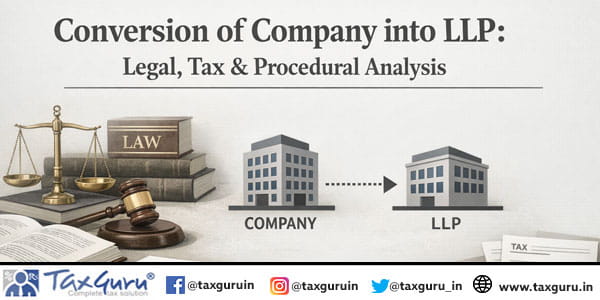
Complete guide to company-to-LLP conversion covering legal provisions, Section 47(xiiib) tax exemption, conditions, benefits, and step-by-step procedural compliance.
Understand the different types of resolutions under the Companies Act, including Board, Ordinary, and Special resolutions. Learn the distinction between Ordinary and Special Business and which resolution type is required for various company decisions.
Understand India’s Corporate Social Responsibility (CSR) mandate, including applicability thresholds, excluded activities, net profit calculation, and obligation determination under Section 135.
The process of striking off a private limited company refers to the removal of a company’s name from the Register of Companies (ROC), thereby ceasing its legal existence. This can either be initiated voluntarily by the company or by the Registrar of Companies (ROC) under specified circumstances. Regulatory Provisions The provisions governing the strike-off of […]
Summary: Entrepreneurs often grapple with the decision of whether to structure their business as a Company or a Limited Liability Partnership (LLP). Both offer the advantage of limited liability and are considered separate legal entities, but their regulatory, operational, and financial implications vary significantly. Companies are governed by the Companies Act, 2013, while LLPs are […]
Learn about the issuance and conversion process of Compulsory Convertible Preference Shares under the Companies Act 2013, including filing requirements and regulations.
The foremost step for an entrepreneur who want to incorporate a company is to identify what kind of company he wants to incorporate (i.e. Private limited, public limited, OPC or etc.)
Learn the process and benefits of converting a Limited Liability Partnership (LLP) into a Private/Public Company under the Companies Act, 2013.
MCA mandates dematerialization for private companies, ensuring transparency. New rules require digital securities for better governance and streamlined processes.
Learn about the compounding of offences under Section 441 of the Companies Act, 2013. Understand types of offences, authorities involved, and the step-by-step procedure for compounding.