The article discusses concerns over inconsistent expert reports, ad hoc committees, and relaxed evidentiary standards in NGT proceedings. It warns that weak scientific scrutiny may compromise the credibility of environmental adjudication.
The article explains how gig platforms classify workers as independent partners to avoid minimum wage, social security, and dismissal protections. It highlights the urgent need for legal reforms recognizing algorithmic control as employment supervision.
The article explains how courts use the Gillette Defence to reject patent infringement claims when the accused product or process already existed as prior art. It highlights major rulings from India, the UK, Canada, and Europe that reinforce the principle that public knowledge cannot be monopolized.
The article explains how ecofeminism connects environmental exploitation with gender-based domination and violence. It argues that both arise from the same structures of control, extraction, and inequality.
An RTI application sought details regarding enrolment, certificate of practice, and practising status under the Advocates Act, 1961. The applicant also requested records relating to non-practising advocate classification and Bar Council verification procedures.
A generalized denial without explanation was contested as contrary to Sections 3 and 7(1) of the RTI Act. The applicant emphasized that authorities must provide justified and detailed responses. The case reinforces citizens’ right to information.
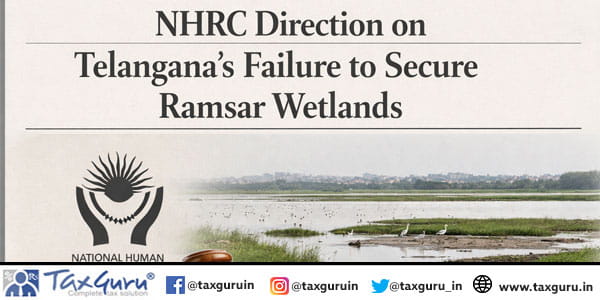
The Commission directed the State government to review wetlands and possible Ramsar candidates after concerns were raised about encroachments, pollution, and environmental risks.
Allegations link uranium-tainted groundwater to violations of the right to life and health. The petition seeks immediate investigation and remedial measures.
In NHRC Case No. 248/36/0/2025, the Commission examined complaints of alarming fluoride contamination in Telangana groundwater and noted official reports showing an increase of nine affected villages and State reliance on alternative surface water supply schemes. The NHRC has now directed that the Action Taken Reports be shared with the complainant and sought comments within four weeks before further proceedings
The case examined severe shortcomings in menstrual hygiene facilities in government schools and their impact on girls’ dignity and education. While the issue was held to raise serious rights concerns, the Commission declined intervention, citing its limited jurisdiction over systemic policy failures.