RENTING THE FUTURE: BATTERY-AS-A-SERVICE AND THE NUMBERS BEHIND THE REVOLUTION
Abstract: Battery-as-a-Service (BaaS) separates the battery from the vehicle in an EV transaction, converting a large upfront capital cost into a recurring usage-based fee. This article examines BaaS exclusively through the lens of the Indian electric vehicle market: how the arrangement is structured commercially, how it is treated under Ind AS 115 and Ind AS 116, how depreciation is computed in the financing partner’s books, what GST applies at each point in the transaction chain, and how the model is deployed across industrial and commercial fleet applications. The objective is a clear, practitioner-oriented reference across all four dimensions — without venturing into unrelated sectors.
1. You Don’t Own the Battery — And That’s the Point
1.1 The Core Idea
A conventional EV sale transfers ownership of both the vehicle chassis and the battery pack to the buyer. The battery typically accounts for 40 to 60 per cent of the vehicle’s total cost — the primary reason EVs remain more expensive upfront than comparable petrol or diesel vehicles. BaaS changes that by separating the two transactions: the customer buys the vehicle body and rents the battery from a financing partner, paying a per-kilometre fee for actual usage.
The practical result is a significant reduction in the purchase price. The MG Windsor EV, for example, is priced at approximately ₹9.99 lakh under BaaS for the base variant, against a non-BaaS ex-showroom price of around ₹14 lakh. The monthly battery rental at ₹3.5 per kilometre adds a running cost, but the customer avoids the large upfront capital commitment. The financing partner owns the battery, earns the rental stream, and bears the risks of battery degradation and technological obsolescence.
Table 1: BaaS vs. Non-BaaS Pricing — MG Motor India (2024–25)
| Vehicle Variant | BaaS Price (₹ Lakh) | Non-BaaS Price (₹ Lakh) | Battery Rental Rate | ARAI Range (km) |
|---|---|---|---|---|
| MG Comet EV | 4.99 | 6.99 | ₹2.9/km | 230 |
| Windsor EV — Excite | 9.99 | 14.00 | ₹3.5/km | 331 |
| Windsor EV — Exclusive | 10.99 | 15.05 | ₹3.5/km | 332 |
| Windsor EV — Essence | 11.99 | 15.15 | ₹3.5/km | 332 |
| Windsor EV PRO | 12.50 | 17.50 | ₹4.5/km | 449 |
| MG ZS EV | 13.99 | 18.98 | ₹4.5/km | 461 |
1.2 Three Parties, Three Different Accounting Positions
Every BaaS arrangement involves three distinct principals, each with different legal and accounting positions:
The Vehicle Manufacturer (OEM) sells the vehicle chassis to the customer and either sells or leases the battery to the financing partner. The OEM may provide battery warranties and buyback guarantees separately.
The Financing Partner (NBFC or specialised lender) acquires the battery, owns it throughout the contract term, and enters a rental agreement with the end customer. Bajaj Finance, Herofin Corp, VidyutTech, and Ecofy operate in this space in India.
The End Customer purchases the vehicle body outright and pays per-kilometre battery rental to the financing partner. Onboard telematics records usage and generates the billing basis.
| The financing partner’s position is central to the accounting and tax analysis. It is the entity that owns the battery as a capital asset, recognises rental income, claims depreciation, and collects and remits GST on the rental. The customer and OEM positions are comparatively more straightforward. |
1.3 Minimum Commitments and What They Imply
Financing partners offer varied terms that affect how the arrangement should be characterised. Some partners require a minimum monthly commitment — Bajaj Finance sets a floor of 1,500 kilometres per month on standard Windsor variants, creating a minimum charge of approximately ₹5,250 per month regardless of actual usage. VidyutTech offers a pure pay-per-use structure with no minimum. This distinction affects the Ind AS 116 classification discussed in Section 3.
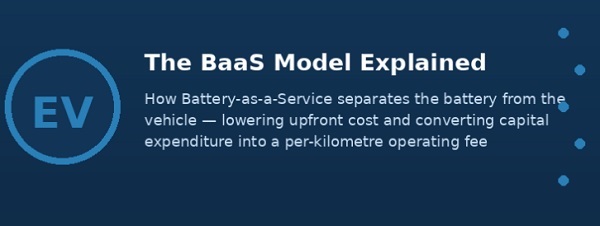
Figure 1: The BaaS transaction structure — OEM, Financing Partner, and End Customer
2. Counting Kilometres as Revenue — The Financing Partner’s Books
2.1 The Battery Is Plant and Equipment
The financing partner acquires the battery from the OEM and recognises it as an item of Property, Plant and Equipment under Ind AS 16. The cost includes the purchase price plus any directly attributable costs of bringing the asset to the condition necessary for its intended use — transport, installation testing, and telematics hardware where integral to the battery unit. General administrative overheads, initial operating losses before the programme achieves planned utilisation, and staff training costs are excluded.
2.2 Revenue Over Time — Ind AS 115
Battery rental income is recognised under Ind AS 115, Revenue from Contracts with Customers. The performance obligation is the provision of battery availability. This obligation is satisfied over time because the customer simultaneously receives and consumes the benefit as it is provided: each kilometre driven is an increment of the service delivered.
For variable-rate contracts (pure pay-per-use), the transaction price is constrained until the usage occurs. Revenue is recognised as each kilometre is logged by the telematics system. For contracts with a minimum monthly commitment, the fixed minimum is recognised ratably over the month, and any excess usage is recognised as it occurs.
Table 2: Revenue Recognition Treatment under Ind AS 115
| Contract Type | Recognition Basis | Balance Sheet Presentation |
|---|---|---|
| Pure pay-per-use (no minimum) | Revenue recognised per kilometre driven, as recorded by telematics | Contract asset if invoiced in arrears; no contract liability |
| Minimum commitment + variable | Fixed minimum recognised over commitment period; variable excess recognised as incurred | Contract liability if advance payment received; contract asset for uninvoiced earned amounts |
| Fixed monthly subscription | Recognised ratably over the subscription period | Contract liability for advance payments; straight-line recognition |
2.3 Long-Term Estimates and Catch-Up Adjustments
Where BaaS contracts run for three to five years, the financing partner must estimate the total transaction price and monitor it against actual performance. If usage patterns diverge significantly from estimates — a fleet customer drives substantially fewer kilometres than projected — a cumulative catch-up adjustment is required under Ind AS 115, revising cumulative recognised revenue to reflect updated estimates. This can produce reported revenue that moves in unexpected directions in a given period, requiring clear disclosure in the financial statement notes.
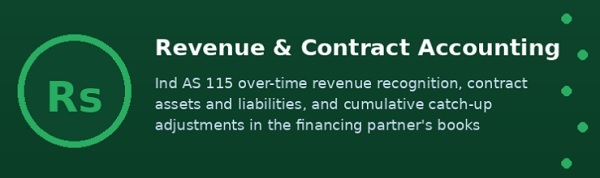
Figure 2: Ind AS 115 over-time revenue recognition and contract assets/liabilities in BaaS
3. Lease or Service? The Classification That Can Reshape a Balance Sheet
3.1 The Ind AS 116 Test
Ind AS 116 defines a lease as a contract that conveys the right to control the use of an identified asset for a period of time in exchange for consideration. Whether a BaaS battery rental qualifies as a lease depends on three conditions:
Is there an identified asset? If a specific battery unit is physically assigned to a single vehicle — which is standard practice in the Indian BaaS market — then yes.
Does the customer obtain substantially all of the economic benefits from use? Under BaaS, the customer uses the battery exclusively for their own driving. The financing partner has no access to the battery’s capacity during the rental period. This condition is met.
Does the customer direct the use? The customer decides when to drive, where to drive, and how intensively to use the battery. The financing partner does not direct the asset’s use. This condition is also met.
On a strict reading of Ind AS 116, a BaaS arrangement with a dedicated battery assigned to one vehicle for a multi-year period is a lease. This has significant implications for the customer.
3.2 What a Lease Classification Means for the Customer
If the BaaS arrangement is a lease, the customer must recognise a Right-of-Use (ROU) asset measured at the present value of the lease payments plus initial direct costs, and a corresponding lease liability. This conflicts directly with the ‘asset-light’ objective that motivates many customers to choose BaaS over outright purchase. The battery re-appears on the balance sheet as an ROU asset — and the liability sits alongside it.
| The short-term lease exemption in Ind AS 116 paragraph 15 permits off-balance-sheet treatment for leases with a term of 12 months or less. Battery-swapping models — where a fresh battery is supplied on demand with no specific unit assigned — may qualify for this exemption. Dedicated-battery multi-year contracts do not. |
Table 3: Lease vs. Service Classification — Ind AS 116 Decision Framework
| Factor | Points Toward Lease | Points Toward Service |
|---|---|---|
| Asset identification | Specific battery serial number assigned to one vehicle | Interchangeable battery drawn from a pool; no dedicated unit |
| Customer control | Customer directs all usage; financing partner has no operational say | Financing partner can substitute a different unit at will |
| Contract term | Multi-year agreement; battery physically stays with vehicle | Month-to-month or battery-swap on demand |
| Minimum commitment | Fixed minimum payment regardless of usage | Pure variable pay-per-use; no minimum |
| Likely outcome | Lease — ROU asset and liability required | Service — off-balance-sheet; straight P&L charge |
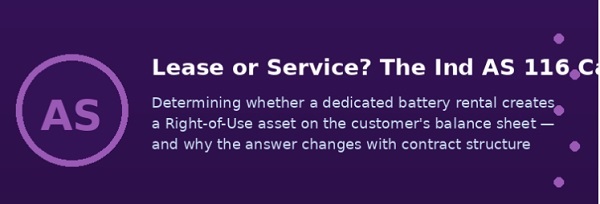
Figure 3: Ind AS 116 classification — how contract structure determines balance sheet treatment.
4. Charge Cycles, Not Calendar Years — Depreciation Done Right
4.1 The Method That Actually Fits
The financing partner carries the battery as PPE under Ind AS 16. Ind AS 16 permits the straight-line method, the diminishing balance method, and the units-of-production method. For BaaS batteries, the units-of-production method is the most economically faithful: battery degradation is driven primarily by charge-discharge cycles, not by the passage of time. A battery that completes 1,500 charge cycles in two years of intensive fleet use has consumed far more of its economic life than one used lightly over the same period.
Table 4: Depreciation Methods Compared for BaaS Battery Assets
| Method | Basis | Suitability for BaaS | Key Limitation |
|---|---|---|---|
| Straight-Line | Equal annual charge over useful life | Simple; suited to low-utilisation personal vehicles | Ignores actual charge cycles; over-depreciates lightly used assets |
| Diminishing Balance | Fixed % on reducing carrying amount | Front-loads depreciation; useful where obsolescence risk is primary | Does not reflect actual usage pattern |
| Units of Production | Depreciation per charge cycle or per kilometre | Most accurate for fleet and commercial use; aligns cost with revenue | Requires reliable telematics; total life cycles must be reliably estimated |
4.2 Estimating Useful Life
The useful life of a lithium-ion EV battery is typically expressed as the number of charge-discharge cycles before capacity degrades to 80 per cent of rated capacity — the industry threshold for vehicle use. Current-generation LFP batteries commonly used in Indian EVs carry manufacturer specifications of 2,000 to 3,000 full charge cycles.
If a battery has a rated range of 300 kilometres per full charge and an estimated 2,500 cycle life, the total kilometre base is 7,50,000 kilometres. Depreciation per kilometre = (Cost − Residual Value) ÷ 7,50,000. The residual value should reflect the expected recoverable amount in second-life applications (stationary energy storage), not nil.
4.3 Income Tax — 40% WDV Block and Deferred Tax
For income tax purposes, the battery held by the financing partner falls within the Plant and Machinery block. Electric vehicle batteries qualify for accelerated depreciation at 40 per cent on the written-down value method under the Income Tax Act, 1961, and the corresponding provisions of the Income Tax Act, 2025 (effective April 1, 2026). The WDV block treatment does not track individual assets; the Ind AS 16 unit-level depreciation will produce figures that differ from the tax block, requiring deferred tax accounting under Ind AS 12.
Table 5: Ind AS 16 vs. Income Tax Depreciation — Key Differences
| Parameter | Ind AS 16 (Financial Reporting) | Income Tax (Tax Depreciation) |
|---|---|---|
| Asset identification | Individual battery unit; component-level where material | Pooled into Plant and Machinery block |
| Method | Units of production recommended; SLM or WDV permitted | WDV mandated at 40% for EV batteries |
| Residual value | Non-nil; estimated with reference to second-life market | Not separately considered; block depreciates until exhausted |
| Deferred tax | Timing differences create deferred tax liability in early years where tax depreciation exceeds book depreciation | N/A (this is the tax base) |
Figure 4: Units-of-production depreciation tracks charge cycles, not calendar time
5. The 5% vs. 18% Problem — GST’s Unintended Penalty on Green Finance
5.1 The Rate Mismatch
The GST treatment of BaaS is the sharpest regulatory friction in the model. An outright purchase of an electric vehicle attracts GST at 5 per cent. A battery rental under the BaaS model is classified as a supply of service and attracts GST at 18 per cent. The 13 percentage point difference undermines the cost advantage that BaaS is designed to provide.
Over a typical five-year BaaS contract at 1,200 kilometres per month for a Windsor EV variant at ₹3.5 per kilometre, the total rental outflow is approximately ₹2.52 lakhs. GST on that sum at 18 per cent is approximately ₹45,360. Had the customer purchased the battery as part of the vehicle at 5 per cent GST on the battery component, the tax on the same value would have been approximately ₹12,600 — a difference of around ₹32,760 over five years.
| The GST 2.0 reforms effective September 22, 2025 narrowed the tax gap between EVs and ICE vehicles by reducing the rate on sub-4-metre petrol/diesel cars from 28% plus cess to a flat 18%. BaaS customers, already paying 18% on battery usage, now face a further erosion of the economic incentive to choose electric over petrol. |
Table 6: GST at Each Stage of the BaaS Transaction Chain
| Stage | Transaction | Nature of Supply | GST Rate | ITC Available? |
|---|---|---|---|---|
| 1 | OEM sells vehicle chassis to customer | Supply of goods — motor vehicle (EV) | 5% | Blocked for personal use under Sec. 17(5) |
| 2 | OEM sells / leases battery to financing partner | Goods (sale) or Service (lease) per contract terms | 5% or 18% | Yes — financing partner claims ITC |
| 3 | Financing partner charges battery rental to customer | Supply of service — rental of battery | 18% | Commercial fleets — yes (subject to Sec. 17(5)); Personal use — no |
5.2 ITC for Commercial Customers
A courier company, food delivery operator, or taxi service deploying BaaS vehicles for business use may be entitled to claim ITC on the battery rental GST, subject to the specific exclusions in Section 17(5) of the CGST Act. The blocked credit provisions have been interpreted narrowly by several advance rulings, and commercial operators should obtain specific legal advice before claiming ITC on battery rentals.
5.3 HSN Classification
Battery rental income is most commonly classified under SAC 9973 — rental or leasing services of transport vehicles — at 18 per cent GST. Financing partners should confirm the applicable SAC via a private advance ruling if volumes are material, as misclassification creates exposure to interest and penalty.
5.4 The Reform Case
Aligning GST on battery rentals with the 5 per cent rate applicable to EV purchase would remove the current distortion. The government corrected an analogous inverted duty distortion in aviation MRO in 2024 by implementing a uniform 5 per cent IGST on aircraft parts and services. A similar notification for EV battery rental, aligning it with the EV goods rate, would materially strengthen the BaaS model’s commercial viability.
Figure 5: The GST rate mismatch — 5% on EV purchase vs. 18% on BaaS battery rental
6. Powering Commerce — BaaS Across Industrial and Fleet Applications
6.1 Why Commercial Operators Win More from BaaS
The individual retail BaaS customer faces a GST disadvantage (blocked ITC) and an uncertain resale position. The commercial fleet operator faces neither problem in the same way. A business deploying EVs for last-mile logistics, intracity delivery, or passenger transport can claim ITC on battery rental GST (subject to Section 17(5) analysis), depreciates the vehicle chassis as a business asset, and treats the battery rental as a deductible operating expense. The total cost of ownership calculation for commercial operators is structurally more favourable.
6.2 Three Sectors with Real Commercial Traction
- E-commerce and last-mile delivery: Companies operating electric two-wheelers and three-wheelers for intracity delivery have the highest daily utilisation rates, making the per-kilometre cost predictable. Outsourcing battery risk to a financing partner simplifies fleet management.
- Public transport and feeder services: State transport undertakings and private city bus operators are exploring BaaS for electric buses, where the battery cost represents an even higher proportion of total vehicle cost. BaaS allows larger fleet deployment with lower upfront capital.
- Industrial and campus mobility: Factory campuses, port logistics, and airport ground support are deploying electric vehicles for internal transport. Controlled routes and predictable usage patterns make battery life modelling highly reliable — which in turn makes BaaS financing terms more attractive.
Table 7: Fleet Operator Accounting — BaaS Lease vs. BaaS Service Classification
| Item | BaaS — Lease (Ind AS 116) | BaaS — Service (off-balance-sheet) |
|---|---|---|
| Vehicle chassis | Capitalised as PPE; depreciated over useful life | Same — no change |
| Battery | ROU asset at PV of lease payments; lease liability recognised | Off-balance-sheet; no asset or liability |
| Monthly battery charge | Split: interest (finance cost) + principal (liability reduction); ROU depreciated separately | Entire charge is operating expense |
| EBITDA impact | Battery charge partially excluded — interest below EBIT, depreciation separate | Full rental charge reduces EBITDA |
| GST ITC | Available on qualifying commercial use | Available on qualifying commercial use |
6.3 Telematics Data and Billing Integrity
BaaS billing is driven entirely by telematics data. For a commercial operator managing a large fleet, this creates an internal control obligation: the kilometre counts that generate rental invoices must be verified against vehicle-level records, driver logs, and route management system data. The internal audit function should include a periodic reconciliation of telematics billing against GPS route records and vehicle odometer readings. A well-documented reconciliation process also strengthens the operator’s ITC position in any GST audit.
Figure 6: Industrial and commercial fleet BaaS — delivery, public transport and campus mobility
7. After the Last Kilometre — Second Life, Scrapping, and What the Numbers Say
7.1 The Asset’s Life Doesn’t End with the Contract
When a BaaS contract ends — by expiry, early termination, or vehicle write-off — the battery remains the financing partner’s asset. If capacity has degraded below the vehicle-use threshold (80 per cent of rated capacity), the battery is no longer suitable for its original purpose but retains value for stationary energy storage applications: solar power systems, backup power, and grid storage. The financing partner must assess whether the battery’s carrying amount at contract end exceeds its recoverable amount in second-life use. If so, an impairment charge is required under Ind AS 36.
A well-calibrated depreciation schedule — with a non-nil residual value set with reference to the second-life market — minimises the risk of a large impairment surprise at contract end. Financing partners who set residual value at nil are overstating depreciation charges during the contract life and understating the asset’s terminal value.
7.2 GST on Battery Disposal
The sale of a used battery by the financing partner to a second-life operator is a supply of goods. Used lithium-ion batteries intended for second-life or recycling use are classified under HSN 8507 and currently attract 18 per cent GST. Where the battery is sold for scrap, the applicable rate may differ. If the battery is written off rather than sold, the financing partner must reverse the proportionate ITC under Rule 44 of the CGST Rules.
Figure 7: End-of-vehicle-life is not end of battery life — second-life applications and GST on disposal
8. Eight Things to Get Right — The Practitioner’s Quick-Reference
The following summarises the principal decisions and compliance points for practitioners advising clients across the BaaS ecosystem:
Table 8: Practitioner Checklist — Accounting, Tax, GST and Internal Controls
| Area | Key Issue | Action Required |
|---|---|---|
| Ind AS 16 | Battery is PPE; choose a depreciation method that tracks actual usage | Adopt units-of-production if telematics data is available |
| Ind AS 115 | Variable vs. fixed-minimum revenue recognition; catch-up adjustments on estimate changes | Apply variable consideration constraint; recognise only when reversal is not probable |
| Ind AS 116 | Is the BaaS arrangement a lease or a service? Balance sheet and EBITDA consequences differ materially | Assess: identified asset, control, direction rights; seek legal opinion on contract terms |
| Income Tax | 40% WDV accelerated depreciation; block treatment; deferred tax on timing differences | Pool in Plant and Machinery block; compute deferred tax under Ind AS 12 |
| GST — Supply | Rental classified as service at 18%; classify under SAC 9973 | Confirm via advance ruling if volumes are material |
| GST — ITC | ITC available to commercial/fleet customers; blocked for personal-use vehicles under Sec. 17(5) | Obtain legal advice on Section 17(5) applicability; document business-use basis |
| GST — Disposal | Battery sale at end of life attracts 18% GST (HSN 8507); write-off triggers ITC reversal | Confirm HSN; compute Rule 44 reversal if asset written off rather than sold |
| Controls | Telematics data integrity underpins billing accuracy and ITC evidentiary basis | Reconcile telematics vs. odometer vs. route data periodically; document reconciliation |
Figure 8: Eight compliance checkpoints for practitioners advising in the BaaS ecosystem
9. The Battery Is Rented. The Compliance Obligation Is Not.
BaaS is a structurally sound response to the EV adoption barrier in India. The commercial logic — lower upfront cost, predictable running expense, battery risk transferred to the specialist — is well established. The accounting and tax frameworks that apply to it are not broken, but they require careful application because the existing rules were written with ownership, not usage-based access, in mind.
For the financing partner, the battery is a long-lived capital asset whose depreciation method should track actual charge cycles, not the passage of time. Revenue is recognised over time as each kilometre is delivered. The GST chain functions correctly so long as classification, ITC eligibility, and GSTR-2B reconciliation are handled consistently.
For the fleet operator, the key decision is whether the BaaS arrangement creates a right-of-use asset on the balance sheet. For individual consumers, the 18 per cent GST on battery rental remains the most significant unresolved policy issue — a correction to the 5 per cent rate applicable to EV purchase would materially improve the model’s economics and align the tax treatment with the government’s stated EV policy objectives.
The practitioner advising in this space needs to work simultaneously across Ind AS, income tax, and GST. None of these frameworks individually produces a wrong answer. The difficulty is that each treats the same underlying transaction — access to a battery in exchange for periodic payment — from a different analytical starting point. Getting all three right, at the same time, for the same client, is the actual job.
| BaaS promises to put electric vehicles within reach of millions of Indian buyers. The tax and accounting frameworks can either enable that promise or quietly undermine it. The practitioner’s role is to make sure it is the former. |
*****
About the Author: CMA Tarun Marimganti, FCMA, B.Com is a Fellow Member of the Institute of Cost Accountants of India, practising as a Cost Accountant and GST & Direct Tax Consultant under Tarun Marimganti & Associates (Hyderabad, Mohali, Chandigarh, New Delhi). The firm advises clients across cost accounting, GST, income tax, and corporate compliance. He is a published author on TaxGuru, CAclubindia, and The Management Accountant Journal of ICMAI (Vol. 61(3), 2026). Contact: www.taruncma.com | 8328174243