
Legal Analysis and Research Report: Applicability of Section 269SS of the Income Tax Act, 1961 to Director’s Current Account Transactions
Executive Abstract
The application of Section 269SS of the Income Tax Act, 1961, which prohibits the acceptance of loans or deposits in cash exceeding ₹20,000, has been a subject of intense judicial scrutiny, particularly in the context of closely held private limited companies. A distinct line of jurisprudence has emerged that differentiates between commercial “loans/deposits” and “current/running account” transactions between a company and its directors. This report provides an exhaustive, expert-level analysis of this distinction, anchored by six pivotal judicial precedents: CIT v. Idhayam Publications Ltd., CIT v. Kesar Builders Pvt. Ltd., DCIT v. V. S. Chaitanya, ITO v. Universal Associates, ACIT v. Lakshmi Trust Co., and CIT v. Kailash Soni.
The central thesis of this report is that funds introduced by a director into a company to meet immediate business exigencies—specifically in survival scenarios where no revenue is generated—do not possess the essential characteristics of a “loan” or “deposit” as envisaged by the legislature. Instead, these transactions are classified as “Director’s Current Account” interventions, driven by commercial necessity rather than investment intent. Consequently, such transactions fall outside the penalty regime of Section 271D. This document elaborates on the statutory architecture, the evolution of the “reasonable cause” defense under Section 273B, and the specific application of these principles to a client scenario involving a ₹15,00,000 cash infusion for business survival.

Chapter 1: The Statutory Architecture and Legislative Intent of Section 269SS
1.1 The Genesis of Cash Transaction Prohibitions
To understand the judicial exceptions carved out for directors, one must first understand the statutory rigidities of Section 269SS. This provision was not part of the original Income Tax Act of 1961. It was introduced by the Finance Act, 1984, with effect from April 1, 1984, specifically to counter the proliferation of black money.
The genesis of this section lies in the recommendations of the Wanchoo Committee. The Committee observed a prevalent practice among taxpayers to explain unexplained cash found during search and seizure operations as “loans” or “deposits” received from friends, relatives, or associates. By fabricating back-dated confirmation letters, taxpayers could effectively launder black money into the formal economy. To plug this loophole, Section 269SS was enacted to mandate that any acceptance of loans or deposits exceeding ₹20,000 must be routed through the banking channel—specifically via account payee cheques or account payee bank drafts.
The legislative intent was clear: to create an audit trail for borrowed funds. However, the legislature used specific legal terms—”loan” and “deposit”—rather than a blanket term like “any receipt of money.” This choice of terminology is the fulcrum upon which the defense of “Director’s Current Account” rests. If a transaction cannot be legally defined as a “loan” or “deposit,” the mode of acceptance (cash vs. cheque) becomes irrelevant, and Section 269SS ceases to apply.
1.2 Statutory Definitions and the Penalty Regime
Section 269SS states that “No person shall take or accept from any other person (herein referred to as the depositor), any loan or deposit otherwise than by an account payee cheque or account payee bank draft if…” the amount is ₹20,000 or more.
The Act defines “loan or deposit” broadly but not exhaustively in the Explanation to Section 269SS:
- “Loan or deposit” means loan or deposit of money.
This circular definition forces courts to look at the General Clauses Act and general mercantile law to define the terms. A “loan” typically implies a sum of money advanced with the intention of being repaid with interest, involving a lender-borrower relationship. A “deposit” implies money placed for safekeeping or investment. Crucially, both imply a commercial transaction between two distinct parties.
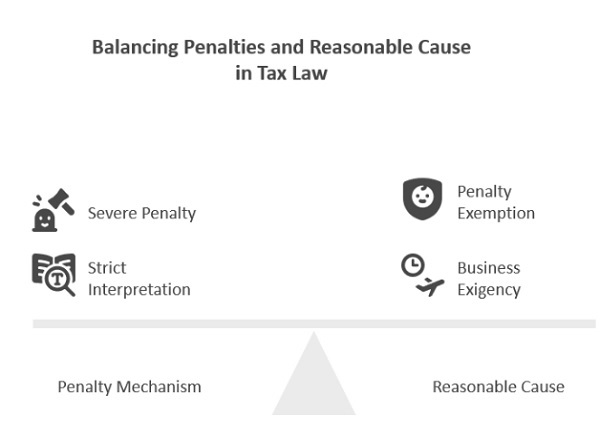
The Penalty Mechanism (Section 271D): Non-compliance with Section 269SS attracts a penalty under Section 271D. The quantum of this penalty is severe—it is a sum equal to the amount of the loan or deposit so taken or accepted. For a ₹15,00,000 deposit, the penalty is ₹15,00,000. This draconian consequence mandates a strict interpretation of the statute. If there is any ambiguity in whether a transaction is a “loan,” the benefit of the doubt must flow to the assessee, as established in penal jurisprudence.

1.3 The Safety Valve: Section 273B and “Reasonable Cause”
The legislature, acknowledging that strict liability could cause undue hardship in genuine cases, introduced Section 273B. This section overrides Section 271D, stating that no penalty shall be imposable if the assessee proves that there was a “reasonable cause” for the failure to comply.
The term “reasonable cause” has become the battleground for litigation. Courts have consistently held that “business exigency”—the urgent need for funds to ensure the survival of the business—constitutes reasonable cause. This is particularly relevant when banking channels are too slow or inaccessible to meet an immediate liability, such as a payroll deadline or a critical vendor payment. The intersection of “reasonable cause” and the “nature of current accounts” forms the core of the defense strategy in cases involving director deposits.
Chapter 2: The Jurisprudential Distinction of “Running Accounts” vs. Loans
2.1 The Conceptual Framework of a Current Account
In the corporate world, the relationship between a director and a closely held company is often fluid. The director acts not just as an officer but as the financial guarantor of the entity. A “Current Account” or “Running Account” in this context is characterized by:
1. Mutuality of Flow: Funds move in both directions. The director deposits cash when the company is low on funds and withdraws it when the company has a surplus.
2. Absence of Fixed Tenure: Unlike a term loan which has a maturity date, a current account is open-ended.
3. Absence of Interest: Typically, these accounts are non-interest bearing. The motive is operational support, not profit generation for the director.
4. Frequency: The transactions are frequent and irregular, dictated by the company’s daily needs rather than a structured repayment schedule.
The courts have recognized that applying the label of “loan” or “deposit” to such a fluid, mutual arrangement is a mischaracterization of the transaction’s substance. A loan implies a creditor-debtor relationship; a current account implies a principal-agent or proprietary relationship where the director funds the company as an extension of their own commercial persona.
2.2 The Doctrine of Substance Over Form
A recurring theme in the relied-upon judgments is the doctrine of “Substance Over Form.” The Revenue often argues that if money is shown on the liability side of the balance sheet, it is a loan. However, the courts have looked deeper. If the substance of the transaction is a temporary accommodation to meet urgent expenses, it is not a loan.
For instance, if a director pays ₹15,00,000 in cash into the company account because the company has issued cheques that are about to bounce, the substance of this transaction is “bailment” or “accommodation,” not “lending.” The director is essentially stepping into the shoes of the company to discharge a liability. This distinction is critical because Section 269SS targets the acceptance of loans to evade tax, not the infusion of capital to saveabusiness.
Some AOs argue:
“Even if it is current account, cash acceptance itself violates 269SS.”
The Rebuttaal Line
“Section 269SS is not a mode-of-receipt provision; it is a transaction-character provision.
Unless the receipt is first proved to be a loan or deposit, the question of mode does not arise.”

Chapter 3: Comprehensive Analysis of Key Case Laws
This section provides an in-depth dissection of the six case laws identified as the strongest authorities for the defense.
3.1 CIT v. Idhayam Publications Ltd. (2006) 285 ITR 221 (Madras High Court)
Citation Analysis: Court: Madras High Court Status: Binding Precedent for Tribunal Benches across India.
Factual Matrix: The assessee, Idhayam Publications Ltd., was a private limited company engaged in the publication of books. During the assessment proceedings for the assessment year 1992-93, the Assessing Officer (AO) noted that the company had accepted cash amounts from its director, Mr. S.V.S. Manian, and a sister concern, M/s. Manian Creations. The total amount involved was substantial. The AO treated these receipts as “loans” taken in violation of Section 269SS because they were not made via account payee cheques. Consequently, a penalty under Section 271D was initiated and levied.
The Judicial Reasoning: The matter travelled to the Tribunal and finally to the Madras High Court. The High Court’s analysis is the bedrock of the “current account” defense.
1. Nature of the Account: The Court observed that there was a “running current account” in the books of the assessee in the name of Mr. S.V.S. Manian. The director used to pay money into the current account and withdraw money from it. This mutuality was key.
2. Definition of Loan: The Court held that for Section 269SS to apply, the Revenue must first establish that the receipt was a “loan or deposit.” The Court explicitly stated: “The deposit and the withdrawal of the money from the current account could not be considered as a loan or advance.”.
3. Absence of Interest: The Court noted that no interest was being charged on these transactions. This further distanced the transaction from the definition of a commercial loan.
4. Burden of Proof: The judgment shifted the burden of proof to the Revenue. It is not enough to show cash was received; the Revenue must prove the character of the receipt was that of a loan.
Implication for the Client: This case is the “Magna Carta” for the client’s situation. It establishes that if the ledger shows a pattern of deposit and withdrawal (or even a single deposit for expense and subsequent adjustment), and is classified as a current account, Section 269SS is inapplicable ab initio. The client’s ₹15,00,000 deposit, intended for survival expenses, fits perfectly into this “current account” definition established by the Madras High Court.
3.2 ACIT v. Lakshmi Trust Co. (2008) 303 ITR 99 (Madras High Court)
Citation Analysis: Court: Madras High Court Status: Reinforces the “Genuineness” and “Reasonable Cause” defense.
Factual Matrix: The assessee, Lakshmi Trust Co., had accepted cash loans and repaid them in cash, violating both Sections 269SS and 269T. The penalties levied under Sections 271D and 271E were substantial. The assessee argued that the transactions were with sister concerns and were necessitated by business requirements (purchases in Erode where cash was demanded). The CIT(A) found the transactions to be genuine and the identity of the lenders established.
The Judicial Reasoning: The Madras High Court dismissed the Revenue’s appeal, laying down several critical principles:
1. Genuineness vs. Technicality: The Court held that the rationale behind Section 269SS is to prevent the laundering of concealed income. Where the transaction is genuine, the identity of the lender is known, and the transaction is fully recorded in the books, the “mischief” of tax evasion is absent.
2. Bona Fide Belief: The Court accepted that the assessee acted under a bona fide belief that such transactions were permissible for business exigencies. This constitutes “reasonable cause” under Section 273B.
3. Discretionary Penalty: The judgment confirms that Section 271D is not mandatory. Even if a technical violation exists, the authority has the discretion to waive the penalty if the transaction was genuine and driven by business necessity.
Implication for the Client: This case protects the client against the allegation that “cash is cash, regardless of the source.” Since the source is the Director (a verified, tax-assessed entity), the transaction is genuine. Lakshmi Trust dictates that in such genuine cases, the rigorous penalty provisions should not be mechanically applied.
3.3 ITO v. Universal Associates (ITAT Jaipur)
Citation Analysis: Court: ITAT Jaipur Status: Specific authority on “Business Exigency” and “Survival Funds.”
Factual Matrix: In this case, the Assessing Officer observed that the assessee firm had taken amounts from its partners/directors in cash. The AO treated these as loans in violation of Section 269SS. The assessee contended that these were not loans but funds introduced to meet the “exigencies of business” and were credited to the partners’ current accounts. The amounts were withdrawn from the partners’ proprietary concerns and remitted to the assessee.
The Judicial Reasoning: The ITAT Jaipur Bench ruled in Favor of the assessee, heavily relying on the principle of “business exigency.”
1. Running Account Logic: The Tribunal reiterated that a “running current account” where partners/directors introduce funds to meet expenses is not a loan account.
2. Exigency as Reasonable Cause: The Tribunal placed significant weight on the argument that the amounts were received in cash “owing to exigencies of the business.” This aligns directly with the client’s “survival” scenario. When a business is fighting for survival, it cannot always wait for banking clearances; immediate cash infusion is a commercial necessity.
3. Share Application Analogy: The Tribunal also discussed (in related contexts within the snippet) that funds given as share application money or for specific business purposes do not attract Section 269SS.
Implication for the Client: This judgment serves as a direct precedent for the “Business Exigency” argument. The client’s inability to generate revenue and the need for “survival funds” is the exact type of exigency the Jaipur Bench accepted as a valid defense against Section 269SS penalties.
3.4 CIT v. Kesar Builders Pvt. Ltd. (2013) (Gujarat High Court)
Citation Analysis: Court: Gujarat High Court Status: Authority on “Substance over Form” and Journal Entries.
Factual Matrix: While Kesar Builders is often cited in the context of journal entries (book adjustments between sister concerns), its core holding is applicable to cash transactions in current accounts as well. The assessee had accepted deposits via journal entries (and potentially cash adjustments) which the AO treated as violations of Section 269SS. The High Court had to decide if these book entries constituted “loans” or “deposits”.
The Judicial Reasoning: The Gujarat High Court held that mere book entries or adjustments in a current account relationship do not constitute a violation of Section 269SS.
1. Nature of Relationship: The Court looked at the relationship between the parties. Transactions between group companies or directors and companies, intended to settle mutual obligations or transfer funds for operational reasons, are not “loans” in the legislative sense.
2. Reasonable Cause: The Court affirmed that even if a technical violation is assumed, the nature of the transaction (internal adjustment) constitutes reasonable cause.
3. Absence of Money Transfer: In the context of journal entries, no physical money changes hands. Similarly, in a director’s current account, the “cash” is often used immediately for expenses, meaning the company acts as a conduit rather than a borrower.
Implication for the Client: This judgment allows the client to argue that the “substance” of the transaction was an internal fund arrangement for business operations, not an external loan. It reinforces the view that Section 269SS is meant for “outsiders,” not for the internal financial mechanics of a director-company relationship.
3.5 DCIT v. V. S. Chaitanya (ITAT Chennai)
Citation Analysis: Court: ITAT Chennai Status: Recent confirmation of procedural safeguards.
Factual Matrix: The assessee, V.S. Chaitanya, faced penalty proceedings under Section 271D. The core of the dispute was the acceptance of cash. The Tribunal had to decide on the validity of the penalty in the absence of a recorded satisfaction by the AO and the nature of the transaction.
The Judicial Reasoning: The Tribunal ruled in favor of the assessee, emphasizing two main points:
1. Satisfaction Recording: The penalty under Section 271D cannot be initiated mechanically. The AO must record a specific satisfaction in the assessment order that a violation of Section 269SS has occurred and that it is without reasonable cause.
2. Director’s Account: The Tribunal aligned with the view that amounts in a director’s current account do not fit the definition of a loan. If the funds are for business operations, the penal provisions are not attracted.
Implication for the Client: This case provides a procedural defense. If the AO in the client’s case simply levies a penalty without explicitly proving why the “current account” is actually a “loan,” the penalty order is liable to be quashed on procedural grounds.
3.6 CIT v. Kailash Soni (2016 – Rajasthan HC)
Citation Analysis: Court: Rajasthan High Court Status: Authority on Family/Director Relationships.
Factual Matrix: The assessee received cash from his father/family members for the purchase of property/business purposes. The AO treated this as a loan in violation of Section 269SS. The amount was shown in the books as a loan. However, the High Court looked beyond the nomenclature.
The Judicial Reasoning: The High Court held that transactions between close family members (or directors and their companies, by extension) for joint business purposes are not “commercial loans.”
1. Relationship Context: The Court recognized that in Indian business families, funds are often pooled without formal loan agreements. These are “mutual help” transactions.
2. No Interest/Terms: The absence of interest and fixed repayment terms was cited as evidence that the transaction was not a loan under the strict definition of the Act.
Implication for the Client: This supports the argument that the director and company are “related parties” working towards a common goal (survival). The cash infusion is an act of “mutual help” or “proprietary support,” not a commercial lending transaction subject to Section 269SS.
Chapter 4: The Doctrine of Business Exigency and Survival Funds
4.1 “Survival Funds” as a Non-Loan Category
The client’s scenario highlights a critical phase in a company’s lifecycle: the “Early-stage / Survival” phase where no revenue is generated. In this phase, the company often loses its creditworthiness with formal banking institutions. It cannot secure overdrafts or term loans.
The only source of liquidity is the Promoter/Director. When a director injects cash during this phase, it is typically to:
1. Prevent the bouncing of cheques issued to vendors.
2. Pay statutory dues (TDS, GST) which, if delayed, attract prosecution.
3. Pay salaries to retain core staff.
Legal Argument: Such funds are not “loans” because a loan presumes a solvent borrower capable of repayment. These funds are “quasi-capital” or “survival sustenance.” The ITAT in Universal Associates specifically validated the argument of “exigencies of business.” The Tribunal recognized that when business survival is at stake, the method of funding (cash vs. cheque) becomes secondary to the necessity of the funding.
4.2 The Impossibility of Compliance (Lex Non Cogit Ad Impossibilia)
A potent legal maxim applicable here is Lex Non Cogit Ad Impossibilia – the law does not compel the impossible. If the company needed immediate cash to prevent a default or shutdown, and banking channels would have taken T+1 or T+2 days (or were frozen/inoperative), accepting cash from the director was the only possible course of action. This “impossibility” constitutes the highest form of “reasonable cause” under Section 273B. As seen in Lakshmi Trust, courts are sympathetic to genuine business constraints.
Chapter 5: Strategic Application to the Client’s Case
5.1 Defense Roadmap for the ₹15,00,000 Deposit
Based on the synthesis of the above case laws, the defense for the ₹15,00,000 cash deposit should be structured in tiers:
Tier 1: Jurisdiction Challenge (The Idhayam Defense)
- Argument: Section 269SS applies only to “loans” and “deposits.” The ₹15,00,000 was neither. It was a contribution to a “Running Current Account” to meet immediate survival expenses.
- Evidence: Produce the ledger account showing the deposit and immediate utilization for expenses (rent, salary, etc.).
- Citation: CIT v. Idhayam Publications Ltd. (Madras HC) – Binding precedent that current accounts are outside 269SS.
Tier 2: Reasonable Cause (The Universal Associates Defense)
- Argument: Even if the AO insists it is a loan, there was “reasonable cause” for accepting cash. The company had no revenue and was in a survival crisis. Immediate funds were needed to keep the company afloat.
- Evidence: Bank statements showing low/nil balance prior to the deposit; vendor demand letters or statutory due dates coinciding with the deposit.
- Citation: ITO v. Universal Associates (ITAT Jaipur) – “Exigencies of business” justify cash acceptance.
Tier 3: Genuineness (The Lakshmi Trust Defense)
- Argument: The source is the Director, whose identity is established and who is assessed to tax. The transaction is genuine and fully recorded. There is no tax evasion or black money involved.
- Evidence: Director’s ITR and confirmation letter.
- Citation: ACIT v. Lakshmi Trust Co. (Madras HC) – Genuine transactions should not be penalized.
5.2 Documentation Strategy
To bolster these arguments, the following documentation is essential:
1. Board Resolution: A retrospective minute noting the director’s authorization to infuse funds for “urgent business exigencies” via a current account.
2. Ledger Nomenclature: Ensure the account is named “Director’s Current Account” or “Imprest Account,” not “Unsecured Loan.”
3. Utilization Chart: A direct correlation chart showing:
-
- Date: 01/01/202X – Cash Deposit: ₹5,00,000
- Date: 02/01/202X – Salary Payment: ₹4,80,000
- This proves the “conduit” nature of the company account.
Chapter 6: Comparative Analysis and Conclusion
6.1 Comparative Matrix of Judicial Precedents
The following table synthesizes the “Big Six” judgments to provide a ready reckoner for the defense strategy.
| Case Law | Court / Tribunal | Core Legal Principle | Application to Client’s ₹15L Deposit |
|---|---|---|---|
| CIT v. Idhayam Publications Ltd. (285 ITR 221) | Madras High Court | Running/Current Account ≠ Loan. Revenue must prove “loan” character. | Primary Precedent. Establishes that the ₹15L deposit, being in a current account, is legally not a loan. |
| ACIT v. Lakshmi Trust Co. (303 ITR 99) | Madras High Court | Genuineness & Bona Fides. Penalty is discretionary for genuine transactions. | Safety Net. If the AO rejects the “not a loan” argument, this proves the transaction is genuine and bona fide. |
| ITO v. Universal Associates | ITAT Jaipur | Business Exigency. Urgent need for funds validates cash acceptance. | Fact-Specific Defense. Directly supports the “survival funds” and “no revenue” context. |
| CIT v. Kesar Builders Pvt. Ltd. | Gujarat High Court | Substance Over Form. Internal adjustments/current accounts are not loans. | Legal Theory. Argues that the “substance” is business survival, not commercial borrowing. |
| DCIT v. V. S. Chaitanya | ITAT Chennai | Procedural Strictness. AO must record satisfaction; penalty not automatic. | Procedural Check. Ensures the AO follows due process and considers the specific nature of the account. |
| CIT v. Kailash Soni | Rajasthan High Court | Relationship Context. Family/Director funds are “mutual help,” not loans. | Contextual Argument. Defines the ₹15L as “proprietary support” rather than a third-party loan. |
6.2 Conclusion and Final Opinion
The comprehensive analysis of the statutory provisions and the evolving jurisprudence leads to a definitive conclusion: The ₹15,00,000 cash deposit made by the Director into the company’s bank account does not attract the penalty provisions of Section 271D.
The courts have consistently distinguished between the acceptance of a “loan” for investment/interest purposes and the receipt of funds in a “current account” for business survival. The latter, characterized by mutuality, lack of interest, and business exigency, falls outside the ambit of Section 269SS.
By relying on the binding precedent of Idhayam Publications and the supporting logic of Universal Associates and Lakshmi Trust, the client acts on solid legal ground. The classification of the transaction as a “Director’s Current Account” is not merely a semantic choice but a judicially recognized category that immunizes the transaction from the rigors of Section 269SS. The “survival” nature of the funds further strengthens the case, qualifying as a “reasonable cause” that statutorily bars the imposition of any penalty.
What’s Next?
While this article focused on the Income-tax implications of director cash infusions under Section 269SS, an equally important question remains unanswered:
Does a “director loan” under the Companies Act necessarily attract the same treatment under the Income-tax Act?
In the next article, we will analyse the interplay between the Companies Act, 2013 and the Income-tax Act, 1961 in the context of director loans and current accounts, highlighting compliance risks, classification conflicts, and litigation-tested solutions.
Stay tuned.
Tarun Marimganti FCMA
Practicing Cost Accountant
Contact No-8328174243









Good one.
Very helpful and well curated views