
Month: June 2026
2,704 articlesIncome Tax
Income Tax
Long-Term Share Holding Not Penny Stock Because Investment Was Held for 10 Years
Income Tax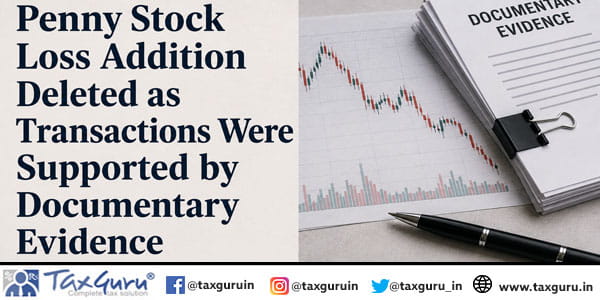
Income Tax
Penny Stock Loss Addition Deleted as Transactions Were Supported by Documentary Evidence
Company Law
Company Law
Drug License in India: Complete Guide for Pharma Business
Goods and Services Tax
Goods and Services Tax
Rajasthan HC Stays GST Adjudication Order as Single Section 74 Notice Covered Multiple Years
Corporate Law
Corporate Law
ED Can Initiate PMLA Inquiry Without Prior FIR: Kerala HC
Company Law
Company Law
Compulsorily Convertible Preference Shares (CCPS)
Goods and Services Tax
Goods and Services Tax
Litigation Lifeline: Judicial Rescue of Time-Barred GST Appeals
Goods and Services Tax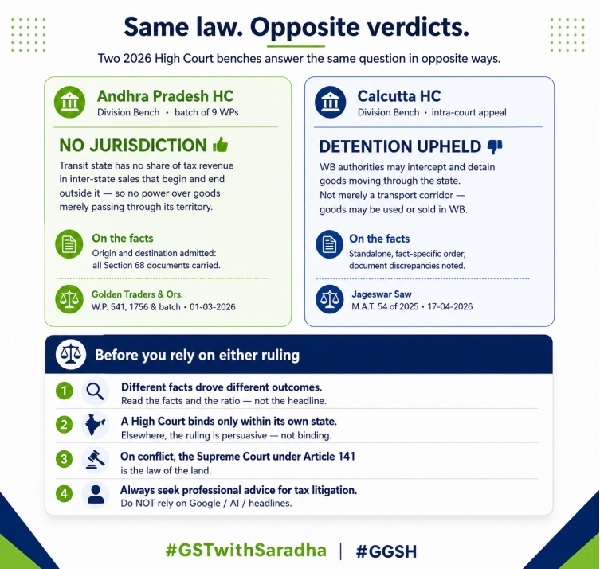
Goods and Services Tax
Can Transit-State Officers Detain Goods? Two High Courts, Opposite Views
Goods and Services Tax
Goods and Services Tax
Alternate Remedy Bars writ challenge to GST Adjudication order involving classification and exemption disputes: Meghalaya HC
Company Law
Company Law
51 FAQs on Investigations by CBI & ED for 73,006 Cr. Bank frauds by RAAG
Goods and Services Tax
Goods and Services Tax
GST Order Quashed as Personal Hearing Cannot Be Waived by Selecting ‘No’: Gujarat HC
Goods and Services Tax
Goods and Services Tax
ITC Reversal Bars Tax Demand; No Interest if Adequate Credit Balance: Orissa HC
Company Law
Company Law
SRA could not back out of CoC-Approved Plan on Pretext of Conditional Letter of Intent (LoI): Supreme Court
Goods and Services Tax
Goods and Services Tax

