The issue involved disciplinary action for professional and other misconduct under the Chartered Accountants Act. The authorities held the member guilty, and the penalty of removal was upheld through appeal and enforced after court dismissal.
The issue was rejection of an appeal filed beyond the condonable period under GST law. The Court allowed reconsideration due to a minor nine-day delay supported by valid reasons.
The Tribunal held that differential CVD cannot be demanded without evidence linking the importer to MRP alteration. Allegations based on assumptions and third-party actions were rejected.
The Tribunal held that no penalty is leviable where service tax and interest are paid before issuance of notice. Absence of fraud or suppression entitled the assessee to relief.
The ITAT held that penalty proceedings are invalid where the Assessing Officer does not specify whether the charge is concealment or inaccurate particulars. The penalty was quashed due to lack of clarity and inconsistency.
The issue was denial of credit due to post-amendment invoicing. The Tribunal held that credit is admissible since services were completed before the cut-off date.
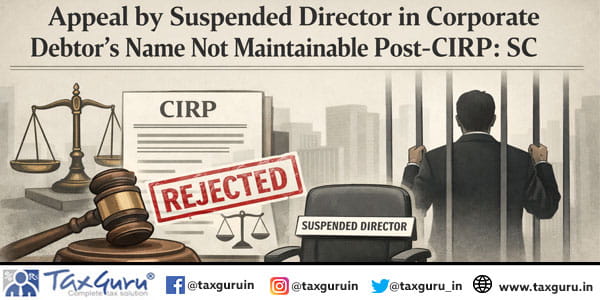
**SEO Description:** Supreme Court holds that an appeal filed by a suspended director in the name of the corporate debtor after admission of CIRP is not maintainable. It rules that such a fundamentally incompetent appeal cannot be cured or converted after expiry of limitation under Section 61(2) of the IBC, and sets aside NCLAT’s contrary approach.
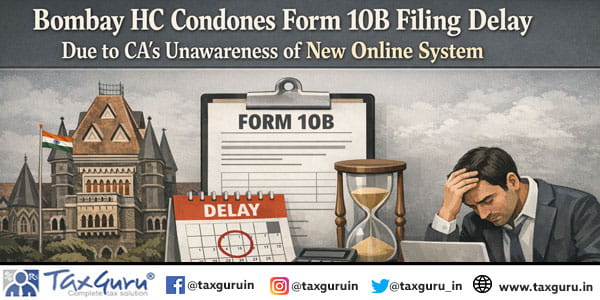
The Supreme Court declined to interfere with the High Court’s order condoning delay in filing Form 10B. It upheld that a genuine explanation and completed compliance justified relief.
The Court condoned a 687-day delay in filing Form 10B, accepting the explanation of unintentional oversight in online filing. It held that denial of exemption due to such delay would be unjust, especially for a charitable trust.
The Tribunal examined whether an increase in loans was due to fresh borrowing or reclassification. It remanded the matter for verification, holding that no addition is warranted if no new funds were received.