
Month: March 2026
2,081 articlesGoods and Services Tax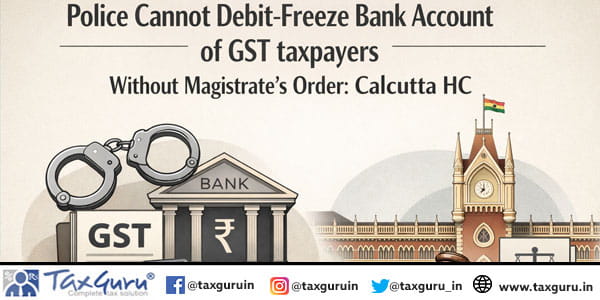
Goods and Services Tax
Police Cannot Debit-Freeze Bank Account of GST taxpayers Without Magistrate’s Order: Calcutta HC
Income Tax
Income Tax
Updated Return After Reassessment Notice Comes With Higher Tax Cost Because Additional 10% Levy Proposed
Company Law
Company Law
INC-22 Is Not a Magic Wand: The Hidden Compliance Trap in ROC-to-ROC Registered Office Shifts
Goods and Services Tax
Goods and Services Tax
Fake Registration or Failed Verification? Retrospective GST Cancellation and Blame on Bona Fide Taxpayers
Income Tax
Income Tax
ITAT Reduces Addition for Household Savings Yet Confirms Higher Section 115BBE Tax
Corporate Law
Corporate Law
PFRDA Notifies New Investment Management Fee Rules for Pension Funds for Five Years
Income Tax
Income Tax
Draft Income Tax Rule 333: Electronic payment of tax
Income Tax
Income Tax
Draft Income Tax Rule 332: Electronic furnishing of Forms, Returns, Statements, Reports, orders, certificates, etc
Income Tax
Income Tax
Draft Income Tax Rule 331: Guidelines for approval under Schedule XV
Income Tax
Income Tax

