
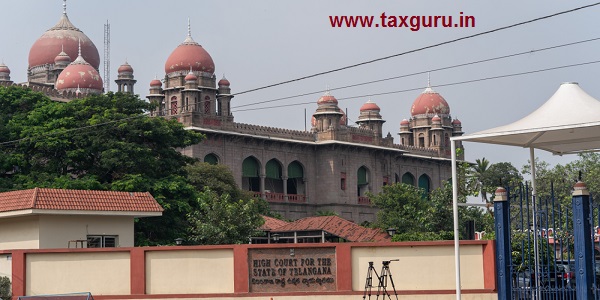
Courts: Telangana High Court
Find latest Telangana High Court judgments, orders and case laws on Income Tax, GST, Customs, Company Law and other taxation and commercial matters.

Telangana HC Quashes GST Registration Cancellation for Grounds Beyond SCN
Telangana HC Condones GST Appeal Delay Caused by CA’s Illness
Telangana HC Directs Taxpayer to Deposit 10% Tax & Approach GSTAT for Second Appeal
Telangana HC Allows Rectification of GST Penalty Order After Tax Demand Was Set Aside
Telangana HC Declines Writ Against GST Demand & Directs Appeal Before GSTAT
Telangana HC Sets Aside Rejection of Form 10-IC Delay Condonation
Telangana HC Permits Appeal Against Alleged Unsigned GST DRC-07 Order with Delay Condonation Liberty
Telangana HC Refuses to Interfere at GST SCN Stage; Directs Assessee to File Objections
Telangana HC Grants Liberty to File GST Appeal with Interim Protection Against Coercive Recovery
Telangana HC Grants Liberty to Appeal Against Section 73 GST Assessment Order
Telangana HC Grants Liberty to File GST Appeal with Delay Condonation Due to CA’s Illness

No Hearing Required for Intra-City Transfer of Income Tax Cases Under Section 127: Telangana HC
Telangana HC Directs Fresh Section 43B Examination Based on VAT-205 Orders
Telangana HC Allows Section 54F Exemption Despite Delay in Villa Handover by Developer
Telangana High Court judgments and orders cover significant taxation, corporate, commercial and regulatory disputes. This TaxGuru page brings together Telangana High Court case laws concerning Income Tax, GST, Customs, input tax credit, refunds, tax demands, reassessment, penalties, Company Law and other legal matters. Taxpayers, companies, Chartered Accountants, advocates and tax professionals can use the collection to research judicial precedents and monitor important legal developments. TaxGuru publishes recent and significant earlier Telangana High Court decisions with summaries and analysis explaining the issues and legal principles involved. The page serves as a convenient resource for readers researching taxation and business-related litigation before the Telangana High Court.

