

Articles by this Author
Income Tax
Income Tax
Business Funds Deposited in Banks Qualified for Section 80P Deduction: ITAT Bangalore
Income Tax
Income Tax
Rule 8D Cannot Apply Without AO Recording Dissatisfaction: ITAT Bangalore
Income Tax
Income Tax
ITAT Bangalore Applies ₹25 Lakh Leave Encashment Limit to AY 2020–21
Income Tax
Income Tax
Goetze Does Not Bar Appellate Claim for BSNL VRS Exemption: ITAT Chennai
Income Tax
Income Tax
Limited Means Explained 124-Day Appeal Delay; ITAT Chennai Restores Quarry Agent’s Case
Income Tax
Income Tax
No Commercial Sales Could Not Justify Blanket Capitalisation of Division Expenses: ITAT Chennai
Income Tax
Income Tax
Power Agent’s Same-Day Transfers Defeated ₹1.25 Crore Section 69A Addition: ITAT Chennai
Income Tax
Income Tax
Untested Third-Party Statement Could Not Sustain ₹9.65 Crore Gold Addition: ITAT Chennai
Income Tax
Income Tax
CPC’s Section 50C Adjustment Despite Objection Sent for Fresh Examination: ITAT Mumbai
Income Tax
Income Tax
Section 50C Could Not Apply to Relinquishment of Specific Performance Right: ITAT Chennai
Income Tax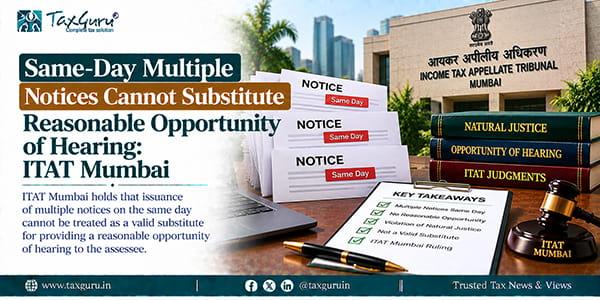
Income Tax
Same-Day Multiple Notices Cannot Substitute Reasonable Opportunity of Hearing: ITAT Mumbai
Income Tax
Income Tax
Technical Error Cannot Defeat Section 12AB Renewal: Mumbai ITAT
Income Tax
Income Tax
Marine Engineering Training Is Education: ITAT Restores Section 11 Exemption for Four Years
Income Tax
Income Tax

