

Articles by this Author
Income Tax
Income Tax
Demonetisation Cash Deposits Deleted – Source Explained from Books & Sales
Income Tax
Income Tax
Section 69A Addition Deleted & Reopening Quashed – No Ownership of Money & Borrowed Satisfaction
Income Tax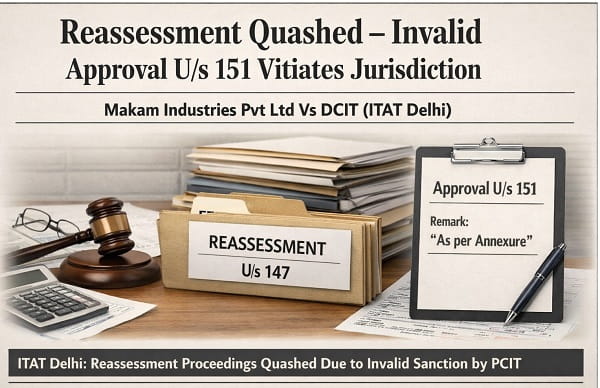
Income Tax
Reassessment Quashed – Invalid Approval U/s 151 Vitiates Jurisdiction
Income Tax
Income Tax
Reassessment Quashed – No Addition on Original Reason for Reopening
Income Tax
Income Tax
Section 153C Assessment Quashed – Mechanical & Combined Approval U/s 153D Held Invalid
Income Tax
Income Tax
Bogus Purchase, Loan Creditor Additions Deleted – CIT(A) Relief Upheld
Income Tax
Income Tax
Charitable Trust Taxed at Slab Rates – MMR Application Held Incorrect
Income Tax
Income Tax
Section 153A Assessment Quashed – Mechanical Approval U/s 153D Held Invalid
Income Tax
Income Tax
Addition U/s 69A Deleted – Third Party Statement Without Corroboration Insufficient
Income Tax
Income Tax
Bogus Purchase Addition Restricted to 10% – CIT(A) Relief Upheld
Income Tax
Income Tax
Reassessment Quashed – Notice U/s 148 Issued Before Approval & Mechanical Sanction U/s 151
Income Tax
Income Tax
Reopening Upheld but Addition Restored – Non-Speaking Order on Cost of Improvement
Income Tax
Income Tax
TDS Default u/s 201 – Matter Remanded for Verification of Payees’ Tax Payment
Income Tax
Income Tax

