ITAT Mumbai held that the Commissioner of Income Tax (Exemptions) cannot impose independent or contingent conditions while granting registration under Section 12AB. The Tribunal ruled that tax benefits could not be kept subject to the outcome of a proposed Supreme Court appeal.
ITAT Mumbai held that reassessment proceedings initiated after scrutiny assessment were invalid because they relied on the same material already examined earlier. The Tribunal ruled that reassessment cannot be used to review a previously accepted claim.
The Tribunal observed that the assessee had repaid the unsecured loan along with interest after deducting TDS and the lender had offered interest income to tax. These facts supported the genuineness of the transaction and rendered the Section 68 addition unsustainable.
Mumbai ITAT held that no addition under Section 43CA could survive where difference between agreement value and DVO valuation remained within 10% tolerance band. Tribunal ruled that safe harbour benefit applies once DVO valuation substitutes stamp duty value.
The Finance Act, 2025 retrospectively amended Section 17(5)(d) of the CGST Act after the Supreme Court allowed ITC on certain commercial buildings under the functionality test. The amendment effectively reversed the earlier interpretation from July 2017.
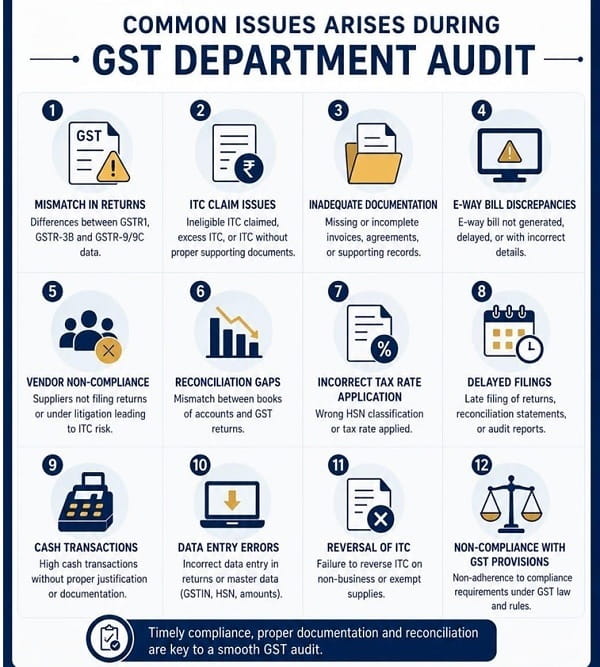
The article explains the most common GST compliance errors leading to notices, ITC denial, and penalties in 2026. It also provides practical steps businesses can follow to reduce litigation risk.
Delhi High Court sentenced a YouTuber to six months’ imprisonment for criminal contempt after finding that his videos and courtroom remarks lowered the authority of courts. The ruling emphasizes zero tolerance for attacks on judicial integrity.
GSTN has announced mandatory capture of Ship-To GSTIN in Bill-To/Ship-To transactions under the EWB system. The change aims to improve data accuracy and traceability of goods movement.
SEBI clarified that clients under Non-Discretionary PMS can pledge securities held in their demat accounts for personal borrowing. The regulator held that such pledging does not amount to borrowing by the portfolio manager as long as the decision is entirely client-driven.
SEBI revised the methodology for computing household savings through the securities market by incorporating actual granular data and broader market segments. The change increased the Gross Savings-to-GDP ratio by 47 basis points in FY 2024-25 and provided a more accurate picture of household financial savings.