The ITAT emphasized that the appeal should be decided on merits after condoning delay where sufficient explanation exists. The CIT(A) was directed to provide proper opportunity of hearing to the assessee.
Pune ITAT held that penalty proceedings under Section 271(1)(c) cannot continue against legal heirs when initiated after the assessee’s demise. The Tribunal ruled that legal representatives are not personally liable for such penalty proceedings under Section 159.
Pune ITAT restored the matter to the CIT(A) after the assessee argued that adequate opportunity was not provided to explain the source of funds received. The Tribunal directed fresh adjudication with proper hearing and liberty to file supporting evidence.
Tribunal remanded the matter after finding that the appellate authority dismissed the appeal mechanically without examining the assessee’s grounds.
The Andhra Pradesh High Court held that GST officers in a transit State cannot invoke Sections 129/130 against inter-State consignments where neither supplier nor recipient is located in that State. The ruling reinforces that jurisdiction depends on tax nexus, not physical passage of goods.
Pune ITAT upheld revision under Section 263 after finding that the Assessing Officer failed to fully verify expenditure claims unsupported by vouchers. The Tribunal held that random verification was insufficient where substantial cash expenses were claimed.
The Orissa High Court held that dismissal of a Section 34 petition on maintainability grounds effectively amounts to refusal to set aside an arbitral award under Section 37. The Court restored the arbitration challenge for adjudication on merits.
The Orissa High Court held that dismissal of a Section 34 challenge petition on maintainability grounds effectively amounts to refusal to set aside an arbitral award under Section 37. The Court restored the challenge petition for adjudication on merits.
Private limited companies with turnover above ₹200 crore or borrowings exceeding ₹100 crore must appoint an internal auditor under the Companies Act, 2013. The article explains compliance rules, penalties and governance benefits.
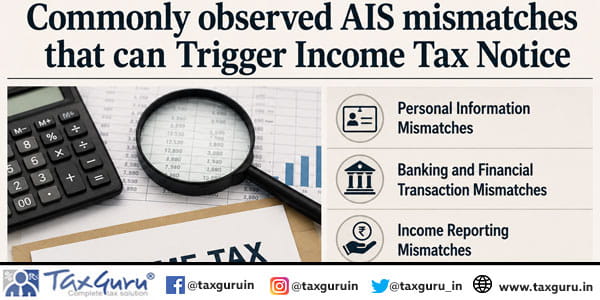
AI-driven scrutiny and AIS integration are increasing Income Tax notices where property transactions occur below stamp duty value. Both buyers and sellers may face taxation under Sections 50C and 56(2)(x).