Abstract
Related party transactions (RPTs) are business dealings between two related entities. These transactions differ from general transactions in terms of the parties involved and their independent interests, based on the arm’s length principle. This article aims to highlight the significance of RPTs in India’s capital market. It also discusses the associated legal and regulatory repercussions. The purpose of this article is to ensure the effectiveness of these standards in guiding the review mechanism of the audit committee and shareholders. Additionally, it explores how corporate governance is strengthened through the establishment of an RPT portal and protects investor interests. Finally, it concludes with the aim of safeguarding corporate governance from fraudulent activities.
Introduction
Related Party Transactions (RPTs) are complex in nature with inherent ambiguity and are governed by the Companies Act 2013, SEBI LODR Regulations 2015, and Accounting Standards. To prevent the misuse of RPTs, vagueness has been eliminated from its definition.[1] RPTs are defined under Section 188[2] of the Companies Act, 2013 (CA 2013) as transactions between a company and its related parties, such as promoters, directors, key managerial persons, subsidiaries, and their related parties. To regulate the approval of RPTs, SEBI announced the adoption of industry standards.[3] Whereas, before the establishment of SEBI, The Controller of Capital Issues (CCI) regulated the capital market under Capital Issues (Control) Act, 1947.[4] The purpose of these new industry standards is to analyse surplus information and ensure stability in the RPTs of listed entities. They aim to initiate uniformity and an organized approach in the disclosure mechanism to meet legal and regulatory requirements.[5] These standards will become mandatory from 1st April 2025, however, after shareholders request, it has been extended from 1st July 2025. To improve the accessibility of disclosures, information will be published on the websites of Stock Exchanges, CII, FICCI, and ASSOCHAM. However, SEBI had earlier directed that the information must be disclosed to the audit committee and shareholders for consideration of the RPTs, under Section IIIB of the Master Circular. [6]This requirement will enhance the audit committee’s and shareholders’ access to symmetric information, helping them detect and review clear transactions. This data shall be incorporated along with the objectives of the audit committee meeting. Reforming the regulatory framework on related party transactions is one of the ways to improve economic efficiency in capital markets.
Setbacks In RPTs
Major challenges in RPTs directly impact market value, as they may favor and benefit one party over others. To address these concerns, the government and SEBI have implemented measures aimed at reducing friction in business operations. Key issues associated with RPTs include unstructured data, information asymmetry, conflicts of interest, unfair pricing, valuation discrepancies, and more. Previously, the absence of standardized disclosure requirements led entities to either provide minimal or excessively detailed information, resulting in inconsistencies in audit committee reviews. The recent regulatory adjustments aim to enhance the quality of disclosures rather than focus solely on quantity. Under the revised framework, disclosed information must now align with industry standards to ensure uniformity and adherence to the arm’s length principle in every transaction.[7] This improvement is expected to make more effective and transparent review process for omnibus approvals. A lack of adequate information on material RPTs has historically forced shareholders to make difficult and potentially uninformed decisions. The updated regulations now mandate that essential details about material RPTs, in line with industry norms, be included in the notice sent to shareholders.[8] This measure will prevent poor decision-making and safeguard investor interests. If a company fails to disclose the nature and value of transactions controlled by its promoter group, it may result in insufficient scrutiny by the audit committee. Standardized industry practices are intended to prevent such misrepresentations of the entities involved.
Despite their benefits, these standards have faced criticism for increasing the compliance burden on companies and causing potential delays in operations due to their long-term implementation process. Additionally, excessive disclosure of strategic information could expose business strategies. However, companies with clear and transparent RPT disclosures are more likely to attract investors and enhance both their corporate image and profitability. Although the complete elimination of fraud may be beyond the scope of these reforms, standardized procedures can significantly suppress fraudulent practices. The new standards also require Promoter Directors and Key Managerial Personnel (KMPs) to certify that RPTs are fair and in line with regulatory expectations. Furthermore, companies must justify each RPT by demonstrating that it serves the best interests of both the organization and its shareholders. To justify the Companies from bias, they are directed to evaluate the royal payments with minimum three industries and categorise them as management fees, brand usage and etc. This requirement guarantees the investors and shareholders with fairness. Companies must disclose sunset clause for these royalty payments in their agreement, such legal requirements verify the scrutiny. The Audit Committee was entrusted with a critical role in ensuring the effective and seamless functioning of the review mechanism. It guides the regulatory body to identify any loopholes, question such transactions and correcting them. Such as, the financial misstatements can be detected instantly and will prevent any fraud related to RPTs. Inaccurate to provide such disclosures based on Industry standards will amount to penalty or other regulatory actions. Securing the corporate governance with remedial actions will safeguard the small-scale investors and shareholders. These standards are investor friendly and a path to Corporate Governance.
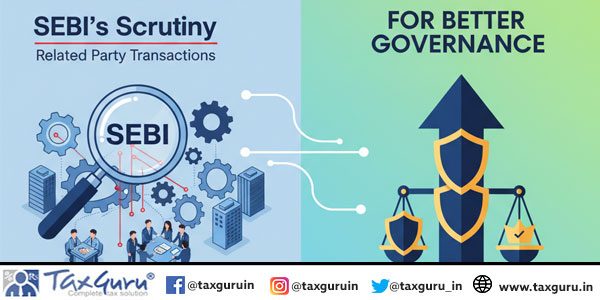
Since the industrial era, the path of corporate governance has faced numerous challenges in India, it can be referred as “Corporate governance is a challenging chapter of the book called industrialisation.” N. R. Narayan Murthy, founder of Infosys, stated in his speech that corporate governance is all about transparency, fairness, accountability and raising the trust and confidence of the stakeholders in a company’s working mechanism. It is also about civilized behaviour to make life better for the next generation. In 1999, SEBI established the Kumar Mangalam Birla Committee through clause 49 of the listing agreement, which recommended to improve corporate governance standards.
To curb the bureaucratic authority of the central government on capital market and erase the scope of approval based functional nature of CCI, the Government of India came up with a resolution to constitute a non-statutory body called the SEBI. Major grounds for this resolution are lack of Transparency, inefficiency in investor protection and delay in approval process (which effected the raise in capital market) and lack of disclosure norms in CCI.[9] Later, in 1992 it was established as a Statutory body,[10] enabled by Entry 48 of List I of Schedule VII of the Indian Constitution.[11] The legislative intend behind all such modification is to secure corporate oversight. SEBI has consistently delivered the regulations to uphold the corporate governance standards.
Recently, SEBI has launched a “RPT Portal”,[12] to build transparency in the corporate governance in India. To elevate its technological aspect in corporate ecosystem, all the investors and shareholders will have access to the critical information from such governance data. This portal ensures standard and comprehensive data. This portal will navigate in tracking and analysing the RPTs, such digital tools will enhance the accessibility and structured information. This portal is considered as a model in building corporate ecosystem. This monitory system will empower the corporate governance. Regulatory body has maintained exceptional performance in term of transparency and governance.
Way Forward
Related Party Transactions is a spotlight area, which needs to be improved regularly. These industry standards will address the Challenges, like lack of transparency and conflict of interest precisely. As we know eliminating all the issues is practically impossible. However, they can be supressed through evolving strategic frameworks in capital market. I support the policy makers in making such stringent compliances, which upgrades the market valuation. I urge the authorities to conduct an inspection of RPTs in terms of misrepresentation and formulate principles. To oversight the fraudulent activities in corporate field, the SEBI along with entities must adhere to the regulations.
[1] Report of the Working Group on Related Party Transactions, Amendment 6 of LODR regulation by work committee report, published on Jan 27, 2020, SEBI Website, Available at: https://www.sebi.gov.in/reports-and-statistics/reports/jan-2020/report-of-the-working-group-on-related-party-transactions_45805.html
[2] Companies Act, 2013, § 188, No. 18, Acts of Parliament, 2013(India).
[3] “Minimum information to be provided for review of the audit committee and shareholders for approval of a related party transaction”, Circular no. SEBI/HO/CFD/CFD-PoD-2/P/CIR/2025/18, published on February 14, 2025, Available at: https://taxguru.in/sebi/sebi-issues-industry-standards-related-party-transactions.html
- 11(1) and 11A of the SEBI Act[3] read with Regulation 101 of the SEBI Listing Obligations and Disclosure Requirements Regulation, 2015 (‘LODR Regulation’) standards are established by Industry Standard Forum (ISF) along with representation of Confederation of Indian Industry (CII), Federation of Indian Chambers of Commerce and Industry (FICCI) and Associated Chambers of Commerce and Industry of India (ASSOCHAM).
[4] The Capital Issues (Control) Act, 1947, Act No.29 of 1947.
[5] Regulation 23(2), 23(3) and 23(4) of SEBI Listing Obligations and Disclosure Requirements (LODR) Regulation, 2015.
[6] Master Circular for Issue of Capital and Disclosure Requirements, Mater Circular No. SEBI/HO/CFD/PoD-1/P/CIR/2024/0154, Published on Nov 11, 2024, Available at: https://taxguru.in/sebi/sebi-master-circular-issue-capital-disclosure-requirements.html
[7] Paragraph 4, Part A of Section III-B, Master Circular for Issue of Capital and Disclosure Requirements, Mater Circular No. SEBI/HO/CFD/PoD-1/P/CIR/2024/0154, Published on Nov 11, 2024, Available at: https://taxguru.in/sebi/sebi-master-circular-issue-capital-disclosure-requirements.html
[8] Paragraph 6, Part B of Section III-B, Master Circular for Issue of Capital and Disclosure Requirements, Mater Circular No. SEBI/HO/CFD/PoD-1/P/CIR/2024/0154, Published on Nov 11, 2024, Available at: https://taxguru.in/sebi/sebi-master-circular-issue-capital-disclosure-requirements.html
[9] HISTORICAL PERSPECTIVE OF SECURITIES LAWS, M S SAHOO, ICSI.
[10] SEBI Website, Available at: https://www.sebi.gov.in/about-sebi.html
[11] INDIA CONST. s.VII (a. 246), List I Union List, entry 48, “Stock exchange and futures market”.
[12] Speech of Shri Ashwani Bhatia, Whole Time Member, SEBI at the Launch of Related Party Transactions Analysis Portal, Published on Feb 14, 2025, SEBI Website, Available at: https://www.sebi.gov.in/media-and-notifications/speeches/feb-2025/speech-of-shri-ashwani-bhatia-whole-time-member-sebi-at-the-launch-of-related-party-transactions-analysis-portal_91929.html