Calcutta High Court held that violation of principles of natural justice and erroneous order cannot be reason for bypassing the statutory remedy of appeal under section 76 of the Andaman and Nicobar Islands Value Added Tax Regulation, 2017. Accordingly, writ petition stands dismissed.
Customs exemptions, MSME financing tools, and infrastructure reforms operate within statutory frameworks like the Customs Act, FEMA, and MSMED Act, ensuring fiscal policies are legally enforceable.
From 1 February 2026, most tobacco products attract 40% GST with excise-based levies replacing compensation cess. GST will now be computed on MRP instead of transaction value.
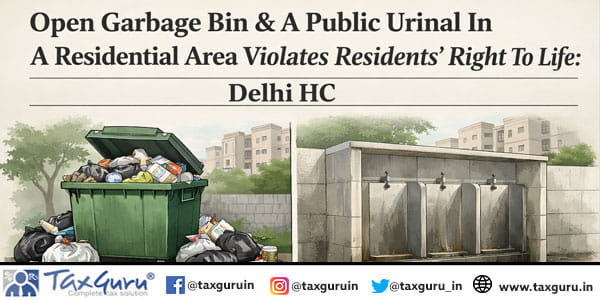
The Court held that unhygienic public facilities near a residence infringe the right to life and dignity under Article 21. MCD was directed to demolish the structures and provide proper waste management facilities.
elying on Supreme Court precedent, the Court upheld ITAT’s finding that reopening based on reappraisal of existing records is invalid. The Revenue’s appeal was dismissed.
The High Court set aside an ex parte GST order after finding lack of proper service and denial of hearing. It held that mandatory opportunity under Section 75 must be granted before adverse determination.
The Court held that CBIC Master Circulars require mandatory pre-consultation before issuing high-value excise/service tax demands, even where extended limitation for alleged fraud is invoked. Notices issued without compliance were quashed.
The Court held that Section 73 does not prohibit issuance of multiple show cause notices for the same tax period when they address different discrepancies. Only overlapping demands on identical facts are impermissible.
Section 74A introduces a single GST demand provision for fraud and non-fraud cases from FY 2024-25 onwards. Authorities can no longer issue notices under Sections 73 or 74 for these periods.
The introduction of GST transformed India’s fiscal federalism by centralizing indirect taxation under a unified framework. While promoting cooperative decision-making through the GST Council, it reduced states’ independent taxing powers.