

Articles by this Author
Income Tax
Income Tax
Section 12A Registration Mandatory for Section 80G Approval: Gujarat HC
Income Tax
Income Tax
Section 13 Applies at Assessment, Not Section 12AB Registration: Gujarat HC
Goods and Services Tax
Goods and Services Tax
GST Sections 73 & 74 Inapplicable to Pre-GST VAT ITC Disputes: P&H HC
Company Law
Company Law
NCLT Ahmedabad Directs ROC Inquiry Into Disputed Share Transfers Under Section 56
Company Law
Company Law
ITO Can Seek Revival of Struck-Off Company as Creditor: NCLT Kochi
Income Tax
Income Tax
Section 148 Reopening Cannot Rest on Presumptions of On-Money Receipt: Gujarat HC
Income Tax
Income Tax
Earlier Rejection Does Not Bar Fresh Section 12AB Application: ITAT Bangalore
Income Tax
Income Tax
ITAT Mumbai Rejects CUP Method, Deletes Transfer Pricing Adjustment on AE Exports
Income Tax
Income Tax
ITAT Cannot Rely on Subsequent Assessment to Uphold Section 263 Revision: Gujarat HC
Goods and Services Tax
Goods and Services Tax
Patna HC Sets Aside GST Registration Cancellation for Denial of Personal Hearing
Income Tax
Income Tax
ITAT Chennai Upholds Section 263 for Lack of Inquiry in Faceless Assessment
Income Tax
Income Tax
Notional Interest Income Cannot Be Taxed Under Section 40A(2)(b): ITAT Jaipur
Income Tax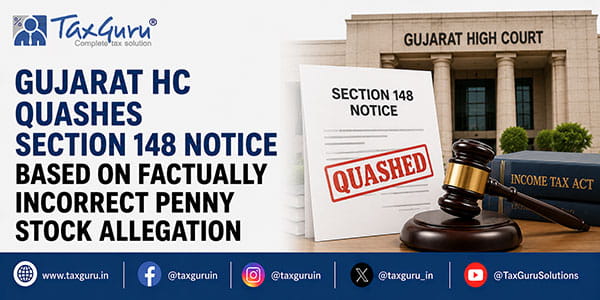
Income Tax
Gujarat HC Quashes Section 148 Notice Based on Factually Incorrect Penny Stock Allegation
Corporate Law
Corporate Law

