Draft Rule 66 requires mandatory audit, Form 32 filing, and section-wise document submission for claiming deductions under Sections 46 to 144, reinforcing strict procedural compliance.
ROC Bangalore imposed penalty for 1,592 days of continuing default after a second DIN was obtained contrary to statutory provisions.
The ROC Bangalore imposed penalty under Sections 155 and 159 of the Companies Act after a director inadvertently obtained a second DIN. The default continued for 807 days before rectification.
ROC Bangalore imposed a penalty for 907 days of continuing default due to acquisition of a second DIN, holding it contravened Section 155.
The ROC Gwalior penalized a company for undertaking integrated poultry farming without altering its main object clause. Though later rectified, the violation of Sections 13 and 10 attracted penalty under Section 450.
Draft Rules 63–65 prescribe strict approval, notification, and compliance conditions for universities, sports bodies, and rent deduction claims under Sections 133 and 134, strengthening regulatory control and transparency.
The article highlights disparities and stagnation in audit fees paid by public sector banks. It calls for ICAI intervention to ensure uniform benchmarks and respect for Chartered Accountants.
The provision extends penalties to “any person,” exposing tax professionals to liability for alleged facilitation of GST fraud. Courts indicate that penalties require proof of intent, not mere compliance engagement.
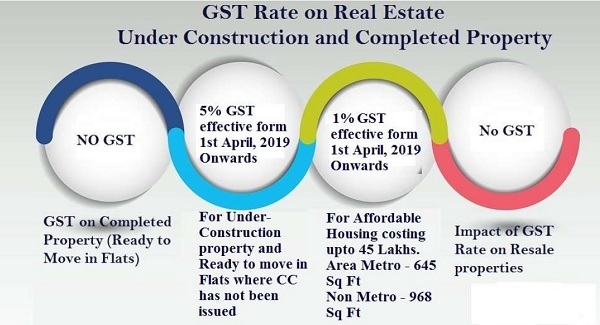
GST applies to under-construction properties while land and completed buildings remain exempt. The regime includes 1% and 5% rates without ITC, deemed land valuation, and reverse charge compliance for developers.
Rule 62 mandates that deductions under Section 128 for specified serious diseases are allowed only when supported by prescriptions from qualified medical specialists. The rule clearly defines eligible ailments, authorised doctors, and the mandatory certification format.