The Tribunal held that exclusion of time for transfer of seized material applies only within the running limitation period. As the assessment was passed beyond the recalculated deadline, it was quashed as barred by limitation.
ITC under Section 17(5)(c) is restricted only when repair or renovation expenses are capitalised. Revenue expenses remain eligible, making accounting treatment crucial.
Courts clarify that ITC can be blocked only on recorded “reasons to believe” supported by concrete evidence. Mere suspicion or supplier default is insufficient to invoke Rule 86A.
CESTAT Kolkata held that demand of service tax under Reverse Charge Mechanism [RCM] raised merely on the basis of figures appearing in Balance Sheet without classifying the category of service is not sustainable.
Examines whether Section 144B’s faceless assessment system enhances transparency or creates challenges relating to natural justice and digital compliance.
Telangana High Court held that rejection of refund application by refund sanctioning authority not sustained since authorities failed to demonstrate that services rendered by petitioner tantamount to intermediary services. Accordingly, writ petition is allowed.
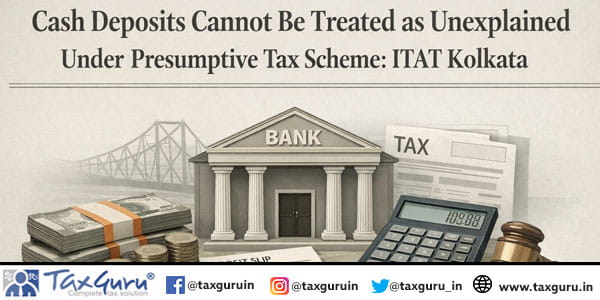
The Tribunal held that once income is declared under the presumptive taxation scheme of Section 44AD, individual cash deposits cannot be separately added. The sustained addition was set aside and deleted.
सेमिनार में अधिवक्ताओं ने अपील फाइलिंग, फीस त्रुटि और क्षेत्राधिकार संबंधी समस्याओं को उठाते हुए पोर्टल सुधार और समय विस्तार की मांग की।
The Court set aside the remand order after finding legal infirmities in compliance with arrest safeguards under the CGST Act. It held that failure to properly furnish written grounds of arrest rendered the remand unsustainable.
The GST framework is analysed in light of Adam Smith’s canons of Equity and Certainty. The system enhances uniformity but continues to evolve amid interpretational disputes and compliance changes.