Fema / RBI : RBI has launched the Integrated Ombudsman Scheme, 2026, providing a centralized, cost-free mechanism for resolving complaints agai...
Fema / RBI : RBI has updated the FLA Return FAQs, clarifying who must file, the 15 July deadline, revision procedures, and reporting requiremen...
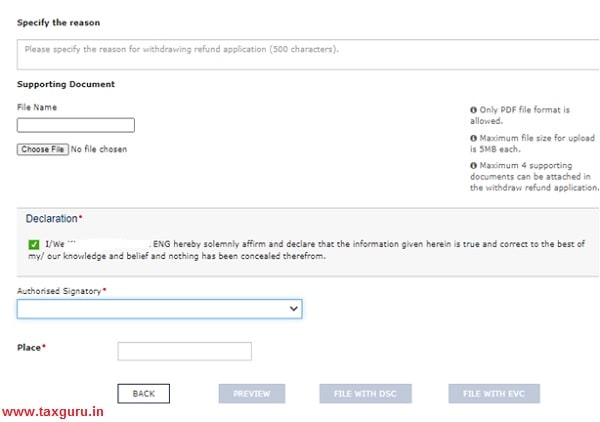
Income Tax : Learn who can apply for an advance ruling, applicable fees, withdrawal rules, and its binding effect under the Income-tax Act. The...
Company Law : The document clarifies that a director's resignation becomes effective upon receipt by the company or the specified future date, w...
Income Tax : Understand who must undergo a tax audit under Section 44AB, the applicable turnover limits, audit forms, filing procedure, due dat...
Corporate Law : MoSPI will introduce the Index of Services Production (ISP) to measure short-term changes in the formal services sector. The month...
Finance : The FAQs clarify the implementation of the IFSCA AML/CFT/KYC Guidelines, covering customer due diligence, reporting obligations, g...
Finance : The IFSCAs updated framework supersedes previous sandbox regulations and establishes a unified regime for FinTech testing in IFSCs...
Finance : The Government has exempted interest and capital gains earned by FPIs on Government securities from income tax with effect from 1 ...
Fema / RBI : RBI has clarified reporting requirements, valuation methods, submission procedures, and entity obligations under the Portfolio Inv...
SEBI : NSE released detailed FAQs to address practical issues in submitting Quarterly Integrated Filing – Governance reports through XB...
Finance : The circular addresses uncertainty in FLA reporting FAQs under FEMA. It directs institutions to pause action until regulatory clar...
Corporate Law : FSSAI introduced perpetual licenses and simplified registration norms to ease compliance. The reforms reduce costs while maintaini...
SEBI : FPIs can now apply for Digital Signature Certificates directly within the CAF portal. The move simplifies onboarding and reduces p...
Goods and Services Tax : GSTN has clarified key issues on filing annual returns through consolidated FAQs. The guidance explains ITC reporting, auto-popula...
Learn about filing Form 3 LLP for initial LLP Agreement and changes in LLP Agreement. Understand purposes, eligibility, and FAQs for smooth filing. Get insights into linked filings, editing details, and error resolution in Form 3 LLP. Simplify LLP compliance with accurate information.
Financial Intelligence Unit-India (FIU-IND) is a statutory body established by the Government of India in 2004. It serves as the central national agency responsible for receiving, processing, analyzing, and disseminating information related to suspect financial transactions. The FIU-IND plays a crucial role in coordinating and strengthening efforts against money laundering and financing of terrorism, both nationally and internationally.
Cancelling your SRN (Service Request Number) can be a crucial step when dealing with unsuccessful eform payments. However, knowing when and how to cancel your SRN is essential. This guide will provide you with a detailed understanding of the specific conditions under which you should cancel your SRN and provide a step-by-step guide on how […]
There is no financial loss to EPF (Employee Provident Fund) members due to the delay in updating interest in the member passbook. The process of updating the member passbook with interest is essentially an entry process. The date on which the interest is entered in the passbook does not have any actual financial impact.
Explore 71 FAQs on Investigations by SFIO & Inspector under Companies Act, 2013. Understand SFIO’s powers, duties, and the organizational structure for effective fraud detection and legal actions in India.
Introduction of ₹2000 banknotes in November 2016 was an interim measure during demonetization. The usage of this denomination has decreased due to the successful implementation of digital transactions like UPI. To ensure only good quality banknotes are in circulation, the RBI has decided to withdraw ₹2000 banknotes.
RBI has decided to withdraw ₹2000 banknotes from circulation as part of its Clean Note Policy However, ₹2000 banknotes will continue to be legal tender
Recent decision by RBI regarding ₹2,000 denomination banknotes is not a demonetization exercise. It is important to note that these banknotes will retain their status as legal tender, ensuring that they can continue to be used for transactions.
When a financial transaction reported by a Source/Reporting Entity is not considered/included by the taxpayers in their Return of Income (ITR), a computerized process of identification of such mismatch is undertaken.
Frequently Asked Questions #FAQs w.r.t. Tax Collection at Source (TCS) on foreign remittance through the Liberalised Remittance Scheme.