A Comprehensive Analysis of Recent Judicial Precedents on Section 129 Penalties
Introduction
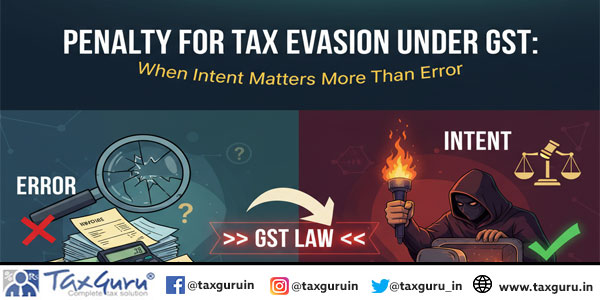
The imposition of penalties under Section 129 of the GST Act for detention of goods and vehicles has been a contentious issue, particularly when discrepancies arise from inadvertent errors rather than deliberate attempts to evade tax. Recent judgments from the Allahabad High Court have established crucial precedents that distinguish between genuine mistakes and tax evasion, providing much-needed relief to taxpayers facing penalties for technical infractions.
This article examines five landmark rulings that collectively establish a fundamental principle: penalties under Section 129(3) cannot be sustained merely on the basis of procedural or typographical errors when there is no demonstrable intent to evade tax.
The Legal Framework: Section 129 and the Intent Requirement
Section 129 of the Central Goods and Services Tax Act, 2017, provides for detention, seizure, and release of goods and conveyances in transit. However, the courts have consistently held that the invocation of penal provisions requires the Revenue to establish that the discrepancies or violations were committed with the intention to evade tax. Mere technical non-compliance, absent malafide intent, does not warrant the imposition of penalties.
Case Law Analysis
1. The Typographical Error Defense
Rimjhim Ispat Ltd. v. State of U.P. (Allahabad High Court) (2024) 22 CENTAX 457 :: (2024) 7 CTOGST (All) 1221
Facts and Holding:
In this case, goods and vehicles were detained on account of discrepancies found in the e-way bill. Upon examination, the Court found that the discrepancy was purely typographical in nature and did not reflect any intention to evade tax. The Allahabad High Court held that a penalty under Section 129(3) could not be imposed when the error was merely a typographical mistake and there was no evidence of tax evasion intent.
Significance:
This judgment establishes that typographical errors, which are inadvertent and human in nature, cannot form the basis for penal action. The Court emphasized the need to examine the subjective element of intent before imposing penalties.
2. Timely Production of E-Way Bill
Banaras Industries v. State of U.P. (Allahabad High Court) 2024-VIL-814-Alh :: (2024) 24 CENTAX 215
Facts and Holding:
The goods were detained on the ground that the e-way bill was not produced at the time of detention. However, the dealer produced the e-way bill before the seizure order was passed. Despite this, the Revenue proceeded to impose tax and penalty. The High Court ruled that the order imposing tax and penalty on detention of goods in transit was not sustainable when there was no finding regarding the intention to evade tax.
Significance:
This case underscores the importance of procedural fairness. When compliance is achieved before the final order, and there is no evidence of tax evasion, penalties cannot be mechanically imposed. The judgment reinforces that the temporal aspect of producing documents must be considered in light of the overall facts and circumstances.
3. Expiry of E-Way Bill Due to Driver’s Diversion
Facts and Holding:
In this matter, goods in transit were detained due to the expiry of the e-way bill. The assessee explained that the driver had diverted the truck for personal reasons without informing the company, which resulted in the delay and subsequent expiry of the e-way bill. The High Court quashed the detention order and penalty, holding that proceedings under Sections 129 read with Section 130 require the establishment of intent to evade tax, which the Revenue had failed to prove.
Significance:
This judgment recognizes that external factors beyond the control of the taxpayer can lead to technical violations. The Court held that such circumstances do not automatically imply tax evasion intent and that the burden lies on the Revenue to establish malafide intention.
4. Minor Discrepancy in Vehicle Registration Number
BMR Enterprises v. State of U.P. (Allahabad High Court) 2024-VIL-516-ALH :: (2024) 19 CENTAX 57
Facts and Holding:
The goods and vehicle were detained due to an incorrect vehicle registration number mentioned in the e-way bill. The correct number was UP 83 CT 2724, while the e-way bill mentioned UP 80 CT 7024. The High Court set aside the penalty order, holding that it was a case of unintentional mistake and did not attract penalty provisions.
Significance:
This case illustrates judicial sensitivity to minor clerical errors in vehicle registration details. The Court distinguished between deliberate misrepresentation and inadvertent mistakes, holding that penalties cannot be imposed for the latter. The judgment provides substantial relief to taxpayers who may face detention due to transposition or typographical errors in vehicle numbers.
5. Discrepancy in Invoice Number
Deco Plywood Industries v. State of U.P. (Allahabad High Court)2024-VIL-224-ALH :: (2024) 19 CENTAX 297 :: (2024) 7 CTOGST (All) 186
Facts and Holding:
The e-way bill reflected invoice number 2224 instead of the correct number 0401, representing a discrepancy of four digits. The petitioner-dealer argued that the penalty was wrongly imposed for a minor e-way bill error without any intent to evade tax. The High Court quashed the orders, ruling that Section 129 penalties cannot apply to minor, non-evasive errors.
Significance:
This decision reinforces the principle that minor numerical discrepancies in invoice details, absent evidence of tax evasion, do not warrant penal consequences. The Court emphasized that the penalty provisions must be applied judiciously and not mechanically.
Emerging Principles from Recent Jurisprudence
The above cases collectively establish several important principles:
1. Intent as a Prerequisite for Penalty
The courts have consistently held that the imposition of penalties under Section 129 requires proof of intention to evade tax. Mere procedural lapses or technical violations, without evidence of malafide intent, do not justify penal action.
2. Distinction Between Error and Evasion
A clear distinction must be drawn between inadvertent errors—whether typographical, clerical, or arising from circumstances beyond the taxpayer’s control—and deliberate attempts to evade tax. The former does not attract penalties, while the latter may warrant penal consequences.
3. Burden of Proof on Revenue
The burden of establishing tax evasion intent lies squarely on the Revenue. In the absence of positive evidence demonstrating malafide intention, penalties cannot be sustained merely on the basis of discrepancies in documentation.
4. Proportionality and Reasonableness
The courts have emphasized that penalty provisions must be applied proportionately and reasonably. Minor discrepancies that do not affect the substantive accuracy of the transaction or result in revenue loss should not attract severe penal consequences.
5. Procedural Fairness
When taxpayers rectify errors or produce required documents before final orders are passed, such compliance should be taken into account favorably. Mechanical imposition of penalties without considering subsequent compliance violates principles of natural justice and procedural fairness.
Practical Implications for Taxpayers
These judgments provide significant relief to taxpayers and offer practical guidance:
For Businesses in Transit Operations
1. Document Minor Errors: Maintain detailed records explaining any discrepancies, including typographical or clerical errors, to demonstrate lack of tax evasion intent.
2. Immediate Rectification: Upon detection of errors in e-way bills or related documents, take immediate steps to rectify them and maintain evidence of such rectification.
3. Driver Oversight: Implement robust tracking systems to monitor vehicle movements and prevent unauthorized diversions that may lead to e-way bill expiry.
4. Verification Protocols: Establish internal verification mechanisms to cross-check vehicle registration numbers, invoice details, and other critical information before generating e-way bills.
For Legal Practitioners
1. Challenge Mechanical Penalties: These precedents provide strong grounds to challenge penalties imposed mechanically without examination of intent.
2. Emphasize Procedural Compliance: Highlight instances where clients have demonstrated good faith through timely compliance or rectification of errors.
3. Burden of Proof Arguments: Assert that the Revenue must discharge the burden of proving tax evasion intent and that mere discrepancies are insufficient.
Conclusion
The recent decisions of the Allahabad High Court represent a welcome shift toward a more balanced and fair application of penalty provisions under GST law. By emphasizing the requirement of establishing tax evasion intent and distinguishing between genuine errors and deliberate violations, these judgments protect honest taxpayers from disproportionate penal consequences.
However, taxpayers must remain vigilant in ensuring compliance with GST provisions and maintaining proper documentation. While the law now provides protection against penalties for inadvertent errors, the onus remains on taxpayers to demonstrate the bona fide nature of such errors.
As GST jurisprudence continues to evolve, it is hoped that these principles will be uniformly adopted across all High Courts and tribunals, providing much-needed certainty and fairness in the administration of indirect tax laws.